Which Shirt Collars Work with Your Face Shape

An Overview

You might be the sort of guy who likes to think how dress shirt collars works with the shape of your face. While this is by no means the only way to think, we want to explain how to choose your collar style with this approach.

For a Longer Face

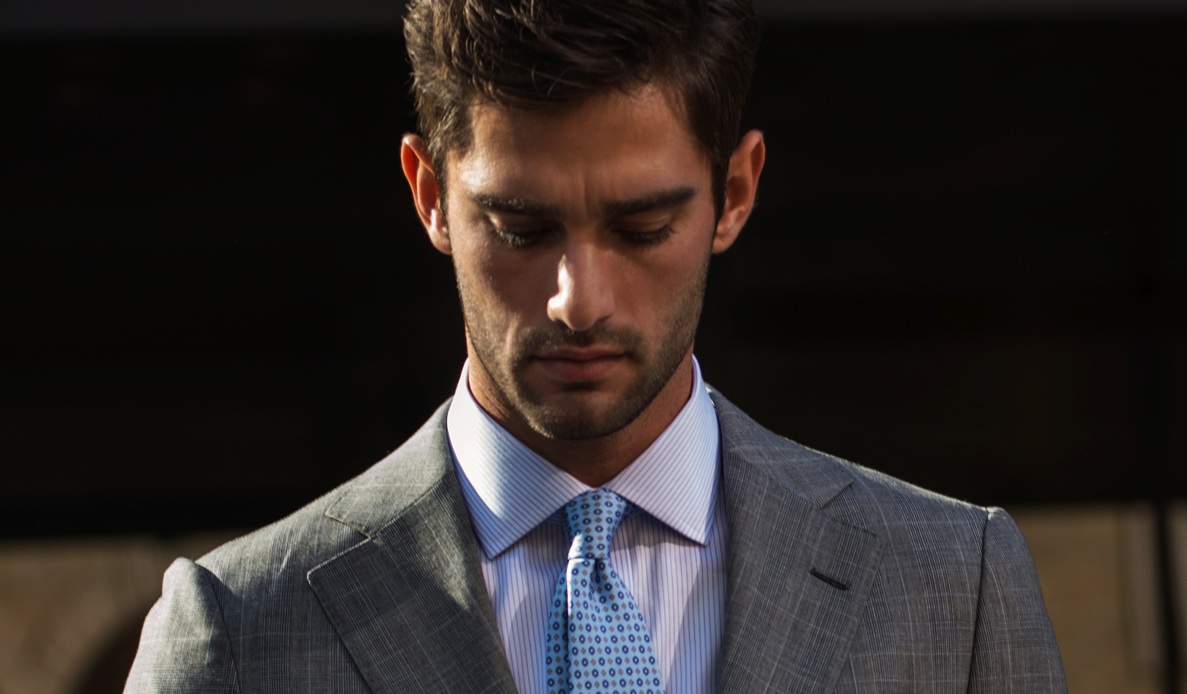
Those with longer, thinner faces might want a collar that will visually widen their face. That’s why a long face might look best with a spread collar–the longer and thinner the face, the more spread the collar.

Spread Collar

For a Rounder Face

A rounder face can be best complimented by a less spread, or point collar as this can make the face seem visually longer.

Point Collar

Collar Point Length

When most guys talk about collar “size,” they often are referring to the length of the collar points. Generally, larger guys look best in collars with longer points as it proportionally compliments their stature. Shorter guys might want to consider going with a shirt that has shorter points, so that it leaves them looking slightly taller.

Consider Neck Length

Another consideration to take into account is the height of the collar itself. Usually, if you have a longer neck you might want to consider a collar with a taller collar band. Conversely, those with shorter necks can think about getting a collar with a shorter, standard height collar band, as it will make the neck look proportionally longer.

Caveat Emptor

While there are many in the menswear industry that like to talk about rules of style, we tend not to be as hard and fast with what one “should” or “shouldn’t” wear. At a certain point, collar styles are a matter of preference and you should select the collar that gives you the look you’re going for. If this means you like a cutaway collar and have a very round face, then don’t hesitate to wear your cutaway collar–you’ll always look your best when you’re confident in your clothes.

Canclini Fabric Mill

Canclini Dress Shirt Fabrics

The Canclini mill is one of Italy’s best and most prestigious shirting mills. Founded in 1925 near Como, Italy, the family-owned mill has produced fabrics for some of the world’s best brands including Zegna, Giorgio Armani, Prada, and Dolce & Gabbana.

While they started primarily as a producer of silk, Canclini moved to shirting fabrics in the 1960s.

Browse our selection of Canclini milled fabrics here.

High Quality Dress Shirts

How can you tell a high quality dress shirt?  Luckily, what distinguishes a high quality dress shirt, is more than just black magic and flashy marketing. There are a few things you can look for. These things are generally signs that the shirt took longer to produce and will help you identify a dress shirt made without shortcuts and capable of lasting you a long time.


High Quality Collar

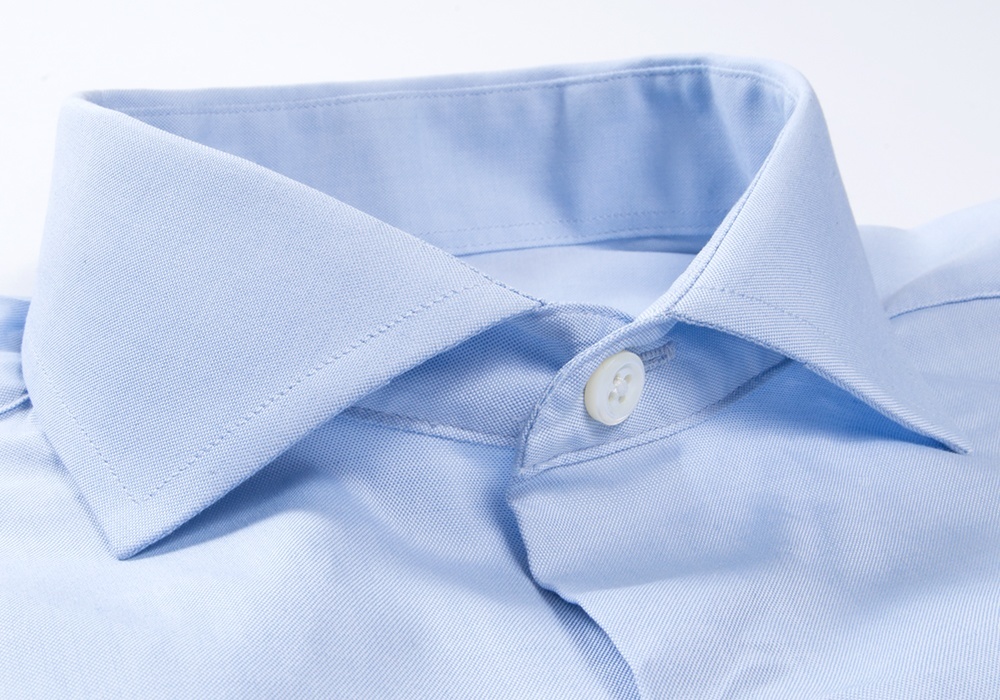
high quality collar of a dress shirt

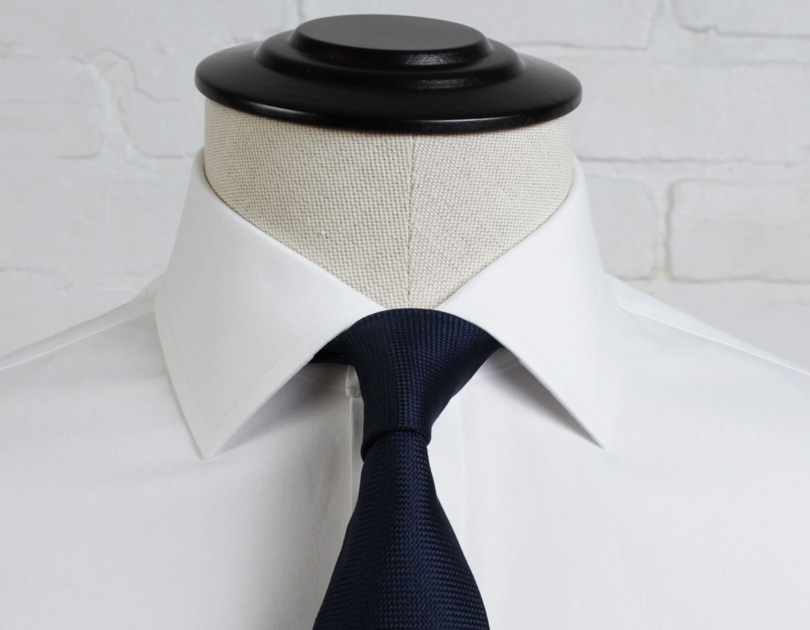
A close inspection of the shirt’s collar will often give a sense for the quality of the shirt. A quality collar will be cut perfectly symmetrical, with straight and clean stitching along the edges.   If the collar is a fused collar, then it should have a nice crispness to it, with sharp, clean edges along the bottom. Bending the collar, it should feel flexible and resilient.  It should not feel like paper or board that can be creased. The collar should naturally curve in a circle when buttoned and not be prone to hold some unnatural shape. The stiffness and weight of the collar is not necessarily a sign of poor quality, but rather an element of design.

If the collar is an unfused collar style, this is not necessarily a sign of poor or high quality. Often unfused collars are softer and a bit more casual, or in the case of the handmade Saville Row shirts, a stiff unfused collar is certainly dressy, but shows more personality and can be very beautiful. Unfused collars generally require a bit more skill to finish perfectly, so a high quality one can be fantastic, while a poorly made knockoff will be terrible.

Split Yoke

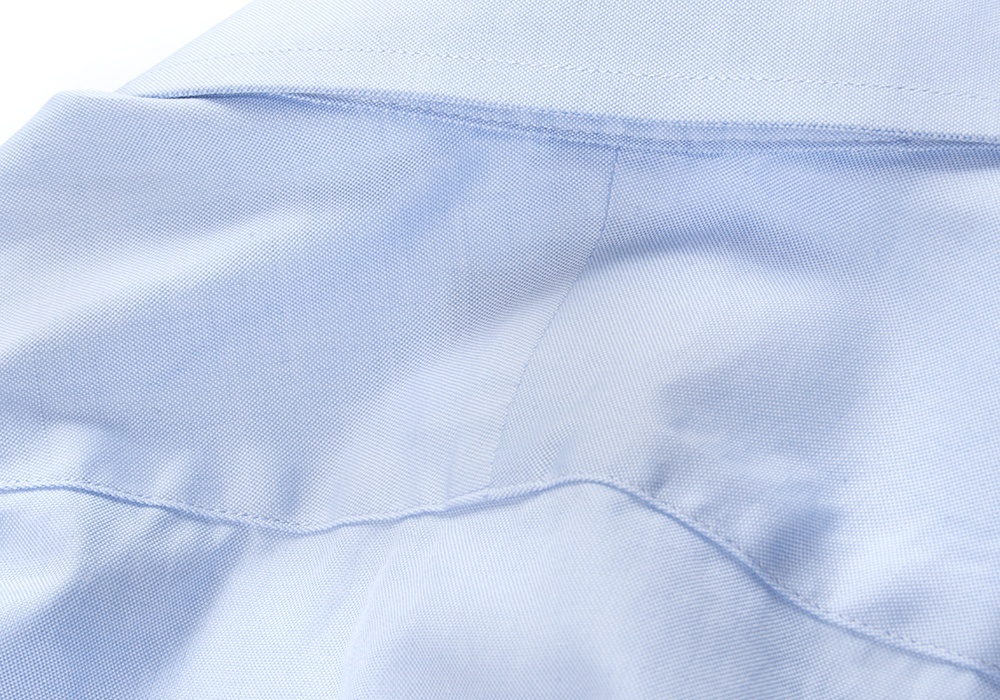
Split yoke on a dress shirt

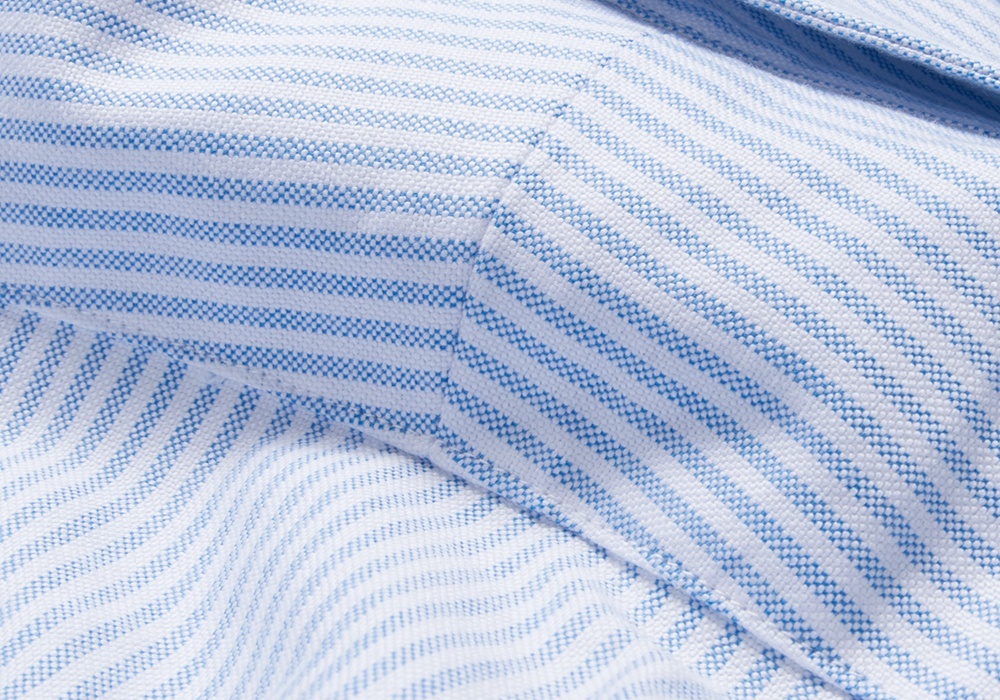
A sure-fire sign of a high quality shirt construction is the split yoke. The shirt yoke is the panel of fabric that runs across the shoulders, just behind the collar. A “split” yoke is where the yoke is made of two different pieces of fabrics. A true split yoke will have the two pieces of fabric cut at an angle or “on the bias”. The stylistic benefit of cutting the fabric like this is that if the shirt has stripes or some kind of pattern, this pattern will run parallel to the front seam of the yoke, producing a neater look to the front of the shirt. In the back below the collar the stripes will meet in a chevron pattern. The functional benefit is that when a fabric is cut at this angle (also referred to as “cut on the bias”), the fabric stretches more length wise. This means you’ll have a greater range of motion when you’re reaching forward.

Generally speaking, a split yoke requires more sewing and more expertise on the part of the shirtmaker and is a great sign of a hiqh quality dress shirt.

Removable Collar Stays

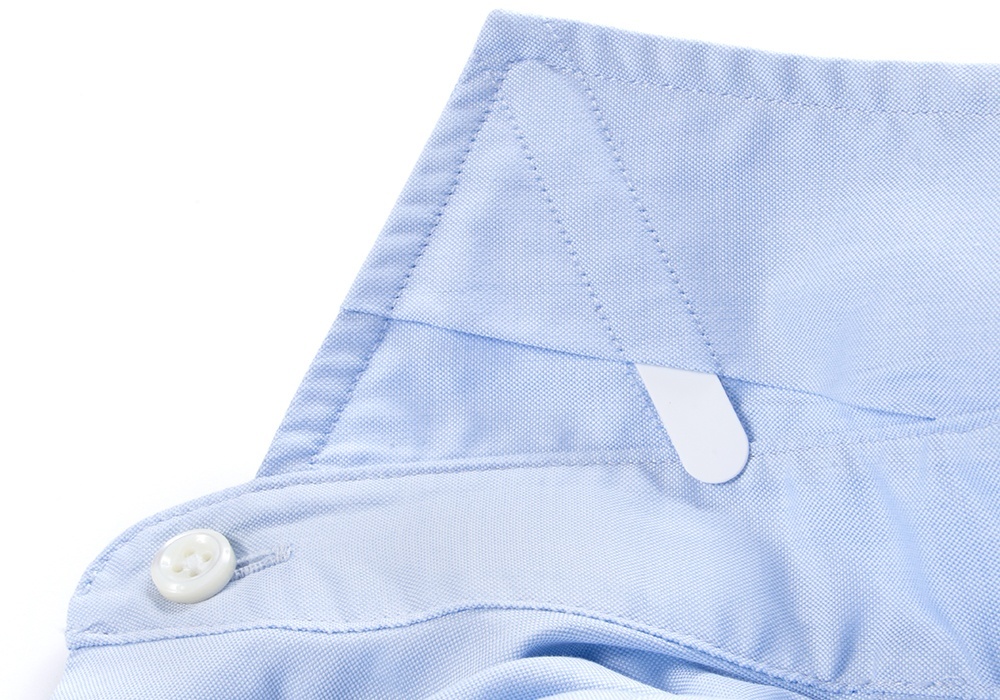
Removable collar stays

Going back to the collar, if the shirt has a dressy style business collar, then it will almost always require collar stays (little pieces of metal or plastic that are inserted into the points of the collar) – they keep the collar points pointing straight and looking sharp. A high quality dress shirt will come with removable collar stays. Some shirts may come with sewn-in collar stays that you can never remove, or no collar stays at all. Both of these options are a sign of a poor quality dress shirt.

Premium Cotton Fabric

We won’t go into this too much in this post, because dress shirt fabrics is a deep subject with varying opinions on thread count, ply, country of origin, mill, type of weave, yarn treatment, materials, etc. But suffice it to say, the quality of the fabric is very, very important to the quality of the shirt. Generally speaking, fabrics with thread count of 80s two-ply or greater are a great quality, though there are many exceptions on both sides of this rule. We’re generally a bit skeptical of 50s single-ply fabrics, very skeptical of 40s single-ply fabric, and very, very skeptical of anything with a polyester blend.

That said, how the fabric looks, feels and performs is ultimately what really matters. If the dress shirt’s fabric is at all rough to the touch, wrinkles particularly easily, or shrinks a large amount with normal washing then you likely have a poor quality fabric.

Mother of Pearl Buttons

mother of pearl button on a dress shirt

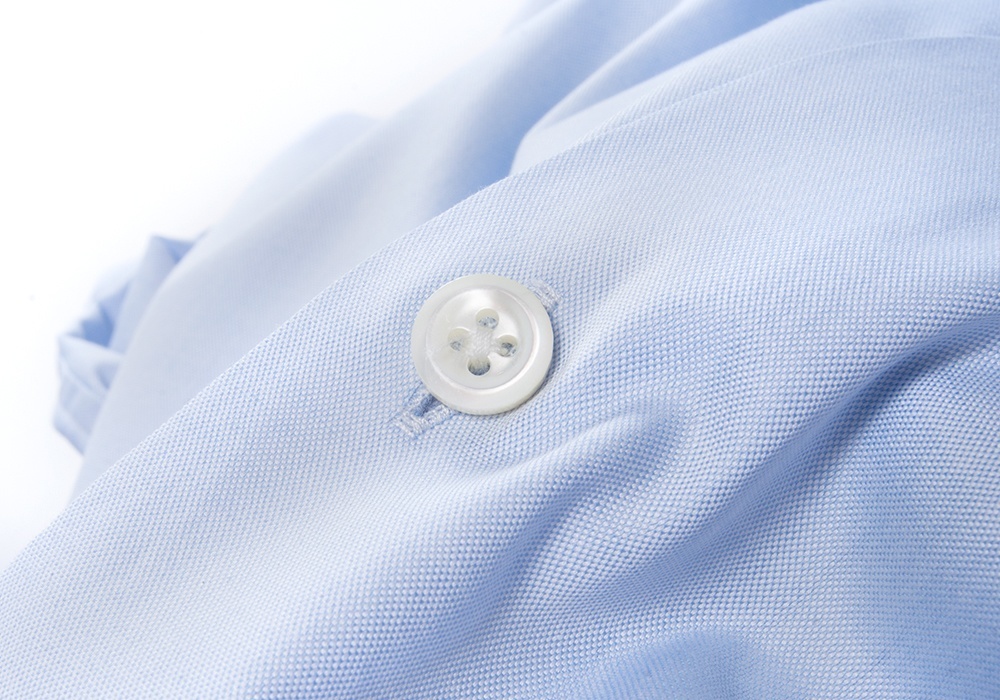
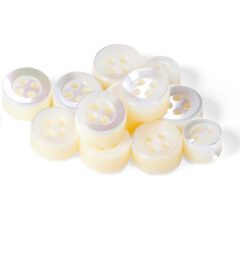
The quality of the buttons is certainly a way to get a sense for the quality of the dress shirt. We generally favor high quality Mother of Pearl buttons for their depth of color and shine. Mother of Pearl buttons are also very resilient to degradation caused by cleaners and heat, and as such can last a long time. Thicker or “Tall Mother of Pearl” buttons are quite expensive and are a sure sign of a high quality dress shirt. That said, mother of pearl buttons are not the only nice buttons there are.  Some plastic/resin buttons can be very attractive and last a long time and other materials such as horn or Tagua nut can also work really well.

Dress shirts can come with a variety of button sizes and the size and shape of the buttons is more a matter of style or design, than it is quality. Thicker or thinner, bigger or smaller buttons can be found on both poor or high quality dress shirts alike so be sure not to draw conclusions based simply on this parameter.

Cleanly Finished Button Holes

If there are loose threads around the button hole, or any sign of fraying, this is the sign of a low quality shirt. Premium quality dress shirts will have more stitches on the button hole and very clean openings with no sign of fraying.

Hand Sewn Cuffs

It doesn’t really matter if we’re talking about French cuffs or barrel cuffs. Like collars, you can get either fused or unfused construction. The appeal of each is the same as it is with collars: fused for a clean, professional look and unfused for a relaxed, casual vibe. They should be hand sewn and this is where experience, skill, and patience makes a difference. It takes a lot of focus, practice and time to get the details on the cuffs right and it will show the most in the pointedness of the corners and the straightness of the stitching.

Pattern Matching

Pattern matching at the split yoke.

If the shirt fabric has a noticeable stripe or check pattern, then you’ll want to see how well the pattern matches where different pieces of the fabric come together. A high quality shirt will certainly have perfect pattern matching at the center back of the split yoke, as well as along the front of the shirt and at the pocket (if the shirt has a pocket). If the pattern matching is not precise, the stripes or checks will not align down the front of the shirt and look sloppy. Horizontal lines should run seamlessly from the left to right side of the shirt and vertical stripes should be spaced such that there is no stripe missing at either sides of the shirt placket. The stripes on one side of a collar should be identical in elevation to the stripes on the opposite side of the collar. A really good sign of a high quality dress shirt is when the pattern at the end of the yoke matches perfectly with the pattern at the top of the sleeves. This is a really great detail that is difficult to accomplish consistently.

Keep in mind that, the way the curves and angles of a shirt pattern go, it will be impossible to match all of the patterns perfectly. It’s normal for patterns to not align where the sleeves meet the cuffs, at the side seams and in many other parts of the shirt.

Clean, Tight Stitching

In general, the stitching throughout the shirt should be straight or smoothly curved in the curves. A high quality dress shirt should have at least 18 stitches per inch around the cuffs and collars. Some casual shirts may be sewn with thicker thread and less stitches per inch, which is certainly acceptable, although these shirts would not be acceptable for most business or evening wear.

Single Needle Side Seam Stitching

Pressed side seam with a single needle stitch.

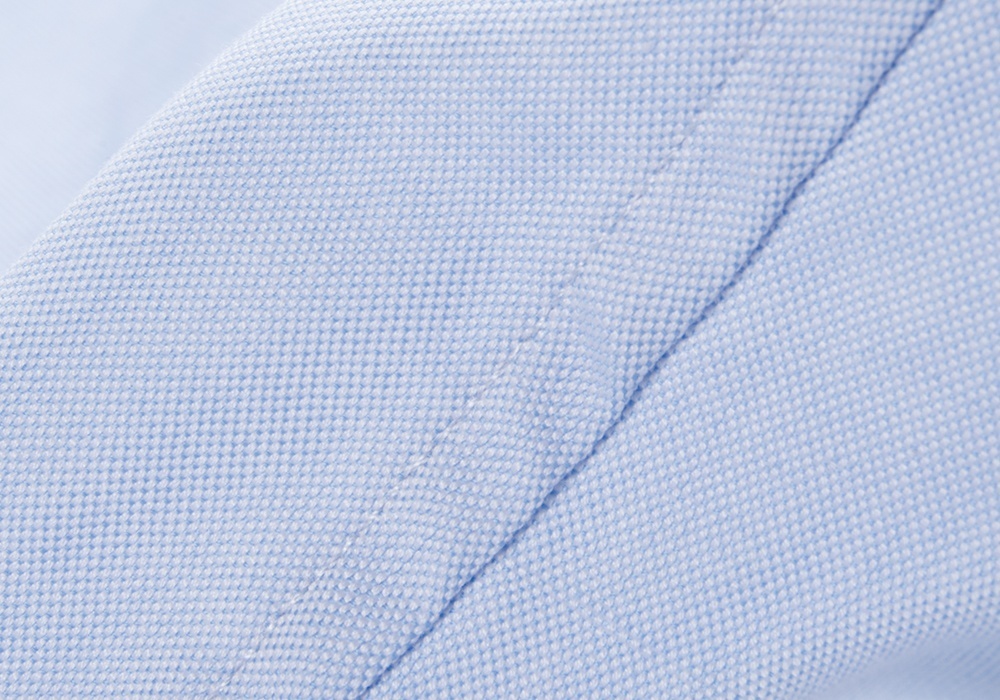
Another way to tell a high quality dress shirt is to check if it has single needle side seam stitching along the sides of the shirt and bottom of the sleeves. This will produce an incredibly tight seam that is very narrow and elegant. Only one line of thread will be visible on the outside of the shirt and the tightness of the seam will make it such that no puckering can show when the shirt is washed and dried. The way to check for single needle stitching is to look at the front and back of this seam along the sides of the shirt and check if you can see one or two lines of sewing. Sewing the side seams in this tight way is more difficult for the shirtmaker. It’s also less forgiving if a mistake is made and correspondingly more expensive. If two lines of stitching are visible here it makes for a less elegant shirt and a side seam that shows more puckering after washing.

One exception to this rule of thumb is if the side seam is sewn such that only one line of stitching is visible from the outside, but two lines are visible from the inside. Technically not “single needle” stitching, this is a bit of a compromise that is also a sign of good quality. It produces a clean look and a tight seam without the cost and difficulty of the classic single needle side seam.

Shanked Buttons 

A shanked mother of pearl button.

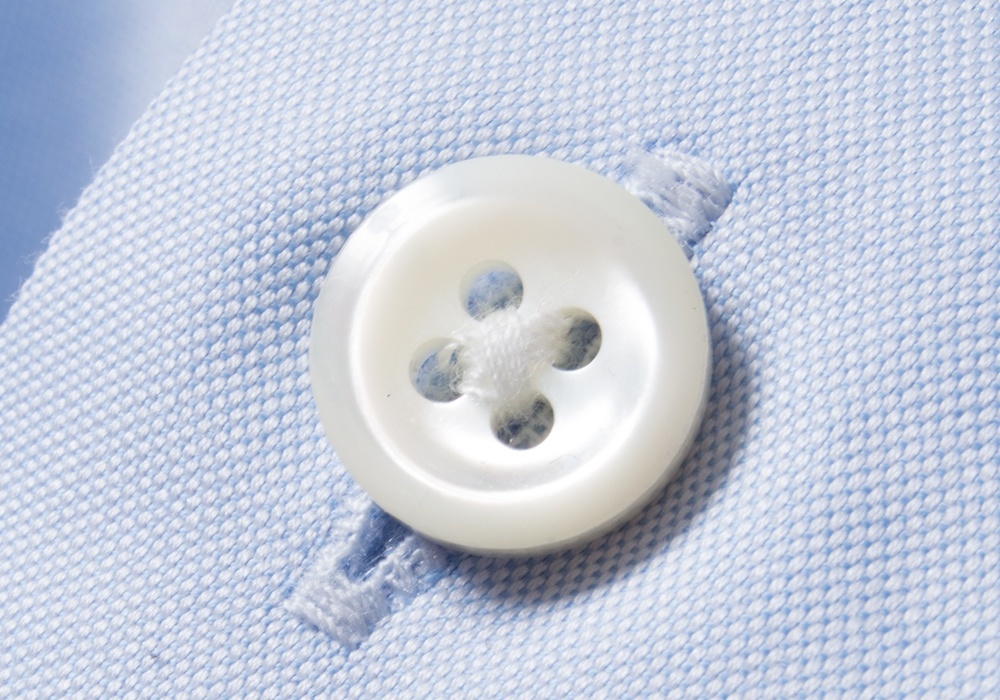
Another nice detail that is a sign of a high quality shirt is if the buttons are “shanked”. While this is totally necessary for secure button attachment, the attention to detail that it implies should be appreciated. A shanked button will have another thread wrapped around the threads that hold the button to the shirt behind the button. This extra wrapping around the button-attaching threads can cause the button to stand up off the shirt ever so slightly, making for an elegant, premium look.

Small Button at Sleeve Placket

shirt sleeve placket button on a long sleeve dress shirt

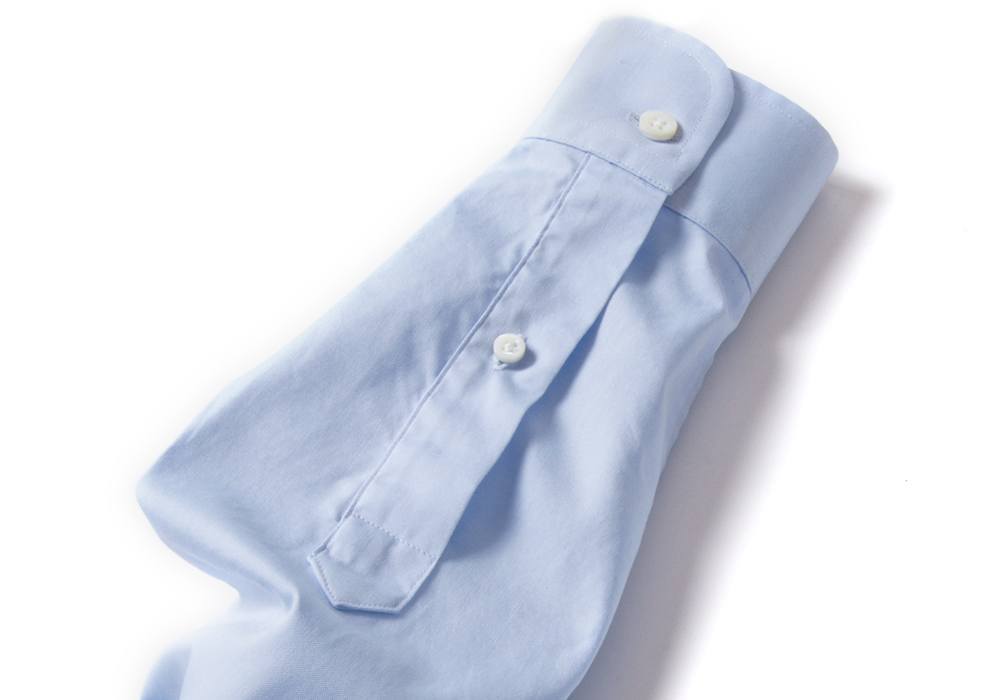
Below the opening of the shirt is what is called the shirt sleeve placket. This is the part of the shirt sleeve that opens up when the cuff is unbuttoned. This area is necessary so that you can get your hand through the opening of the sleeve or roll your sleeves up your arm. A high quality dress shirt will feature an extra button in the center of this placket that prevents this part of the sleeve from gaping open. Some lower quality shirts will try to skip this detail to save a few pennies, resulting in either a large gaping opening just below the cuff, or a sleeve placket so short that the sleeves cannot be rolled up the forearm without feeling uncomfortably tight.

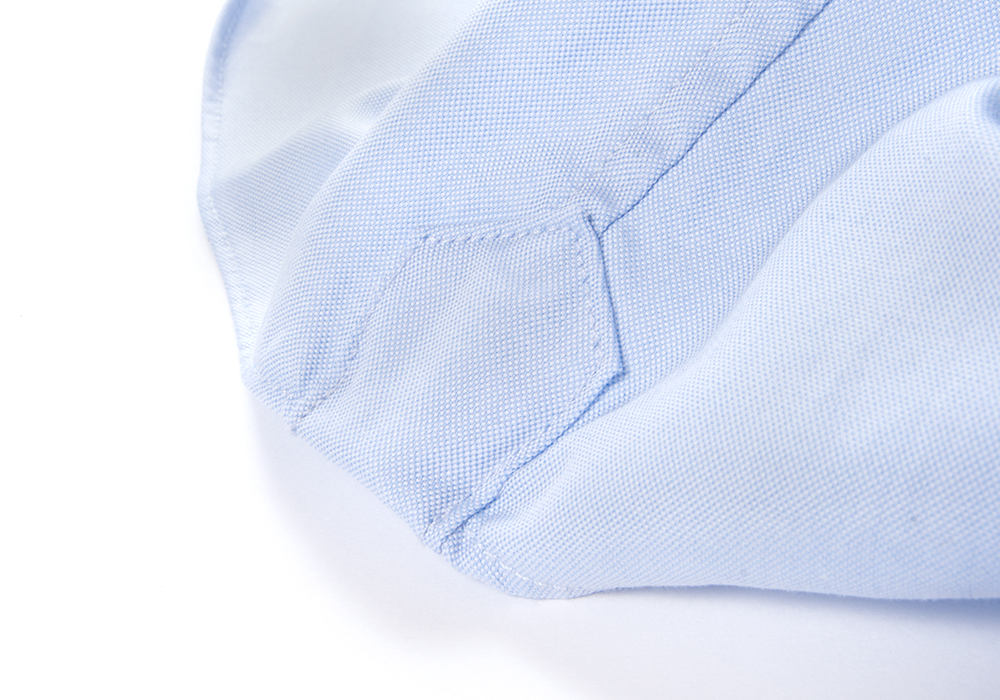
Reinforced Side Seam Gussets

Reinforced side seam with gussets.

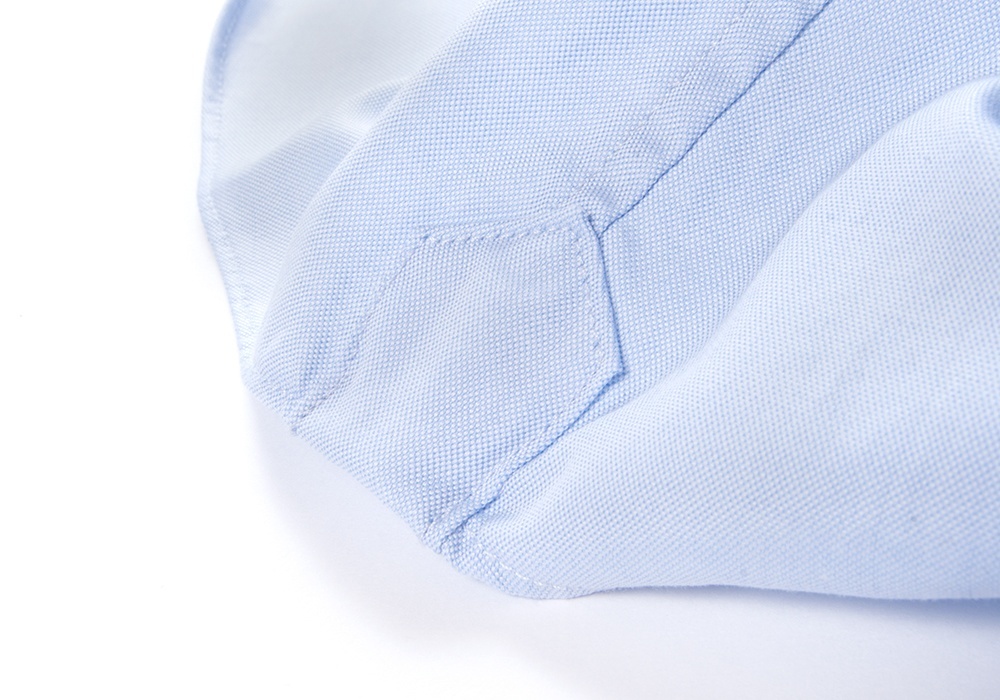
Another sign of a high quality dress shirt can be found at the bottom of the side seams. Premium shirts will have some sort of reinforcing here that is called a gusset. This extra piece of fabric will prevent the shirt from ripping at the seam that can be caused by aggressive tucking/untucking or an overzealous cleaner. It also adds just a bit of minimal, practical design to the shirt. The extra time and effort that it takes to add details like this is a good sign of a high quality dress shirt.

What to Wear to a Business School Interview

Business School

Maybe you want to pursue social entrepreneurship and end hunger in Africa? Maybe you want to improve your quantitative finance and team building skills so you can increase the value you deliver to clients? Or maybe you heard business school is a chance to drink beer like you did in college and still make a lot of money two years later.

Whatever your reasons, you applied to business school. You aced the GMAT, your letters of recommendation (written by Jack Welch) say you are the second coming (of Jack Welch) and your essays articulately convey that you are a well-rounded, analytical, team player/type-A leader with uncompromising ethical standards.

And you got the interview. Congratulations. You just increased your chances of getting in to a top MBA program from 0.1% to 1%! Now, it’s time to get dressed.

Let’s be clear. What you wear to a business school interview DOES matter. Forget everything your mother told you about “it’s what’s inside that counts.” Top tier business school programs are a conservative group and they want candidates that look the part. Guys – this means a formal, conservative suit and tie (even if the lady from Stanford wants to meet you in a coffee shop and you know it will look ridiculous) and nice leather shoes.

So, to help you prepare, we called up interviewers at Harvard Business School, Stanford, and Rod Garcia, the head of admissions at MIT Sloan, and asked them what their advice is. Here’s what they suggested.

Follow the interviewer’s lead

Your interviewer has a rough idea of the stress you’re going through and friendly ones will try to help you out. However, it’s rare that they tell you exactly what to wear (and it would be totally inappropriate to ask). Take their lead, but play it conservatively. For example, if you’re on the west coast and the interviewer mentions “I will not be wearing a suit”, this is not a green light for you to wear jeans and a t-shirt. In this situation, the safe bet is to still wear a full suit (even if you’ve never worn a suit before). Depending on the location of the meeting you could consider skipping the tie, but think twice. Remember, they will NEVER think less of you if you overdress. The only exception is if they explicitly tell you not to wear a tie. This could be worded as “come by my office, by the way, we’re pretty casual here, we have a no tie policy, so no need to dress up”. In this case, you wear a suit minus the tie.

Ok, let’s go back to the VERY beginning. You need to remove the label from the suit cuff. If you don’t, it’s a dead giveaway that you’ve either never worn a suit before or were planning to return the suit after the interview. Either way, not in your favor.

While we’re at it, that temporary stitching that holds the side vents or center vent of your jacket together at the rear bottom should also be removed so that the vents can open.

Don’t show too much cuff

If the sleeves of your suit are too short and the sleeves of your shirt are the right length, your shirt cuff will show too much. Try your interview outfit on in advance and make sure this doesn’t happen. Between .25″ and .5″ of exposed shirt cuff is your sweet spot.

Avoid shirt and suit wrinkles

This is a stressful time and you have a lot going on. You may have even driven from San Diego to LA in a car with no air-conditioning and rendezvoused with an old girlfriend the night before. It’s no excuse. Plan ahead to have both your suit and shirt perfectly pressed.

White shirt with red or blue tie

Save the blue dress shirt and yellow tie combo for another day. When we say “conservative” we mean a boring dark gray or dark blue suit, white pinpoint oxford cloth dress shirt (with undershirt), simple dark red or navy tie, and dark brown leather shoes.

Keep the tie tight

If you wear a tie it should be tight. The top button of your shirt should be buttoned and the tie knot should be up against your collar band. Loosening the tie a couple inches may be more comfortable but it  looks less put together. MBA interviews are not aced by looking comfortable. MBA interviews are aced by looking like you belong on the cover of business week with the headline “CEO of the Year” over your smiling face.

Shave

You might look like you’re 18 years old when you shave, and you’re trying to make your 1.5 years of work experience sound more like 3. But, there’s no way around this, no matter how cool you think scruff makes you look. Show up to your interview looking like an extra from season five of LOST and you won’t be doing yourself any favors.

Keep everything clean

No lunch on your tie. No ring around your collar. No sweat stains under your arms. Obviously.

Avoid anything trendy

Skinny ties: no. Suede double monkstrap shoes: not this time. Glen plaid soft-shouldered suit: leave it at home.

Avoid button down collars, cutaway collars and contrasting collars

Avoid a shirt with a button down collar.  Some button downs will make you look too humble, and others are just too casual.  Also avoid any dramatic cutaways or contrasting collars.  These will make you look too cocky.  Play it safe with a timeless spread collar.

Finally, just make sure you look put together

If you have no sense of style ask a friend that does. There are a couple situations where obsessing over what you wear is acceptable: high school prom, your wedding day, and your MBA interview. Don’t feel bad, get it right.

The Perfect Wedding Dress Shirt

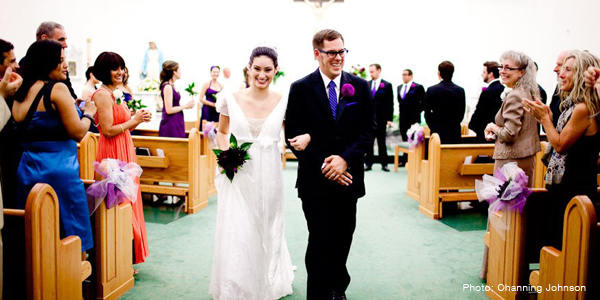
The Big Day is coming up and you need to look your best. You’ll never have as many friends around, or as many photos taken, as you will on your wedding day, and there’s no doubt you’ll want to look back on the memories without cringing at your style choices.

“Which white dress shirt should I wear?” is the most frequently asked question we get when it comes to wedding attire. Weddings are unique and special events, and as such there are some special considerations you’ll want to make when you choose your dress shirt. Here we pull together our recommendations for everything you should think about when designing the perfect wedding dress shirt.

To make things a bit easier, shop our gallery of pre-designed formalwear shirts here.

Wedding Dress Shirt

Fabric Color – White vs Ecru vs Ivory

A white dress shirt is usually a safe bet if the bride is wearing a white or ivory dress. If the bride or bridesmaids are wearing anything closer to cream-colored than ivory, however, then a pure white dress shirt is out of the question as it will cause the bride/bridesmaids to look dingy relative to you in photographs. Instead, you’ll want to opt for an ecru or ivory dress shirt in that case. Ecru will usually be a slightly darker color than ivory, though the thickness of the fabric can also influence the perception of the color (i.e. a lighter weight ecru dress shirt will appear lighter in color than a heavier one).

Overall we find that, when in doubt, a white dress shirt will do the trick.

Fabric Thickness – Do you plan to wear an undershirt?

One important thing to consider when selecting your wedding dress shirt is how opaque you want it to be. Thinner fabrics like broadcloth or poplin will be more sheer than thicker pinpoints and twills, and depending on your skin tone a thinner shirt may look a bit darker against your chest without an undershirt. One way to combat this is, predictably, to wear a white undershirt. If you plan to take your jacket off during the event, you will see the contrast of the undershirt’s short sleeves under the shirt sleeves at the biceps. This will be bothersome for some, and not as big a deal for others. If you opt for a thicker, more opaque white fabric, you can avoid an undershirt completely, or in the case where you do wear an undershirt not worry so much about the contrast at the sleeves.

Additionally, a thicker dress shirt fabric will usually be a bit more wrinkle resistant and for many guys will drape in a more flattering way.

If you can’t handle all the options, we strongly suggest the following fabrics for their individual merits:

  1. Thomas Mason White 3 Ply Regal Twill – Very opaque; medium heavyweight; subtle shine; pronounced weave texture.
  2. Thomas Mason White Fine Twill – Fairly opaque; medium weight; subtle shine; very smooth finish with minimal texture.
  3. Greenwich White Twill – Very opaque; medium weight; brilliant shine; smooth yet visible texture.
  4. Thomas Mason White Luxury Broadcloth – Fairly opaque; very lightweight; matte finish; very smooth and free of texture.

How long should the shirt be?

If you plan to keep the shirt tucked into your pants for the entire day/night, then a longer shirt is ideal. A longer dress shirt will stay tucked in better and keep a better alignment at the bottom front of the shirt above your belt. This is great for when you’re taking your wedding photos, and will prevent you from worrying about whether or not your shirt is properly tucked during what is sure to be a hectic few hours. The exception to the longer shirt rule is if you plan to really cut loose on the dance floor after the main event—untuck your shirt, tie your tie around your head, and just go crazy with the Electric Slide. No shame in that whatsoever, and a shorter shirt might work (and look) a bit better in that case.

Collar Style

Whether you’re wearing a tuxedo or a suit, we generally recommend the President Spread collar. It goes equally well with a bow tie and a neck tie, and is a pretty universally safe bet no matter your body type. Our English Spread collar is also a good choice if you want to go for a slightly more modern look. If you’re doing a tuxedo shirt and your dress code is very formal, then you can also opt for the Wingtip collar, but keep in mind that this collar style tends to move out of place and can be a pain to monitor, particularly when you’re having your photo taken constantly.

French Cuff or Barrel Cuff

This depends a bit on the formality of the event. If you’re marrying up, and her dad is paying for a very fancy, very formal wedding (at a castle… in Italy…) then you’ll probably want to go with French cuffs. If the wedding is black tie and you’re wearing a tuxedo, then French cuffs are technically the default cuff style choice. You’ll want to give some special consideration to the cufflinks. Perhaps you have some special cufflinks that are a family heirloom, or a gift from someone special? Alternatively, nice black onyx cufflinks that match the studs in your tuxedo can also be a great choice.

Barrel cuffs certainly work for weddings, so if that’s more your speed then that’s fine too. They work best with suits, rather than full tuxedos, as they are less formal than French cuffs.

Pocket

In almost no situation will you want to have a pocket on your wedding shirt. It automatically makes the shirt less formal, and will give your overall look a kind of “everyday” rather than “special event” vibe.

Attending a Wedding?

Guest attire can be confusing, too. Let our Wedding Style Guide help you decide what to wear.

The Perfect Dress Shirt

What makes the perfect dress shirt? A careful combination of premium materials, high quality construction, design and fit. Here we break down some pointers.

Stiff, fused spread collar

Collars can be constructed using either a fused or unfused construction, and each is great for different settings. For the most part, if you’re in a business setting you’ll want the crisp, clean appearance of a stiff fused spread collar. They dress up great with a tie and stand at attention with a suit in a way that signals professionalism and competence.

While fused collars have become the standard in modern times, we’re also big fans of unfused collar construction in the proper setting. These collars have a very nice nonchalance to them and show a very elegant roll in their shape. Typically, these are more ideal for casual settings, but in the case of a relaxed office dress code that still like to dress up, these can have a very sophisticated look. By nature, they show slight wrinkling that is part of the relaxed appeal of this construction.

High quality detail: Split yoke

Look for signs of a high quality dress shirt construction such as a split yoke cut on the bias.  The shirt yoke is the panel of fabric that runs across the shoulders, just behind the collar. Fine shirts will be made with what’s called a split yoke (it is made from two pieces of fabric and split in the middle). A true split yoke will have the two pieces of fabric cut at an angle. The stylistic benefit of cutting the fabric like this is that if the shirt has stripes or some kind of pattern, this pattern will run parallel to the front seam of the yoke, producing a neater look in the front In the back below the collar the stripes will meet in a chevron pattern. The functional benefit is that when a fabric is cut at this angle (also referred to as “cut on the bias”), the fabric stretches more length wise. This means you’ll have a greater range of motion when you’re reaching forward.

Premium white cotton fabric

We won’t go into this too much in this post, because dress shirt fabrics is a deep subject with varying opinions on thread count, ply, country of origin, mill, type of weave, yarn treatment, materials, etc. It all comes down to one thing though: the fabric makes the shirt. So get something comfortable that looks nice. Most dress shirts are made with 80 thread count fabric and nicer shirts are usually made with higher thread count fabrics. We caution you stay away from blended fabrics for your dress shirts and stick to 100% cotton for comfort and breathability. What fabric you prefer is up to you.

Slim fitting midsection

Similar to the slim cut sleeves, a tapered midsection adds to a polished look by removing unnecessary fabric. Especially if you have an athletic build, you’ll find that most off the rack shirts will naturally billow out around your waist. A slim fitting tapered midsection will compliment your physique and make your entire outfit look more flattering.

High Quality Mother of Pearl ButtonsHigh quality buttons

Buying a well-constructed dress shirt with quality fabrics means that you won’t want to skimp on cheap buttons. We favor high-quality Mother of Pearl buttons for their depth of color and shine, but there also some high quality composite plastic resin buttons that are attractive and even more durable than their natural alternatives.

Smaller arm holes

Now we’re getting into the shape of the shirt, which should be considered just as important as the fabric it’s made from. Most off the rack shirts come with very large arm holes (to accommodate the widest range of body types) although some designers are now making their shirts with tighter armholes. The benefit of a smaller arm hole is part appearance (it’ll make you look a little sharper and slimmer) and part function (a smaller arm hole better isolates the movement of the arm from the rest of the body allowing you to move your arms without pulling the body of your shirt all over the place).

Stiff, fused cuffs

It doesn’t really matter if we’re talking about French cuffs or barrel cuffs. Like collars, you can get either fused or unfused construction–the appeal of each is the same as it is with collars: fused for a clean, professional look and unfused for a relaxed, casual vibe. They should be hand sewn and this is where experience, skill, and patience makes a difference. It takes a lot of focus, practice and time to get the details on the cuffs right and it will show the most in the pointedness of the corners and the straightness of the stitching.

Reinforced Side Seam GussetsReinforced side seam gussets

The last thing you want is for your new dress shirt to start coming apart at the seams (literally). That’s where reinforced side seam gussets come in. We’ve heard guys complain that their past shirts tear at the bottom of the side seam, so we add this little bit of fabric to add to the life span of your shirt.

The perfect shirt length

Think about how you’ll wear your shirt. Solely with a suit in a professional setting? You’ll want your shirt on the longer side so that it never becomes untucked when you’re in the middle of a presentation. Wearing it to work then to the bar after? You may want to find a sweet spot that stays tucked in throughout the day, but is short enough to wear untucked when you’re out at night. Think about your usage and find the right length for you. You’d be surprised how much length can factor in to how much you like your dress shirt.

Glossary

Acala Cotton:

A Mexican variety of cotton that was introduced into the United States. This type of cotton is currently also grown in the southwestern states and Israel. The longer growing season and need to irrigate this type of cotton plant makes the Acala Cotton more expensive to produce.

American Pima Cotton:

American Pima Cotton, also known as extra long staple cotton, is a fine strong cotton used for sheer woven fabrics and fine fabrics.

Basket Weave:

A style of weave where two or more threads are interlaced resembling a basket. This is a very simple fabric weave. Examples of basket weave would be broadcloth, oxford cloth, and pinpoint, but would not include weaves like twill or dobby.

Bleach:

A chemical substance used to clean fabrics prior to dying.

Broadcloth:

Broadcloth is a tightly woven fabric with a very smooth, simple over-under weave and slight sheen – making it very dressy. Broadcloth fabrics are generally thinner, lighter weight fabrics. White broadcloths in particular can be slightly transparent and sheer. Particularly when freshly pressed, broadcloth dress shirts are the quintessential “crisp” dress shirt. Technically speaking, broadcloth is the same weave as poplin and the two names are often used interchangeably. Link to browse.

Brushed Twill:

The fabric is brushed before dyeing to create a deeper color tone. Brushed twill is a variation of twill that is usually less shiny but softer than standard twill, it almost has a fuzzy feel to it and is super comfortable (particularly great for the colder weather). Link to browse.

Button Down Collar:

The button-down collar has buttons that attach the collar points to the front of the shirt. This collar was inspired by polo players in the late 1800’s that used buttons to prevent their collars from flying up when playing polo and the style was popularized commercially by Brooks Brothers. With its origins in sport, the button down collar is technically a more casual style, although it’s prevalence in conservative work environments makes it a perfectly acceptable for business attire.

Center Box Pleat:

A box pleat is constructed from two folds of fabric that meet on a center line on the back of the shirt located just below the yoke. This is a classic design detail and a more casual option. More info here.

Chambray:

A lightweight, soft fabric with white weft and colored warp that gives the fabric a mottled look. Similar to denim in appearance, but different in construction. Link to browse.

Chevron:

Continuous lines in the shape of a V (or an inverted V-shape) that create a zigzag pattern.

Collar stays:

Strips of metal, horn, or plastic, that are inserted into a shirt collar to stiffen it and prevent the points from curling up. These can be removable or sewn into the garment. Link to browse.

Contrast Collar:

A contrast collar shirt has a solid white collar that contrasts the color or pattern of the shirt. These collars are usually considered more formal. The contrast collar is often referred to as the “Banker Collar” or “Gordon Gekko” collar, a reference to the 1987 film Wall Street starring Michael Douglas.

Cotton (Pima Cotton, Sea Island and Egyptian):

Pima, Sea Island and Egyptian cottons refer to the same cotton plant: Gossypium Barbadense. This is a more desirable cotton for its “longer staples” which allow it to be threaded into finer, stronger threads. Making matters a bit more confusing, there are trademarks filed around the names “Sea Island” and “Supima”, so you can keep an eye out for “certified sea island cotton” vs. “sea island quality”. In our experience, sea island cottons are usually higher thread counts 120s+ and Egyptian and Pima cottons can be found in more rugged 80s and 100s.

Covered Placket (Fly Front):

A fold of fabric covers the buttons for a modern, clean finish. This is not a super popular style, but we like that it’s unconventional, and it’s great for more formal occasions.

Delavé:

A special dye-and-wash process for textiles that allows the fabric to organically fade over time for a broken-in look.

Detergent:

A water-soluble cleaning agent used to remove dirt, impurities, and stains from clothing.

Dobby:

Dobby (which is very similar to Jacquard, although technically different) is quite similar to broadcloth in terms of thickness and weight. Many Dobby fabrics have small, geometric figures woven in as a regular pattern. The solid colors tend to have a faint white pattern of stripes or dots woven into the fabric. Link to browse.

Double Cuff:

Double cuffs are twice as long as normal cuffs and should be folded back over and secured with cufflinks. Also known as French Cuffs.

Dry Cleaning:

A cleansing method used on fabrics with a solvent other than water to remove dirt and stains.

Egyptian Cotton:

Cotton grown exclusively in Egypt that is used for thread and fine fabrics. Egyptian Cotton is valued for its softness and it has the longest fiber staple in the world making it luxurious and durable.

End-on-End:

Closely woven fabric with alternating warp yarns, usually one warp in white and the other in color. The weaving technique creates a subtle checkered pattern/texture. Link to browse.

English Spread Collar:

The English spread collar accommodates both large and small tie knots and looks great unbuttoned. A traditional English look – this is a popular, classic collar style.

Flannel:

A soft woven fabric typically made of cotton, wool or rayon. Flannel usually has a single- or double-sided nap (meaning it has been brushed) to resemble woolen fabrics. Link to browse.

French Cuff:

French Cuffs are folded over and must be worn with cufflinks. French cuffs are considered formal business attire. In some circles (primarily countries that may have a slight resentment towards the French) this cuff style is referred to as a “Double cuff”.

French Front:

The simplest shirt front and sometimes known as the “sport front.”  The front of the shirt simply folds back on itself for a cleaner yet less structured look.

Front Placket:

The fabric behind the buttons is folded back for a symmetrical look. The Front Placket has an interlining sewn into it that, when ironed, holds a crisp, clean finish. This is our default choice for the shirt placket.

Gingham:

Gingham is a distinctive type of check pattern that is reminiscent of the classic tablecloth. Gingham fabrics are primarily broadcloth or twill weaves. Gingham checks can vary in size from extremely small to over 1″ wide. The smaller the pattern repeat the more formal the shirt. Link to browse.

Herringbone:

Herringbone is a fabric texture or pattern. Most Herringbone patterns are twill fabrics, woven such that the direction of the diagonal texture or pattern alternates row by row. Dobby fabrics can also be used to create nice herringbone patterns. Herringbone patterns can come in a variety of sizes and subtleties. Link to browse.

Jacquard:

Invented by Joseph J.M. Jacquard, a French inventor, in 1801-1804. Jacquard is a fabric woven on a loom with perforated cards to create an intricate variegated pattern.

Londoner Collar:

The Londoner collar is a type of cutaway collar. It has a wide collar point spread and originated in the UK. This is considered a cutaway collar style. The Londoner collar is great for large or medium-sized tie knots and is considered a formal collar style.

Long Staple:

A classification for cotton fiber that is a minimum of 1-1/18” staple length.

Madras:

A light cotton fabric patterned using stripes, cords or checks on a plain-weave background. This weave is typically associated with the summer season.

Milano Collar:

The tall two-button spread collar is distinctly Italian. The tall collar band is flattering for men with longer necks and the wider spread works well for a men with longer, narrower faces. The Milano Collar goes particularly well with larger tie knots, wider ties, and wider suit jacket lapels.

Mother of Pearl:

Mother of Pearl, used for premium buttons, comes from the inside of an oyster shell. It is a strong and resilient material.

One Button Barrel Cuff:

This is a simple style where the barrel cuff is pure functionality. It’s classic and easy to put on in the morning.

One Piece Yoke:

A simpler yoke design, a single piece of fabric goes across the shoulders. The One Piece Yoke has less stretch across the shoulders and less curve to the back. It’s great for simpler, casual style shirts and folks with forward posture. More info here.

Oxford Cloth:

Oxford cloth is very similar to pinpoint oxford, except it uses a slightly heavier thread. This fabric is famously used in the “Oxford Cloth Button Down” dress shirts…also referred to the “OCBD.” The Oxford has a slightly rougher texture than the pinpoint but is more durable than most fabrics. The origin is from sports, so it’s more on the casual side. This can be worn slightly wrinkled straight from the dyer – very low maintenance. Link to browse.

Peached Fabrics:

Fabric that is sanded lightly to achieve an extra soft feel (said to resemble the feel of a “peach”). This process is often referred to as “carbon peaching”. Other brands such as J.Crew refer to this type of fabrics as “Secret Wash”.

Peruvian Cotton:

A variety of cotton that comes from Brazil, Central America, and West Indies that is known for its long rough fibers, soft texture and rugged durability.

Pinpoint Oxford:

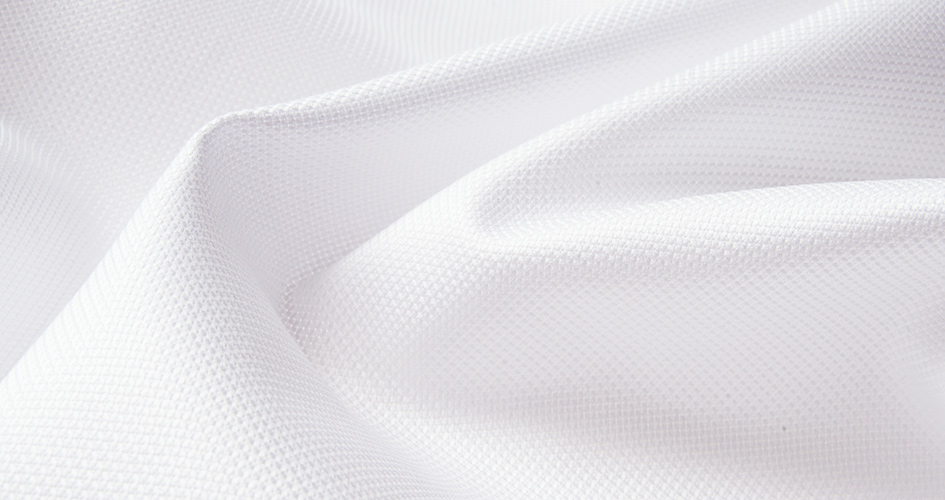
Pinpoint (also referred to as pinpoint oxford) has the same weave as oxford cloth, although it uses a finer yarn and tight weave. The pinpoint is a simple basket weave fabric although it has a bit more texture and shine than comparable broadcloth. This fabric is more formal than oxford cloth, but less formal than broadcloth. Pinpoint fabrics are generally not transparent and are slightly heavier and ticket than broadcloths. Due to their heavier construction, pinpoint are fairly durable fabrics. When a fabric is described as “Pinpoint”, it can reliably be assumed to be an 80s two-ply basket weave. Link to browse.

Plain Weave:

A common weave style in which each filling yarn alternates over and under the warp. Broadcloth is a type of plainweave with a more formal appearance and higher threadcount construction.

Plaid:

A pattern made up of colored stripes that cross each other at right angles (comparable to Tartan). Plaid originated in the Scottish Highlands as a way to differentiate clans. Plaid is different than a check pattern because the motif is larger and incorporates more colors. Link to browse.

Ply:

Ply is how many yarns are twisted together to make a single thread. Fabrics can either be two-ply or single ply. Two-ply means that two yarns are twisted together to make a single thread. This single thread is then woven into the fabric. (Note that this is not at all like two-ply toilet paper!) Two-ply fabrics are generally superior to single-ply fabrics.

Poplin:

A tightly woven fabric identified by the slight rib effect. The ribs are achieved by using a coarser yarn for the warp.

President Cutaway Collar:

Similar to the President Spread Collar but with a wider collar spread giving the shirt a more contemporary feel. The wide spread leaves plenty of room for the largest neck tie knots. More info here.

President Semi Spread Collar:

A versatile classic, perfectly suited for larger men, or men with longer necks. The spread is relatively moderate, so the collar also favors men with wider, or rounded faces. It you find the standard Semi Spread Collar a bit too small you’ll love the President Semi Spread. Its slightly taller collar band and longer collar points make for a look that’s a bit more European than Brooks Brothers. At the same time it’s in no way too large, thus totally appropriate for any office. Works well with medium and large tie knots. More info here.

President Spread Collar:

The President Spread has a slightly taller band and the collar leaf is a little longer than the traditional English Spread collar. More info here.

Royal Oxford:

Although similar in name, this fabric is hardly similar to Pinpoint Oxford or Oxford Cloth. Royal Oxford is a more formal, dressy fabric with distinctive shine and texture. The look comes from a heavy basket weave with white overtones on a different color background. Link to browse.

Sea Island Cotton:

Fine-quality long-staple cotton that is used for expensive dress goods. The cotton is silk-like and is one of the finest grades available. Sea Island Cotton is raised in Mexico and Central America. Read more about our Sea Island Cotton dress shirts here.

Side Pleats:

Located just below yoke out towards the sides of the shirt below the shoulders this puts two ½” side pleats. Side pleats can potentially help the shirt drape smoother aligning with the shape of the back. This style pleat allows greater ease of movement in the shoulders. More info here.

Sleeve Placket:

A slit that runs along the forearm to the cuff that usually features a button.

Split Yoke:

The split yoke is made from two pieces of fabric, cut diagonally to maximize the stretch and comfort across the shoulders. The diagonal cut creates a chevron design detail for shirts in a stripe or grid pattern. More info here.

Staple:

The average length of the bulk of cotton fibers.

Straight Point Collar:

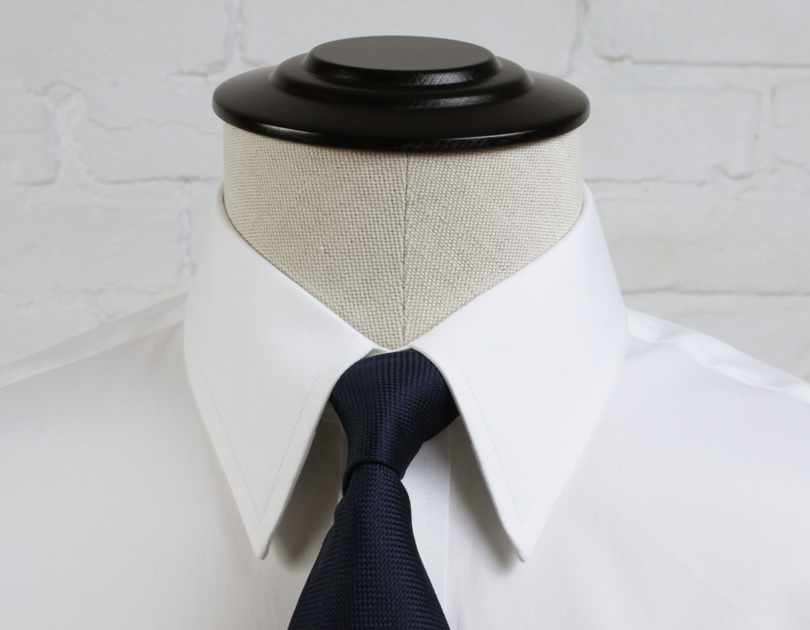
This style is one of the most universally flattering collars as it frames all face shapes nicely. The Straight Point Collar has a particularly slimming effect on guys with round faces. The longer collar points fit neatly inside a suit jacket. More info here.

Tartan:

Any textile that has different size stripes and colors crossed at right angles against a solid background. Tartan is usually associated with Scotland. Link to browse.

Thread Count:

Thread count is often referred to with a number like 50s, 80s, 100s, 120s, 140s….up to 200s. You would be excused for thinking that 80s = 80 threads per inch, but that’s incorrect (and a common misconception in the industry). Rather, these numbers refer to the yarn size. 140s means there are 140 hanks (1 hank = 840 yards) of yarn in one pound. Regardless the higher the number, the higher the thread count.

Twill:

This fabric is easily identified by the diagonal lines or textures in the fabric. Twill weave is one of our favorites and just may be the perfect dress shirt fabric. The fabric is generally slightly shiny. Twill is an extremely right wear, that can come in very high thread counts, some of which might be mistaken for silk. Twill won’t give you the same “crisp” look that freshly pressed broadcloth can, but it’s easy to iron and resistant to wrinkles. Link to browse.

Two Button Mitered Cuff:

Our two-button mitered cuff is a little more stylish than the barrel cuff, though you will not likely find it too flashy. It has an angled shape at the opening.  One button is in the center of the cuff and the other is closer to the sleeve side of the cuff. The ability to only button one button can make it easier to fit this cuff over a larger watch.  Ours is slightly longer than our one-button barrel option.

Vintage Club Collar:

The Club collar is a distinctive look with rounded collar points. This collar is also referred to as the Eton collar (old British folk) or the Golf collar (Brooks Brothers). It’s a call back to the 1920’s, where it was the uniform of all boys school Eton College in England. This is a versatile collar but not for the conservative workplace. Paired with a nice tie you can pull-off a sharp Mad Men look or go with a skinny tie for a more downtown vibe. This collar doesn’t always have to be dressy either – it’s particularly easy to pull off unbuttoned for a unique casual look.

Warp & Weft:

Warp threads run vertically and weft yarns run horizontally. A fabric will often use different types of threads in the warp vs. weft directions.

Wingtip Collar:

The Wingtip collar is a formal collar style. The front edges of the collar are folded down – resembling a pair of wings. More info here.

Yoke:

A piece of fabric located on the upper back of a dress shirt that connects the back of the garment to the shoulders. More info here.
How to Measure Your Body for Dress Shirts

Featured

If you’re ordering a custom dress shirt, one way to create your custom size is to measure your body. The following explanations and videos will show how to measure for a dress shirt and create your custom size. However, before you get started, these links may be helpful.

  1. Enter your body measurements to generate a custom shirt size.
  2. If you prefer to measure a dress shirt directly, that can also be a great way to create your first custom dress shirt size. How to measure a dress shirt.

Neck Around

Place the measuring tape around the neck at the height where the collar would normally rest. This will be just below your Adam’s apple. Stand relaxed. Do not crane your neck out or squeeze your chin down. The tape should be resting lightly on the skin, not squeezing it. Hold one finger behind the tape measure, against your neck, to ensure some room for comfort. Do not try to account for shrinkage by adding extra room here. We will do that for you. How to measure your neck for custom shirts.

Sleeve Length

Measuring your body in this way will require a partner. If you don’t have a partner, measure a shirt with sleeves that are the right length. Place one end of the measuring tape at the base of the center of the back of the neck. Run the measuring tape over your shoulder, and let it hang down to your hand. Measure to the center of the meaty part of your palm. Do not adjust for shrinkage. We will do that for you. How to measure your sleeve length for custom shirts.

Shoulder Width

This measurement will require a partner. If you don’t have a partner, measure a shirt directly. Either way, it’s helpful to refer to a shirt that fits well in the shoulders. Start the end of the tape measure on the outside edge of the shoulder where you want the yoke of the shirt to start. This is where the horizontal part of the shoulder meets the vertical part of the arm. Measure up over the curve of the shoulders and to the outside edge of the other shoulder. How to measure your shoulders for custom shirts.

Chest Around

Run the measuring tape around the fullest part of your chest, tight up under your armpits and over the shoulder blades. Let your arms hang down in a relaxed, natural pose. Do not puff out your chest or arch your back in any sort of pose that isn’t natural or sustainable. How to measure your chest for custom shirts.

Waist Around

This is slightly different from the waist measurement you use when you buy pants, so don’t assume you know this. It’s important to stand in a relaxed, normal position (unless you’re able to suck in your stomach and hold your breath all day long). Run the tape around the fullest part of the belly. This is usually around the level of the belly button. The measuring tape should be snug on the skin, but not squeezing in. How to measure your waist for custom shirts.

Shirt Length

We need to know how long you want the shirt to be. Put the first end of the measuring tape at the base of the back of your neck and measure down your back to the point where you’d want the shirt to end. This point is usually the bottom of the buttocks, although you may want to go slightly longer if you plan to always tuck the shirt in, or slightly shorter if you plan to wear the shirt untucked. How to measure your body for custom shirt back length.

Bicep Around

With your arm relaxed and hanging at your side, measure around your bicep at its fullest point. This is probably pretty close to your armpit. Make sure the tape measure is not too tight. Round up to the nearest half-inch. Don’t flex. Fine, flex. Done? Ok, now take the measurement. How to measure your bicep for custom shirts.

Wrist Around

Measure around your wrist at the wrist bone. Hold the tape measure tight to your skin, but do not squeeze your wrist. Round up to the nearest quarter inch. We will add 2 inches to this measurement when we calculate your cuff circumference. How to measure your wrist for custom shirts. 

Type of Fit

For most men, we suggest starting with our standard or “office-appropriate” Slim Fit. It will be nicely fitted to you, yet still comfortable and not too tight. However, if you prefer a particularly tight fit, dislike any excess fabric around the chest, waist and arms, and are not bothered by slight tightness or limited range of motion, consider the Super Slim Fit. Conversely, if you appreciate a generous, roomy fit that does not hug your body, then select the Classic Fit. This will be looser around the chest and arms and boxier through the stomach. Tips for choosing the right type of custom shirt fit.

Slim Fit Dress Shirts

Whether you’re particularly skinny, a star athlete, or an average person, you’ve probably noticed that when you wear a dress shirt it fits just a bit looser than you’d like. You tried tucking it in and pulling all the fabric to the back and it looked pretty good in the mirror… until it all puffed back out 5 minutes later. Time for a slim fit shirt.

What to look for in a slim fit dress shirt

Midsection: Check that the midsection is not too loose around your waist. You want there to be 4-6″ of extra fabric. This means when you pinch it off on the side, there should be 2-3″ of folded fabric. Any more and you look sloppy. Any less and you could be cutting it too close. Make sure you think about how the midsection will fit when you’re sitting down as a very slim fit may lead to pulling on the bottom button when seated.

Chest: Check that the chest width is not too loose. Again, you want to have 4-6″ of extra fabric. If it’s too tight, you’ll have limited range of motion and the fabric will constantly pull at the buttons, resulting in unwanted lines across the shirt. Too loose and you’ll have excess fabric gathering in all the wrong places.

Sleeve Width: Too many men forget the sleeves. You don’t want to go through the effort to get a slim fit in the body and leave your sleeves baggy. Getting the right fit is a little tricky, but you’ll usually know it when you feel it. Sleeves should be cut close to your arms without restricting movement (too much anyways). Guys with longer arms should take note that a very slim fit in the arm can lead to tightness when they bend their arms.

Armhole: How closely the armpit fits is a matter of personal preference, but a higher armhole will often eliminate excess fabric that bunches up around armhole. A high armhole can actually give you a greater range of motion but can feel uncomfortable to the uninitiated.

Shoulder Width: More or less, the shoulder width should not change based on the type of fit. However, it’s worth noting that a good slim fit shirt should also have a slightly narrower shoulder width. For most men, the point where the shoulder curves down to the arm is not a precise point, but a gradual curve, so there is always some range of acceptable shoulder widths for one person. On a slim fit shirt, you will want to be on the narrower end of this range such that the shoulder seam of the shirt rides slightly higher up on the shoulder. More relaxed fits might have the yoke come off the shoulder just ever so slightly.

Slim fit based on body measurements or Smart Size

If you are entering body measurements, or using the smart size survey to create your size, then the type of fit is a little different. With both of these size methods, we will have an idea of how big your body is, and the type of fit will help determine how close to your body you want the shirt to fit. The following video is a good way to get a sense of how Classic, Slim and Extra Slim Fit selections will affect your shirt size.

Tips for getting the best Proper Cloth slim fit shirt

Forearms: For Proper Cloth custom shirt sizes, you have the ability to specify one, two, or three pleats in the forearm. While it may seem obvious that the one pleat setting is the best choice for a very slim fit shirt, you do want to give it a second thought. If you go aggressively slim at the bicep/upper arm of the shirt and also specify a small cuff size, then there is a chance that the shirt will be too tight right at the elbow. Oftentimes, in this case, we will set the forearm to two or three pleats so that we can maintain a fitted sleeve at the upper arm without being too tight at the elbow.

Tailored or Very Tailored Upper Sleeve Fit: Another size option you can use to really tune a Proper Cloth shirt size is the Upper Sleeve Fit. Here we have four options, “Full,” “Tailored,” “Very Tailored,” and “Max Tailored.” What you select here will determine the shape of the pattern where the sleeves attach to the shirt’s body. If you want a really slim, tailored-looking shirt we usually suggest selecting Tailored here, though be aware that this selection will slightly limit your range of motion, meaning it will look more tailored but when you reach up or forward you will feel the shirt against your body a bit more. The same is true of our Very Tailored or Max Tailored fit, but making this selection is particularly handy if your goal is to reduce the Sleeve Width more than the Tailored fit allows. The Very Tailored Upper Sleeve Fit unlocks a greater range of dimensions for the Sleeve Width without compromising the Chest Width measurement and reduces the amount of fabric in front of and behind the shoulder for an extra streamlined look.

Wearing a slim fit shirt tucked vs untucked

Another thing to keep in mind when sizing your slim-fit dress shirt is if you plan to wear it tucked or untucked. If you plan to exclusively wear the shirt tucked in, then you can usually get away with going tighter around the midsection than you can if you plan to wear the shirt untucked. If the shirt is worn tucked in, it can essentially be cut to follow the shape of the torso closely and then into the pants. An extra slim fit worn untucked can awkwardly hug the hips or butt in an unflattering way. Thus, for untucked shirts, we usually suggest going slightly less fitted around the waist and hips.

How Much Will a Dress Shirt Shrink?

How much will a dress shirt shrink?

Generally speaking, dress shirts are made from woven cotton, and a nice woven cotton  shrinks an average of 2%.  All fabrics are a bit different, but 1-3% is a good rule of thumb. 2% may not sound like much, but keep in mind that for a collar size of 15″ that translates to 0.3″ in the collar size, and for a sleeve length of 35″, it can mean a full 0.7″!   Of course there are a number of caveats to this rule that should also be considered:

How the shirt is washed and dried makes a big difference

Some clients ask, “If I only dry clean the shirt, will it still shrink?”, and unfortunately the answer is a complicated yes.  Certainly, if you rarely wear the shirt and only occasionally have it spot-cleaned by the dry cleaner it will not shrink as much as if it is washed regularly in water.  And if you’re incredibly careful it may not shrink at all.  However, for other reasons, we don’t suggest dry cleaning as the optimal method to wash a dress shirt.  Rather we suggest sizing the shirt such that some normal amount of shrinkage is taken into account and then washing it in water and pressing it after.

Alternatively, if you wash the shirt and then dry it on high-heat in the dryer, you will see shrinkage that is much more significant and unpredictable.

If you wash a shirt according to our suggested methods, you should see more minimal and predictable shrinkage over time, without the costs and hassle of dry cleaning only.

Shrinkage happens over time, not all at once

The first time a shirt is washed it usually shrinks the most, but it can still be expected to shrink more over the life of the shirt.  We generally expect that the first washing gets most of the shrinkage out of it, the second gets a bit more, the third a tiny bit more, and so on in some logarithmic decreasing function (although we don’t necessarily have the data to support this).  The point is, it’s common for a shirt to be slightly smaller after fifty washings than it was after its first washing.

Shrinkage in length vs width

Generally speaking (though there are plenty of exceptions) dress shirt fabrics shrink more in the warp than in the weft.  Another way of saying this is that dress shirts tend to shrink more in the length than in the width.  Sleeve length, shirt length and collar around are where you can expect most shrinkage to occur, while generally speaking shirts won’t shrink as much in their width.

Typical dress shirt fabrics vs. some specialty casual fabrics

Generally speaking, high-quality dress shirt fabrics shrink in this 1-3% range.  At Proper Cloth, we test all of our dress shirt fabrics to ensure that they meet this criterion.  However, occasionally we come across a fun casual fabric that we think is just really cool and special for its look/feel that shrinks more than 3%. When these exceptional fabrics are included in our offerings, we do our best to specially account for this shrinkage.  High shrinkage fabrics can include some of our chambrays, heavy oxford cloths, and printed fabrics.

Why did my shirt become looser in the torso or sleeves?

In some cases, you may find that rather than shrinking, your shirt actually became looser around the chest, midsection and around the biceps.  This is a result of a shirt being stretched out. We’ve seen this phenomenon occur when certain, aggressive cleaners clean shirts made from fabrics with a looser weave.

To understand how this can happen, it helps to understand how most shirt cleaners wash/press a shirt. First, the shirt is washed in water.  Secondly, it is put through a spin cycle to wring most of the water out of the garment.  And finally, the shirt is put on some sort of rig or press where the remaining water is then steamed out, resulting in a wrinkle-free and dry shirt.

The problem occurs when a cleaner pulls the shirts onto the press such that the fabric is under tension in the width direction.  This tension stretches the shirt out in the width direction, and then when the shirt is steamed dry the stretch is effectively locked into the shirt.  This can result in the midsection width being 0.5-0.75″ larger than it should be.

In most cases, washing the shirt and then drying it on low-heat in a tumble-dry will return it to its original size.

With a careful cleaner you won’t have this problem.  It’s also worth noting that some fabrics are more susceptible to this sort of stretching.  While we’ve generally found broadcloths to be resistant to this effect, we’ve seen it happen quite severely in some imperial twills and even pinpoint oxfords.

Learn more about how Proper Cloth adjusts custom shirt dimensions for shrinkage.

Full vs Tailored vs Very Tailored vs Max Tailored Upper Sleeve Fit


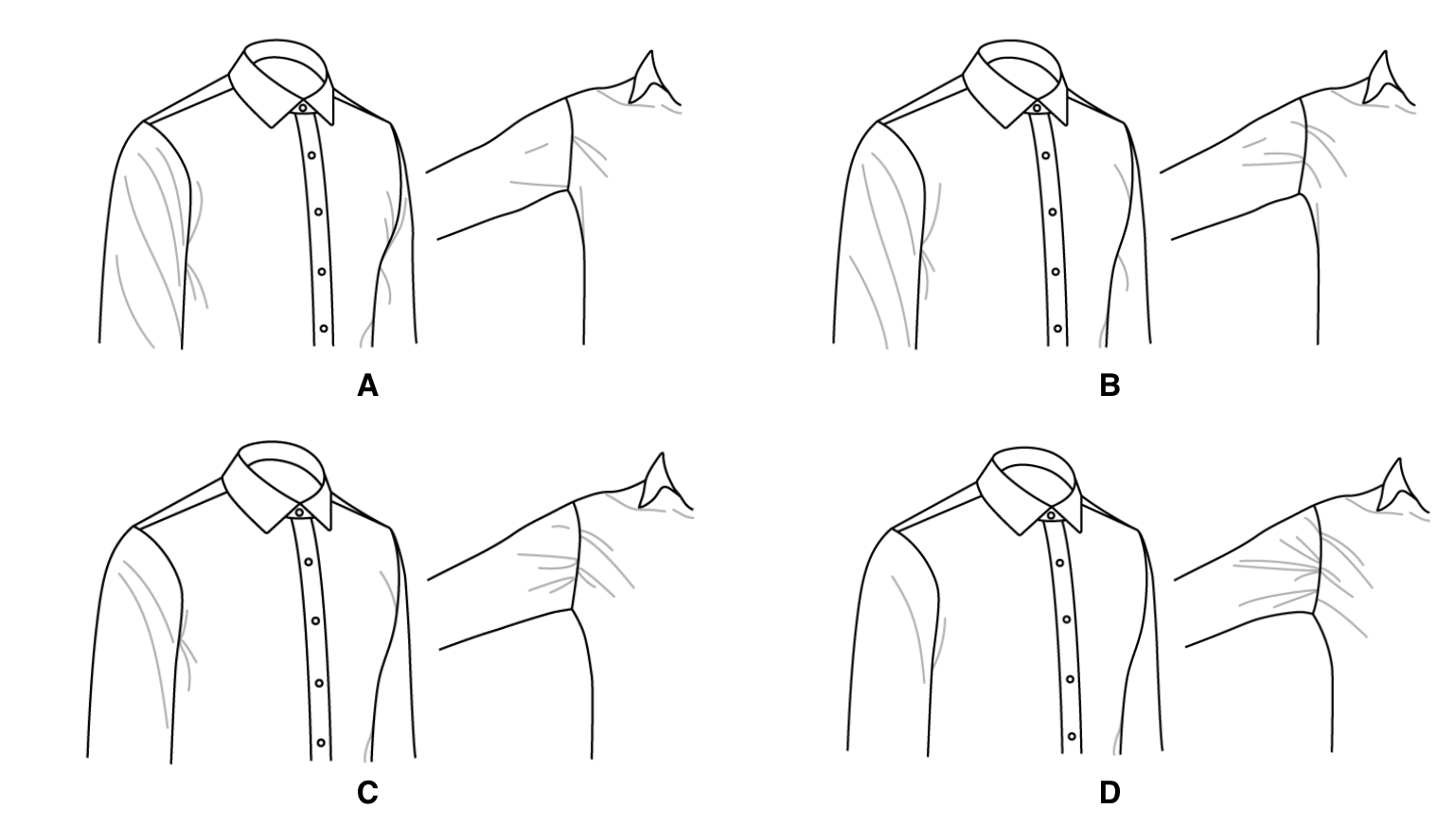
Full Upper Sleeve Fit (A), Tailored Upper Sleeve Fit (B), Very Tailored Upper Sleeve Fit (C), and Max Tailored Upper Sleeve Fit (D)

What does ‘Upper Sleeve Fit’ do?

The Upper Sleeve Fit option will adjust the shape of the top of the sleeves and the angle at which the sleeves attach to the body of the dress shirt. Based on your personal preferences for comfort and appearance of your shirt, you may find one option to suit your needs best.

In general, between the four Upper Sleeve Fit options, there are tradeoffs wherein choosing a more tailored, streamlined appearance of the upper sleeve results in less range of motion for the arms.

Full Upper Sleeve Fit

The Full Upper Sleeve Fit attaches the sleeve to the body of the shirt in roughly a “T” shape. The shape of the armhole is a round, circular shape.

The Full Upper Sleeve Fit gives you maximum range of movement at the shoulder. You can raise your arms fairly high in the air and reach forward or backward with minimal pulling or tightness in the armpit. If you’re used to looser fitting shirts, this is a great place to start.

The tradeoff of this option is that you may notice some diagonal lines running from the outside of the shoulder down to the inner part of your armpit when your arms are at rest. The rounder, circular shape of the armhole also adds a bit of extra fabric right at the front and back of the deltoid. If you’re going for an extremely tailored, clean look, these lines may be bothersome.

Choose Full if: Unrestricted movement matters more to you than a clean upper sleeve line.

Tailored Upper Sleeve Fit

The Tailored Upper Sleeve Fit attaches the sleeves to the body of the shirt at a more acute, downward-pointing angle. The shape of the armhole is little more oval-shaped than circular, resulting in slightly more room under the wearer’s armpit, about 1/8″ to be exact.

Selecting the Tailored Upper Sleeve Fit option reduces the fabric at the front and back of the shoulder and makes for a cleaner, more polished look with less lines around the shoulder and armpit. The tradeoff for reducing the lines spiraling around the bicep is that you’ll experience slightly less range of motion. Reaching above your head to grab something or putting your arms up and elbows back in a bench-press position, you will feel more restriction at the armpits.

Choose Tailored if: You want a polished upper sleeve with very comfortable, everyday range of motion. Our recommended starting point.

Very Tailored Upper Sleeve Fit

The Very Tailored Upper Sleeve Fit attaches the sleeves to the body at an even more acute downward angle. The shape of the armhole is more oval-shaped than the Tailored Upper Sleeve Fit option, resulting in an additional 3/4″ of room under the wearer’s armpit. The lowered position of the armhole also unlocks a greater range of dimensions for Sleeve Width than Full or Tailored.

For those looking to achieve a very slim bicep fit (Sleeve Width) without compromising on Chest Width, the Very Tailored Upper Sleeve Fit is your answer.

Selecting the Very Tailored Upper Sleeve Fit also reduces the amount of fabric in the front and back of the shoulder even more than with our Tailored Armpit Fit. This allows for our cleanest and most streamlined look by reducing lines around the shoulder and armpit when your arms are at rest. Again, the tradeoff is that you’ll have less range of motion when reaching up above or in front of you.

Choose Very Tailored if: A clean sleeve line and slimmer bicep are worth trading some overhead reach.

Max Tailored Upper Sleeve Fit

The Max Tailored Upper Sleeve Fit attaches the sleeves to the body at an even more acute downward angle than Very Tailored. The shape of the armhole is more oval-shaped than the Very Tailored option, resulting in an additional 3/4″ of room under the wearer’s armpit. The lowered position of the armhole also unlocks a greater range of dimensions for Sleeve Width than Full or Tailored.

For those looking to achieve a very slim bicep fit (Sleeve Width) without compromising on Chest Width, consider Max Tailored Upper Sleeve Fit.

Selecting the Max Tailored Upper Sleeve Fit also reduces the amount of fabric in the front and back of the shoulder even more than with our Very Tailored Upper Sleeve Fit. This allows for our cleanest and most streamlined look by reducing lines around the shoulder and armpit when your arms are at rest. Again, the tradeoff is that you’ll have the least range of motion when reaching up above or in front of you, even more than with Very Tailored. Fabrics with stretch, or a looser fitting torso are encouraged when choosing this option.

Choose Max Tailored if: The cleanest possible upper sleeve is your priority and you’re comfortable with restricted movement.

Lines Running from Armpits to Back of Shirt Collar

Sloping Shoulders
Signs of Lowered Shoulders

Problem description

There are noticeable lines running from the armpits up towards the back of the collar.  Generally, this will be most noticeable when the shirt is worn buttoned all the way up.  This is frequently a problem with folks who lift weights and have more developed trapezius muscles.  Others, with wider shoulders that pitch downwards at the end may also find these lines developing.

How it should fit

Ideally, the shirt should drape flatly across the upper chest without any lines pulling or puffiness.  For this aspect of the fit, you will want to consider if this is a problem only when the shirt is buttoned all the way up, and if that is how you will primarily wear the shirt.  Also, it’s common for the left and right shoulders to slope differently.  In this situation, you’ll want to find a Shoulder Slope setting that is a happy medium for the two shoulders.

Problem solution

To reduce these lines you will want to Lower the Shoulder Slope on your shirt size.  If you have no shoulder slope adjustment selected, go to Lowered Shoulders -0.2″, Lowered Shoulders -0.6″, or Lowered Shoulder -1.0″.  If you had a ‘Raised’ Shoulder Slope adjustment selected you will want to reduce that back to the “Standard” setting, or move it to a Lowered Shoulder Slope adjustment.

How the adjustment works

Changing the Shoulder Slope setting on your size changes the elevation of the shoulders relative to the elevation of the collar.  Changing the Shoulder Slope from “Standard” to Lowered Shoulders -0.2″ will lower the shoulders by 0.2″;  adjusting Shoulder Slope from Lowered Shoulders -0.2″ to Lowered Shoulders -0.6″ will lower the shoulders by 0.4″; and adjusting Shoulder Slope from Lowered Shoulders -0.6” to Lowered Shoulders -1.0” will lower the shoulder by an additional 0.4”.

Dress Shirt Front Placket Types

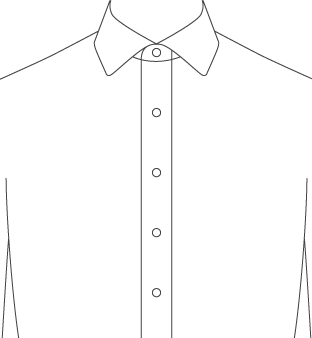
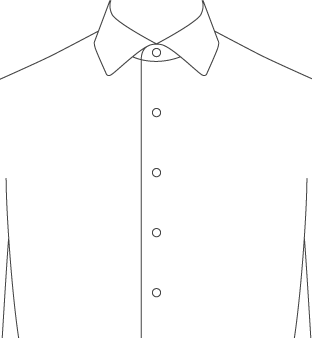
Front Placket (Fused or Soft)

A dress shirt Front placket is the most common dress shirt front style. The fabric around the buttonholes is folded back over and sewn with a fused interlining to give it that crisp, dressy appeal. You’ll rarely, if ever, go wrong with this on a business shirt.

Front Placket

[fused] Front Placket

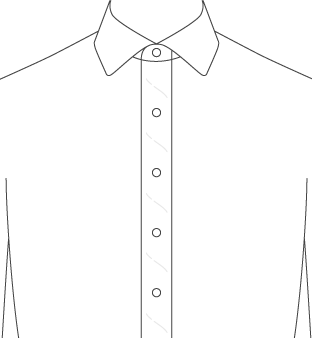
The Soft Front Placket is exactly the same in style and dimensions to the classic fused Front Placket, but with a soft, unfused interlining. It’s ideal for casual shirts and pairs nicely with a soft collar and cuffs.

Soft Front Placket

Soft Front Placket

French Front

The French Front is a popular placket style that features no fold-back placket along the buttonholes. It has a “cleaner” more “downtown” appeal to it. It can be slightly more difficult to iron than the standard front placket, but works well on both business and casual shirts.

French Front or No Placket

French Front Placket

Stand Up Front Placket

We created this updated version of our standard Front Placket specifically to provide the collar with extra support and help it stand up extremely well. The Stand Up Front Placket looks just like our standard Front Placket, but it’s constructed with a special stiff, fused interlining in the back side of the placket.

Stand Up Front Placket

Stand Up Front Placket

Stand Up French Front

An updated version of our French Front design featuring stiff fusing on both the front and back (buttonhole and button) side of the placket. The stiff fused lining provides extra support to ensure your collar stands up really well, with or without a jacket.

Stand Up French Front

Stand Up French Front

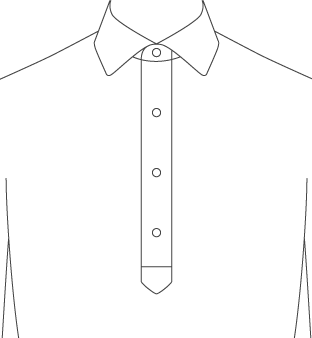
Popover Front

Part dress shirt, part polo. The Popover features a soft front placket with only three buttons below the collar, requiring you to “pop” it “over” your head. A casual design option, for sure.

Popover Front Placket

Popover Front

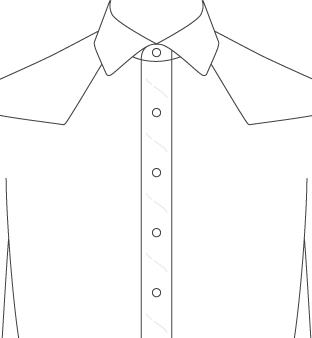
Western Front

The Western Front incorporates both the Soft Front Placket and an extended, stylized yoke detail along the shoulders. A casual design option, the Western Front will automatically set the yoke to our Western yoke style to complete the look. Western flap pockets and snap buttons are optional.

Western Placket and Shirt Front

Western Front

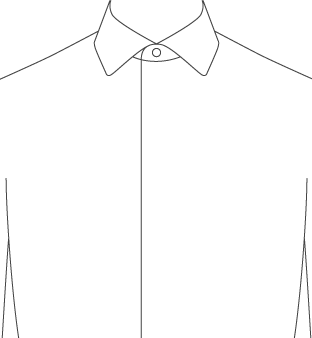
Covered Placket (Fly Front)

Commonly known as the Fly Front, the Covered Placket is a more formal style placket with an extra piece that covers up the buttons on the front of the shirt. Commonly used for tuxedo shirts, this certainly will give your shirt a very clean, dressed-up look.

Covered Placket or Fly Front

Covered Placket or Fly Front

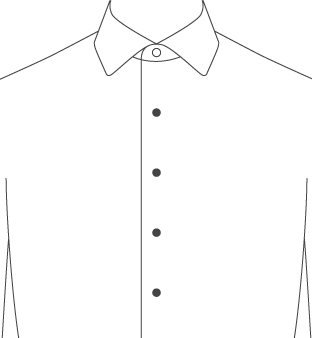
Tuxedo Front (Plain)

Similar to the French Front in look and construction, but the top four buttons below the collar are removable in order to be replaced with tuxedo studs. We suggest only going with this option when buying a tuxedo shirt.

Plain Tuxedo Front Placket

Tuxedo Front (Plain)

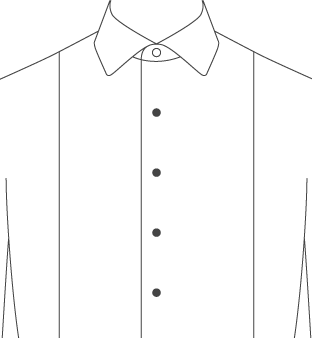
Tuxedo Front Pique (Bib)

A timeless formalwear staple featuring a textured Thomas Mason Marcella white piqué fabric sewn onto the front of the shirt. The piqué bib is 10” wide, ends just below the 5th button, and features no placket. The top four buttons below the collar are removable in order to be replaced with tuxedo studs.

Piqué Bib Front Tuxedo Shirt Style

Piqué Bib Front Tuxedo

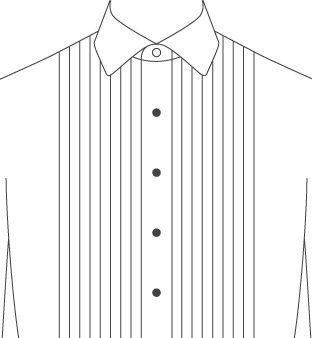
Tuxedo Front Pleated

A classic formal option featuring ten 7/16″ pleats on each side of the (fused) front placket. The pleats are made from folds in the fabric of the front of the shirt. The top four buttons below the collar are removable in order to be replaced with tuxedo studs.

Pleated Tuxedo Shirt Front

Pleated Tuxedo Front

Soft Wide Front Placket

The Soft Wide Front Placket is a traditional version of the casual Soft Front Placket. The placket measures 1/4” wider than the Soft Front Placket at 1.5″, and features the same soft, unfused construction. It’s perfect for casual shirts, particularly for those who prefer a more traditional look.

Soft Wide Front Placket

Soft Wide Front Placket

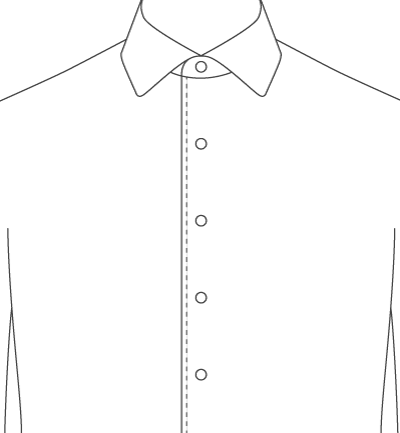
Italian Front Placket

A less structured version of the French Front placket featuring soft construction with a topstitched edge detail. Great for casual shirts.

italian front placket design
Italian Front Placket

Gingham

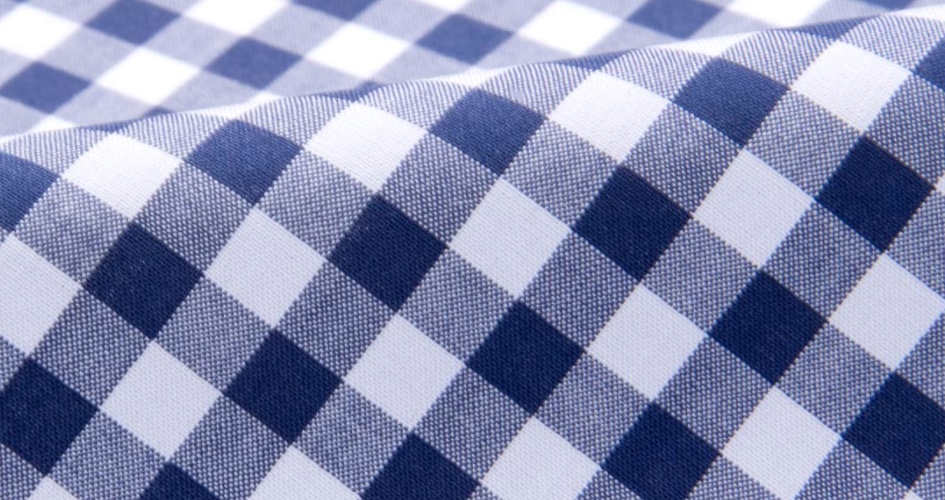
Gingham is a simple, checked fabric design where vertical and horizontal stripes of equal width intersect to make a checkerboard pattern.

Gingham can be found in both large and small-scale patterns.  Generally speaking, the larger the pattern, the more casual the shirt.  1/2″-2″ checks will be louder and feel more outgoing, making for great sporty shirts for the weekends with jeans.  Checks under 1/2″, and particularly 1/4″ or smaller can be quite business appropriate, though they will still feel more casual than traditional stripes or solid patterns.

Gingham dress shirt fabrics.

Gingham can be found in one-color patterns as well as two-color patterns.

We suggest keeping your suit and tie solid when dressing up a gingham shirt. It is a bolder shirt pattern, so keeping the rest of your look toned down will keep you from looking overly flashy.

The History of Gingham

The word “gingham” is derived from the Malay word “genggang” meaning striped. Gingham  fabric actually started off as a stripe pattern when it was first imported to Europe in the 17th century, but crazy folks making fabrics in Manchester England experimented with check versions.  Over time the word gingham evolved to be mostly associated with the check pattern.

Gingham custom shirt fabrics.

Thomas Mason Fabric Mill

Thomas Mason is widely considered one of the top Italian mills for dress shirt fabrics. Founded in England over 200 years ago by the enterprising industrialist Thomas Mason, the storied mill was purchased by Italy’s Albini Group in 1992. With production now based in Italy, Thomas Mason still maintains its English heritage by staying true to the historical and aesthetic qualities present in the brand’s extensive fabric archives. Thomas Mason fabrics are among the best in the world, and we’re proud to carry them prominently in our collection.

Thomas Mason Fabrics

History of Thomas Mason Fabric Mill

The Thomas Mason fabric mill was founded in 1796 in Leeds, England. The first fabrics were considered top quality and were widely used by West End London tailors to clothe the British aristocracy.

Through the 1800s, as Britain’s empire and wealth expanded, so did Thomas Mason’s global reach. Back in Victorian Era London, Jermyn Street and Savile Row emerged as a center for fine gentleman’s clothing. Fine bespoke suit and shirt makers such as Turnbull & Asser, Norton & Sons, and Emmett London flourished.

TM fabric books

 Fabric books in the Thomas Mason archives.

During the First World War, the Thomas Mason mill developed new fabrics and treatments, such as waterproofed cotton, that proved vastly helpful to the British cause. In the few decades after the war, aided by the solidification of Savile Row as the international epicenter of elegant gentlemen’s clothing, Thomas Mason transitioned back to producing the finest dress shirt fabrics in the British Empire. In 1936—at the height of English style icon Duke of Windsor’s roguishness—Thomas Mason became the exclusive fabric supplier for Turnbull & Asser, longtime shirt maker of English royalty.

In 1992, Italian-based Albini Group acquired Thomas Mason and moved production to Bergamo, Italy where it remains today. The fabrics continue to be inspired by the brand’s long history while benefitting from the Italians’ equally long and proud heritage of manufacturing the highest quality textiles in the world.

Thomas Mason Goldline shirts

Thomas Mason Goldline shirts

Thomas Mason Wrinkle-Resistant & Non-Iron Shirts

In 2013 Proper Cloth became the first to offer Thomas Mason fabrics with a wrinkle-resistant treatment. Our vision was to bring luxury to the easy-care shirting realm, and Thomas Mason was, in our minds, the obvious choice. Working closely with both the mill and our production team, we chose seven premium Goldline fabrics to start and applied our proprietary wrinkle-resistant solution to produce the finest shirts possible.

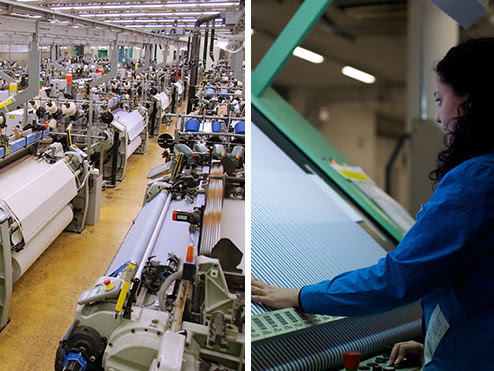
Thomas Mason mill

The Thomas Mason mill in Italy

After the success of our wrinkle-resistant shirts, we set our sights on non-iron and became the first and only shirt maker to offer non-iron Thomas Mason fabrics in 2018. We developed our own non-iron formula, focusing not only on the strength and ability of the treatment to prevent fabrics from wrinkling during wear but on maintaining the beautiful Egyptian cotton feel of the fabrics as well. Learn more about our wrinkle-resistant and non-iron fabrics here.

Browse our selection of Thomas Mason fabrics here.

Oxford Cloth

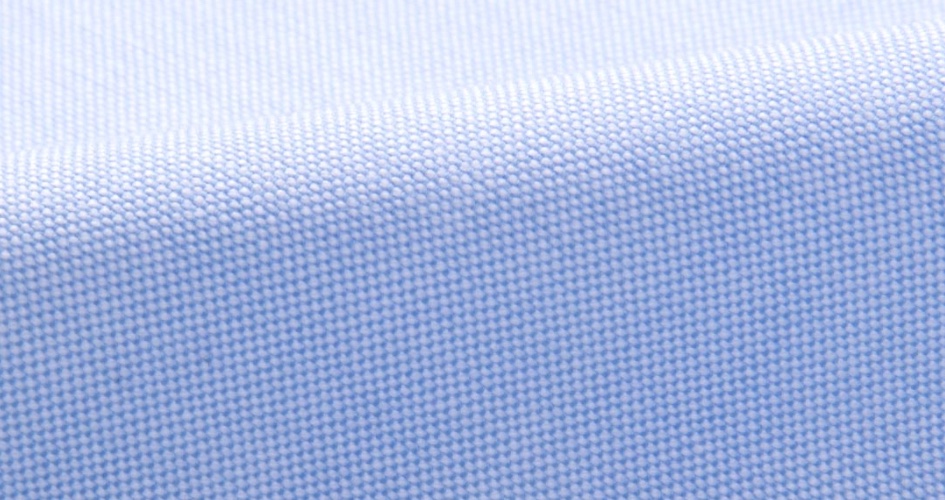
Close up weave of a oxford cloth.

Oxford cloth is a very popular shirting fabric, particularly for more casual or sporty styles of dress shirts.  It’s a bit thicker than what we’d consider “fine” dress shirt fabrics, and has a hearty feel that is both durable and naturally resistant to wrinkles.  Oxford cloths can be found in a variety of qualities.

  • 40/1×24/2: This is the classic heavier weight oxford cloth. These are generally much thicker than the average shirt fabric. Make for really great casual shirts. They are very durable and can be washed/dried with your socks and t-shirts and worn a bit wrinkly. A good one will be quite soft to the touch and get better with age.
  • 80s two-ply: This is the classic pinpoint oxford cloth. It’s a nice quality oxford cloth weave with a dense enough texture that works well for conservative business settings. Thicker than broadcloth and relatively opaque, this is the classic Brooks Brothers style shirt.
  • 75/2×38/3: This construction comes from Thomas Mason and is what we like to call a “premium oxford”.  It has a similar thickness and heartiness to the basic heavy oxford, but it is simultaneously a bit smoother and more refined.  The result is a shirt that looks great a bit rumpled casually, but can also be ironed up sharp for a slick, suited look.
  • 50s single-ply: A crisp but lighter weight oxford. Can usually be found in interesting patterns or colors. In appropriate patterns these can make for great business shirts or relatively sharp casual shirts.

Overall, a nice casual oxford cloth shirt is a wardrobe essential for its durability and versatility. Pair it with a button down collar for the low-maintenance OCBD.

Oxford cloth custom shirt fabrics.

How to Measure a Shirt: Collar Around

How to Measure a Shirt: Collar Around

Unbutton the shirt and spread it out on its back. Place one end of the measuring tape at the center of the button where the button stitching comes through to the inside of the collar band. Pull the collar tight so that any curve to the collar band becomes straight.   Measure straight across the collar band to the far edge of the button hole. Round to the nearest ¼ inch.

Do not add extra to account for shrinkage. We will do that for you.*

*Standard Shrinkage Allowance:

Proper Cloth adds 0.4” to the Collar Around dimension to account for shrinkage/match industry standards.

Tolerance:
While we do our best to sew each garment precisely to its specification every time, hand sewing and different fabric types naturally result in small variations. We consider a tolerance of +0.3” to -0.3” acceptable for the Collar Around dimension.

Dress Shirt Buttons: Plastic vs. Mother of Pearl

Australian MOP butons

Plastic Buttons

Our Roma Plastic buttons are the default option for most custom shirts and for good reason– they’re specially developed to withstand chipping and exposure to high heat. While they may not have the natural irregularities that make Mother of Pearl buttons so special, our Roma buttons do feature a unique, mottled finish and off-white hue to provide a similarly appealing, versatile look.

Mother of Pearl Buttons

Mother of Pearl buttons are a classic detail favored by high-quality shirt makers. Made from the inner layer of pearl oysters (also called nacre), they have a little more depth of color than plastic resin buttons do. These buttons can have a tendency to crack, but usually only do this with particularly brutal dry cleaners. They do not dissolve after repeated washes like resin plastic buttons can.

Other things to consider

Orders including shirts with Mother of Pearl buttons (Mother of Pearl, Australian MOP, or Smoke MOP) must undergo special Fish and Wildlife inspections that can cause shipping delays. To be safe, we automatically adjust the estimated turnaround times for the affected items, reflected in your shopping bag and order receipt email.

Replacement Mother of Pearl and plastic resin button sets.

Made to Measure Dress Shirts

This article will try to help you really understand the term “Made to Measure,” also referred to as “MTM” or “M2M.” We’re not discussing suits. We’re focusing on shirts and we’re focusing on how made to measure applies to fit.

The term “made to measure” can be confusing because in practice it is used to describe very different custom fit systems which produce wide ranges in fit quality.

According to Wikipedia, made to measure garments will be “inferior to that of a bespoke or ‘custom made’ garment, because made-to-measure garments always involve some form of standardization in the patterning and manufacturing processes, whereas a bespoke garment is truly unique.”

This is generally true. The main thing to understand is that different made to measure systems involve different degrees of “standardization in the patterning”.

made to measure formal shirt

On the one extreme of made to measure, a shirt provider will simply measure a customers neck circumference and sleeve length. Additionally, they may ask the customer if they prefer a “Slim” or “Traditional” fit. The shirt’s dimensions will be based entirely on these three pieces of information. For most people this results in a poor fit because every dimension of the shirt other than sleeve length is based on neck circumference. For a 16″ neck circumference, all shirts have the same chest, yoke, mid-section, arm width, cuff circumference and back length measurements. Skinny guys will find that the slim fit is not as “slim” as they really want. If you have a 16-17 inch neck and a 32-33 inch waist, the shirt is still going to fit you like a bag (even if you request “slim-fit”). Alternatively, if you have a 17 inch neck but are in the 5’6″-5’9″ height range, the shirt will be too long.

Another small detail that a lot of people overlook is the cuff circumference. With these systems, the cuffs are almost guaranteed to be too big. This means the sleeve will slide down too far on your hand and look sloppy. On the Brooks Brothers website you can purchase shirts this way (starting at $127.50!). Also, several department stores will take your neck and sleeve measurement and order you a custom fit shirt using this system. They’ll also play up the “custom” story and require you to purchase 3-5 shirts minimum at $150+ per shirt.  On the other extreme is made to measure systems like the one Proper Cloth uses. We’re proud to employ one of the most advanced made to measure sizing systems in the industry.

A more robust made to measure program will take a much more detailed approach to creating a custom size, which involves more measurements than the more basic system we previously described in order to get a more personalized fit. We start by taking 9 different measurements:

  • Collar Around
  • Sleeve Length
  • Yoke Width
  • Chest Width
  • Midsection Width
  • Back Length
  • Sleeve Width
  • Cuff Around
  • Bottom Width

From these measurements, we have the option to tweak all of these fit points by as little as 1/10” in order to zero-in on the best fit possible. In addition, we employ various other fit improvements such as raised or lowered shoulder slope adjustments; chest posture adjustments; tailored, very tailored, max tailored or full upper sleeve fit; neck posture adjustments; and watch allowances to personalize a customer’s fit even further. Basically, what all this means is that we’re set up to really understand how your body is shaped and flexible enough to create a shirt that fits you properly.

Furthermore, as a technology company, your shirt’s pattern is created in an accurate, precise, and repeatable fashion. We also provide great transparency into how we size your shirt. For most people this is more information than necessary, but if you’re really particular about how your clothes fit, you won’t find a better solution.

man wearing dress shirt and jacket

Royal Oxford Fabric

White Royal Oxford

Royal Oxford is a beautiful, flashy dress shirt fabric. It has an elaborate weave that gives it a distinctive, significant texture. It’s usually very shiny. Royal Oxford fabric is well known for its softness. Something about the weave makes the yarns puff out a bit and it just feels cushy and nice.

Don’t confuse Royal Oxford cloth with regular oxford cloth, or pinpoint oxford cloth. They are totally different. Regular oxford cloth is a much heavier, rougher, and casual-looking fabric. Pinpoint is the most versatile of the ‘oxford’ family: great for everyday business and formal looks as well. However, Royal Oxford, particularly in white is best suited for your most formal of occasions, either with a suit or tuxedo.

Because Royal Oxford fabric is such a fancy looking fabric, we especially recommend it for french cuff dress shirts. Pair a nice fitted royal oxford dress shirt with a dark navy suit and you’ll feel extra sharp.