President Button Down vs Soft Ivy vs Colorado BD

button-downs

Differences between the President, Soft Ivy, and Colorado Button Down Collars

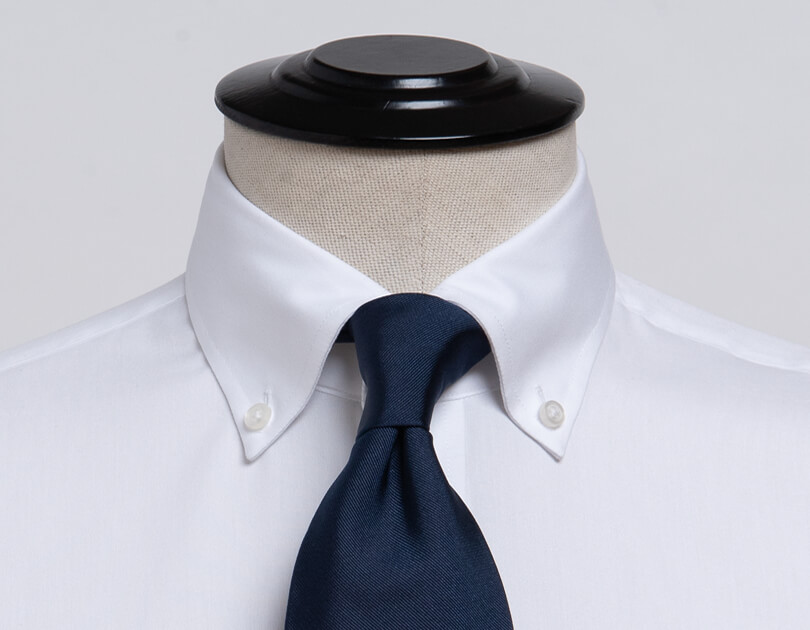
The Soft Ivy Button Down and President Button Down are taller button down collar styles. They both have some “roll” to them, that trademark bowing of the collar point. The President Button Down, however, is fused and features just a bit of roll for a sharp, professional appearance. The Soft Ivy, on the other hand, features a lot of roll and a soft, unfused construction for a decidedly more casual look.

The Colorado Button Down also features a soft, unfused construction for a relaxed appearance. The Colorado is perfect for casual wear, as it’s smaller in size the President and Soft, and features a button on the back to hold it firmly in place.

Point Collar vs Semi Spread Collar

Semi Spread vs Point Collar

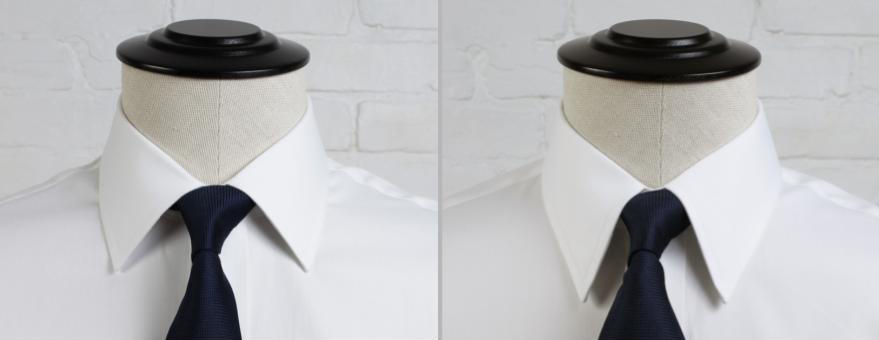
Semi Spread Collar (above left) vs Point Collar (above right)

These are both traditional dress shirt options, with the biggest difference being the difference in collar spread. The Semi Spread Collar has points that finish 4″ apart from each other, whereas the Point Collar has its collar points finishing 3″ apart. These two collars have the same collar band height, same collar point length, and are both made using a stiff, fused interlining.

We tend to push most guys that are choosing between these two collars to go for the Semi Spread. We find its a more versatile collar that looks better with more tie widths. If you’re a tried-and-true point collar wearer, then stick to your guns.

Advanced Tips for Perfect Dress Shirt Fit

Perfect Fit Dress Shirt

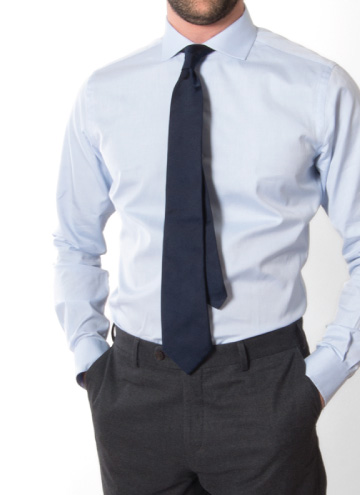
Your first custom dress shirt is likely to be the best fitting shirt you’ve ever owned. If it’s the right fit in the collar, the sleeves are the right length, and the body isn’t too baggy around the waist you’re probably already feeling pretty good.

But that doesn’t mean you can’t still make some small adjustments to improve your fit just a little further. These are our advanced tips for perfect dress shirt fit. Three things that our fit experts consistently look for to help clients go from a great fitting shirt to a perfect fitting shirt.

1. Make sure the cuffs aren’t too loose

More often than not, the cuffs are looser than they need to be. A perfect fitting shirt will have the cuffs fit as tight as possible without being uncomfortable. We cringe when a guy tries to push his hands through his shirt cuffs without unbuttoning them. Those buttons are not just decorative! The reason we like the cuffs to fit so tight is that it prevents the cuffs from coming too far down your hand when your arms are at your side (which makes your sleeves look too long). A perfect fitting shirt cuff will always come to the right point of your hand without being uncomfortable. A 1/4″ or 1/2″ adjustment here can make a big difference.  Find out more about how a dress shirt cuff should fit here.

2. Make sure the shoulders aren’t too wide

Another common mistake we see is the shoulders being too wide. Depending on the shape of your shoulders, measuring shoulder width can be tricky, so it’s a common mistake. However, once you have your first shirt and can see how it fits, it becomes easier to tell if the shoulders are the right width or not.  Stand in front of a mirror, looking straight forward with your arms at your sides. If the yoke of the shirt is coming down past where the shoulder curves down to the arm it is too wide. Narrowing the shoulder width will make for a more tailored look and can also help improve alignment of the shirt around the armholes and tops of the sleeve. Find out more about how the shoulder width should fit here.

3. Fine tune the shoulder slope

Shoulder slope is another “advanced” fit option that is tough to get right on the first try. Fine tuning the shoulder slope can help make the shirt drape smoother across the upper chest. Finding the optimal shoulder slope will hinge upon whether the shirt is buttoned at the collar or open collar, so be sure to evaluate this as you primarily plan to wear the shirt. Generally speaking, if you’re wearing the shirt buttoned up with a tie you might want to specify greater shoulder slope than a shirt you plan to wear open collar. With your arms at your side, check for pull-lines running from the shirt armpits to the back of the collar, or from the buttons out to the ends of the shoulder. Each shoulder slope adjustment will raise or lower the armhole and shoulder to better align the shoulder of the shirt with the shoulder position of the body. A little bit goes along way with this adjustment.  Find out more about how to select the perfect shoulder slope here.

Fabric Thickness and Weight

Overview

When choosing a dress shirt fabric, you may want to consider how the thickness and construction of the fabric will play a role in how warm it is, how easily it wrinkles, and whether it’s sheer or opaque.

Proper Cloth Thickness and Weight Measurement

We measure the thickness of each of our fabrics to the nearest thousandth of an inch to provide an objective measurement of the fabric weight. Dress shirt fabrics generally range from 0.006″ thick (incredibly light) to 0.015″ thick (very heavy).

In our Fabric gallery we offer the ability to filter by fabric thickness. The following are the categorizations we give fabrics of each thickness measurement:

Very Lightweight: 0.006″-0.007″

Lightweight: 0.008″

Medium Weight: 0.009″

Medium Heavyweight: 0.010″-0.011″

Heavyweight: 0.012″-0.014″

Very Heavyweight: 0.015″

Although, as a general rule, you can assume that fabric thickness and weight correspond to fabric weave type, there are some exceptions due to the specific threads used in each fabric. Below we’ve laid out more guidelines along with specific examples of each fabric type from our own inventory.

Very Lightweight Fabrics

These fabrics are some of the lightest on the market. They tend to be breathable and great for warm weather, and they also have a tendency to wrinkle more than heavier fabrics. They may also be more see-through, though the darker the color the less likely this is. Generally speaking, broadcloths, linens, and cotton and linen blends fall into this category, though we carry many other fabrics that are categorized as very lightweight:

Lightweight Fabrics

These fabrics are light with a bit more body to them. They tend to be good for year-round wear, and may wrinkle a bit, though we offer several wrinkle-resistant and non-iron options to counteract that. These fabrics drape well and are great for business wear. Lighter twills make up the majority of this category, along with several other weave types and some lighter casual fabrics:

Medium Weight Fabrics

This category includes year-round fabrics, including many more casual weaves. They tend to hold up against wrinkling fairly well on their own. You should not have any issue with opacity with these fabrics, although whites will still show through somewhat. Non-iron fabrics, chambrays, light flannels, and wrinkle-resistant twills make up the majority of this category:

Medium Heavyweight Fabrics

These fabrics are most suitable for cool weather and casual wear. They are naturally wrinkle-resistant and quite warm. Many of these fabrics also have a pronounced weave. In this category, imperial twills and royal oxfords are great for formal wear, while chambrays and flannels are solid casual options:

Heavyweight Fabrics

These are some of the heaviest fabrics, and tend to fall on the more casual side. They tend to hold in heat well and are very durable. The majority of this category consists of thick flannels, corduroys, and heavy oxfords:

Very Heavyweight Fabrics

Shirting fabrics don’t get much heavier than this. These are decidedly cold-weather fabrics that tend to have more visible texture. This category includes heavy oxfords, denim, and flannels:

Chambray vs Denim

Denim Dress Shirt Fabric

Overview

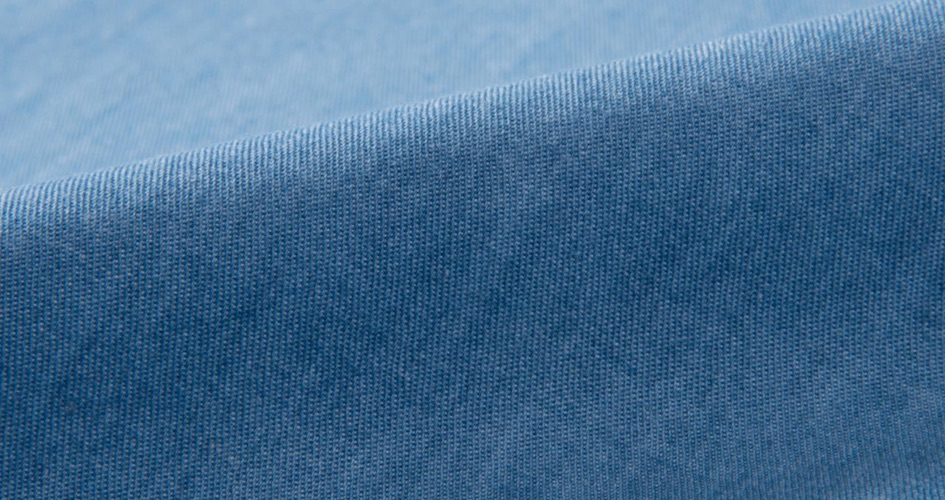
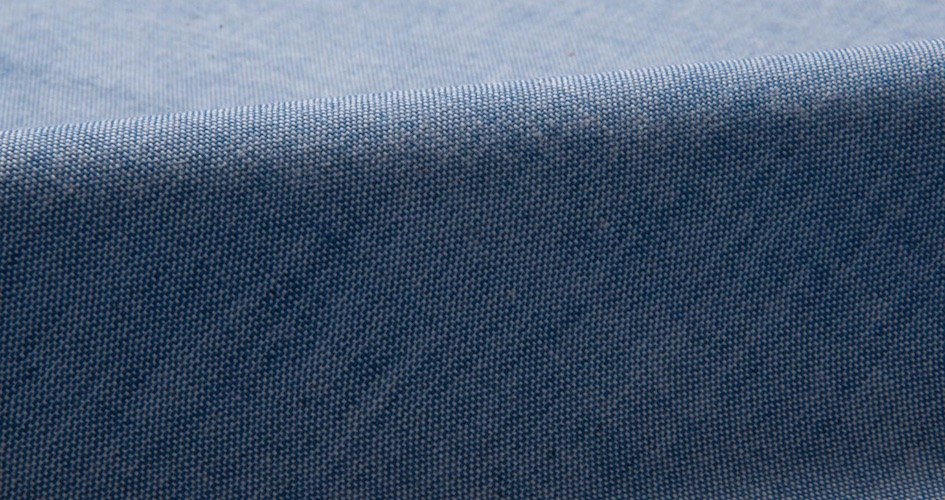
While chambray (below) and denim (above) are often confused for one another, they’re not exactly the same fabric. A chambray is a plain weave fabric woven with a colored yarn in the warp and a white yarn in the weft. Like chambray, denim is made with a colored yarn in the warp and white in the weft, but is woven in a twill construction. The chambray’s warp and weft threads will alternate one over the other, while denim’s warp thread will go over two threads in the weft before going under one. Typically, you will notice a lighter color to the underside of a denim fabric, whereas the underside of chambray will appear much more similar to its face side. Check out more Proper Cloth chambray and denim fabrics here.

Chambray Dress Shirt Fabric

Obviously, the denim that we are all most familiar with is the kind used to make jeans or 90’s style denim jackets. This denim is generally very heavy, and in most cases would not make for a comfortable shirt.

Chambray and denim can be found in both heavy and light weight styles. The heavier versions will seem more casual and be more durable and rugged. Higher thread count versions of denim will be thinner and light weight and seem more “dressed up” than lower thread count versions. Lighter weight chambray can have either a dressy or casual appeal. Some will be woven with a tighter weave and have a nice shine and dress up nicely, while others will have a very noticeable fabric slub and a looser, gauzier weave that is better suited for casual shirting.

Washed Denim and Chambray Shirts

In some cases, a shirt will be sewn from an indigo dyed denim or chambray fabric that has not been finished. This “raw” fabric will not yet be completely colorfast. After the shirt is completely sewn together it is washed using a special garment washing process that causes slight fading at the seams and makes the color colorfast. This process has never before been feasible for custom made dress shirts, however Proper Cloth is the producer of the first ever custom fit washed denim shirts.

Custom Garment Washed Denim Dress Shirt (Limited Edition)

Custom Garment Washed Denim Dress Shirt (Limited Edition)

Button Down Collars

Soft Ivy Button-Down Collar

Soft Ivy Button-Down Collar

History

Invented by Brooks Brothers in 1896, the button-down collar features buttons that fasten the collar points of the shirt. It was originally used on sport shirts rather than dress shirts. While button-down collars are occasionally dressed up with suit and tie looks, it still remains a more casual option than spread or point collar shirts.

President Button Down

Styles

There are a range of button-down styles around, each having its own appeal. For those who want something a little more business oriented, the President Button Down collar, made with a fused construction, is very popular these days as it’ll stay the most crisp.

But many want something with a bit more expression and “roll” to the collar, like the button-down collars of Mercer & Sons and Brooks Brothers of yesteryear. These are made using a soft, unfused construction. Our Soft Ivy Button Down collar is designed for this crowd, seeking a comfortable-wearing, classic collar roll.

Along with the classic Soft Ivy-inspired button-down styles, smaller unfused button-downs have become really popular as of late. They work really well on heavier oxford cloths and flannel twills, and are best worn without a jacket. Our Colorado Button Down, pictured below is an example of this modern, casual collar style.

Colorado BD

Colorado Button Down

Soft Collars

soft roma cutaway collar image

Soft Roma Cutaway Collar

While crisp, fused collars have dominated the landscape over the last 70 or so years, all collars used to be made using unfused construction before the 1950s. Some of the best shirtmakers in the world have continued making unfused collars, with many British artisans making a heavier option while the Italians (Finamore, Borrelli, G. Inglese) have perfected the “soft collars” we have come to know and love today.

These lighter soft collars come in many shapes and size. Proper Cloth offers them in multiple spread and cutaway collar styles as well as button-down designs. The pliable interlining used in these collars gives them a bit more flexibility when you wear them. This leads to a great expression in the collar that you can’t get as easily from a fused collar.

Since the shirting fabric isn’t fused to the interlining, this also leads to some natural wrinkling across the collar. While this may bother some, we embrace it as the more relaxed style the soft collar is built for. If you’re a first-year analyst at a bank, you might want to steer clear. But if you have more flexibility in your day-to-day dress and want to nail that sprezzy look, than this is the style for you.

Dobby Dress Shirt Fabrics

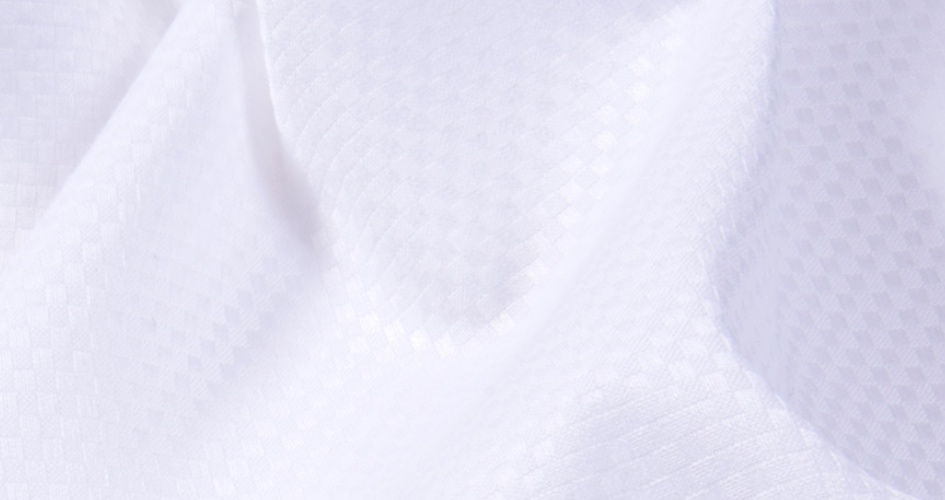
Dobby fabrics can come in a variety of styles and are often mistaken with “Jacquard” fabrics, though there are some subtle differences between the two. You can find very thin dobby fabrics that you might mistake with a broadcloth and you can find dobby fabrics with very thick textures that appear more similar to twills. Many dobby fabrics will have colored threads woven into stripes and grids. The solid colors tend to have tonal patterns woven into them, like a white-on-white grid.

Light pink dobby fabric.

Dobby fabrics tend to fall on the business side of the spectrum and we’ve found that they can be a good choice for guys that want something that is naturally resistant to wrinkling. They can often be slightly shinier than many other fabrics, as well. White-on-white dobby fabrics in particular are an excellent choice for formal shirting to pair with a tuxedo.

Dobby and jacquard custom shirt fabrics.

Flannel Shirt Fabrics

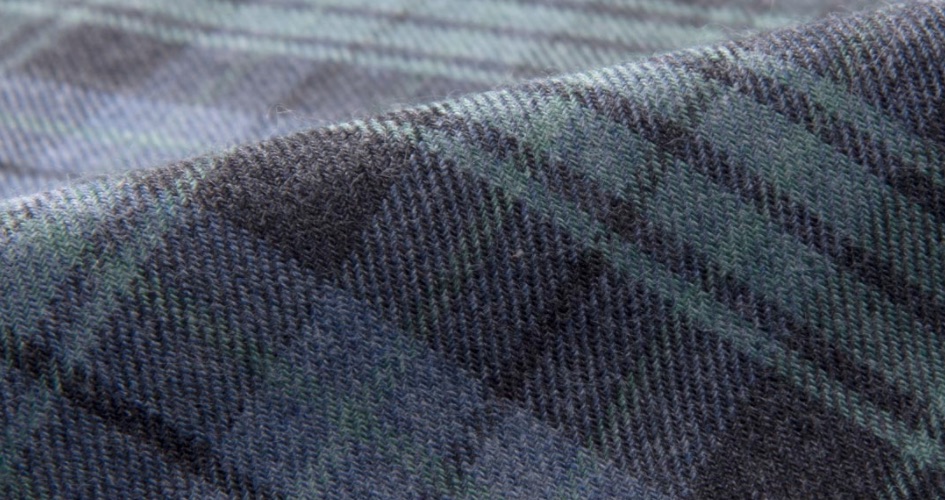
A flannel shirt fabric is a particularly soft woven fabric that has undergone a special brushing treatment to get a fuzzy texture. Some flannels are brushed on only one side, while others are brushed on both sides. Many might be familiar with wool suiting flannels, but the majority of shirting flannels tend to be made with cotton.

Flannel dress shirt fabric satoyama.

Flannel fabrics are popular for casual wear in the colder months. Flannels will come in a variety of patterns, but most commonly either solids or plaids.

Flannel custom shirt fabrics.

Mini Grid Shirt Fabrics

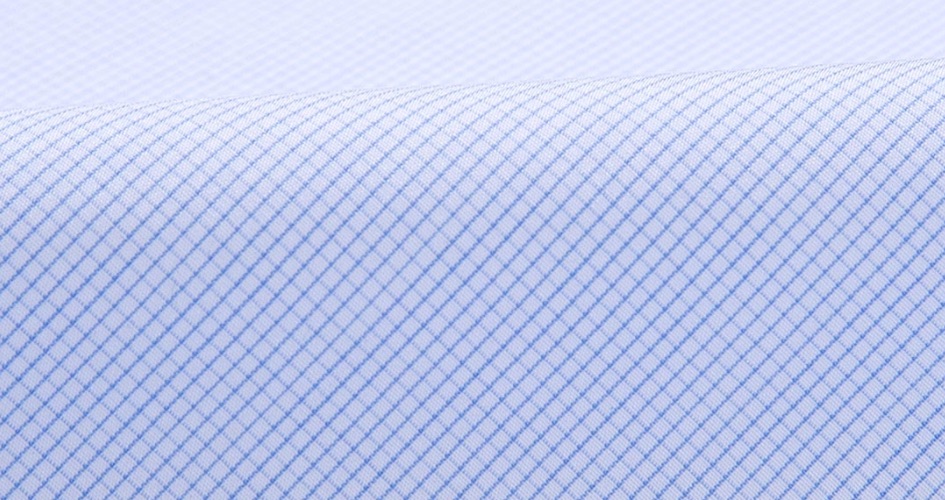
The mini grid is a popular dress shirt pattern featuring thin vertical and horizontal stripes that create a gridded pattern throughout the shirt. From a distance the shirt most often looks like a solid color, but as you get closer up the pattern will become more apparent.

Mini grid dress shirt fabric.

The mini grid is a really popular option for business shirts as they add pattern to a look without appearing overly aggressive. You can generally wear a solid, striped, or patterned tie or suit with mini-grids. Just make sure any sort of pattern is medium-to-large in size, as smaller pattern can look a little busy with a mini grid shirt.

Mini grid custom shirt fabrics.

Tartan Shirt Fabrics

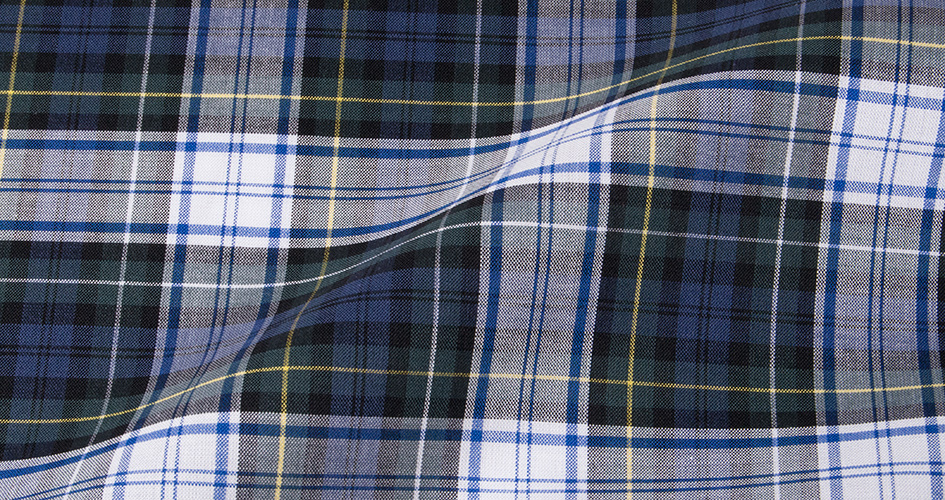
While tartans originated as wool fabrics, they have become popular fabrics for sport shirts over the years–especially for fall and winter. Tartans are particular styles of plaids associated with Scottish clans. Some of the most popular styles are Black Watch, Royal Stewart, Gordon Dress, and Wallace.

Tartan plaid Scottish dress shirt fabric.

Tartans can be made in a variety of weaves including broadcloth, twill (especially flannel twill), and oxford. We typically suggest sticking to a solid tie and/or suit with a tartan–additional pattern can make your look seem overly busy.

Tartan and casual plain custom shirt fabrics.

Tattersall

Tattersall is a pattern featuring alternating grids that are interwoven into the cloth. They most often have one grid that is a darker color and one grid in a lighter color. Tattersall came into popularity in London around the 1770s and has been popular over the last few decades for its sporty look. We find that tattersalls can be a great option for guys who want to add subtle patterns to their business shirt collection.

Tattersall fabric

Tattersalls can be paired with most solid, striped, or patterned suits and ties. Consider going for medium-to-large scale patterns, though, as small patterns don’t look best when paired with a tattersall shirt.

Tattersall custom shirt fabrics.

University Stripe Fabrics

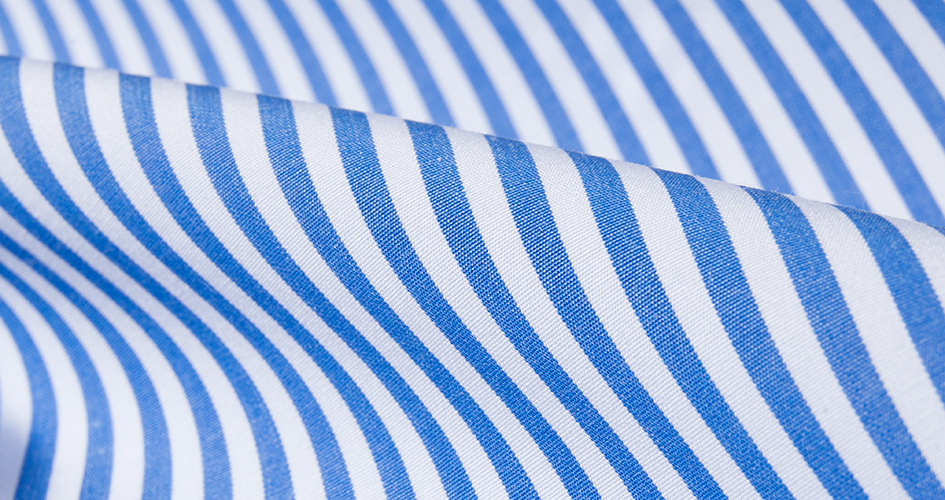
A University Stripe is a very popular style of dress shirt fabric featuring alternating even stripes slightly under 1/8″ in width. This is a timeless style that can easily be worn with a suit and tie in business settings. These stripes are almost always color and white, but occasionally you might see a color and color University Stripe.

University Stripe

You can pair University Stripes with a solid, striped, or patterned suit and tie. If you’re wearing a striped suit or tie with a University Striped shirt, go for something with a larger stripe–two smaller stripes together can be a bit too busy.

Bengal Stripe Fabrics

A bengal stripe is a particular type of wider-striped dress shirt fabric, most often featuring an even 1/4″ alternating stripe. It can either be a color and white or color and color stripe and sits on the bolder end of the stripe spectrum.

Bengal Stripe

Though not as wide, or as bold, as an awning stripe, the bengal stipe is probably the widest you’d want to consider for business wear. It has a distinct Wall Street vibe and is often paired with a contrast collar.

Bengal stripes tend to look best when paired with a solid or patterned suit and tie. While you can wear a striped tie, you’ll want to pick something with a large stripe or else it might be visually distracting.

Bengal stripe custom shirt fabrics.

Dress Shirt is Too Tight at the Stomach

Problem description

The dress shirt is too tight at the stomach, causing it to pull uncomfortably or simply look unflattering. This could be a problem at all times or primarily when sitting.

Solution

The answer to this problem is fairly straightforward: increase the midsection width of the shirt.  This will provide more fabric around the belly, reducing any uncomfortable tightness there as well as allowing the shirt to drape more flatteringly around the midsection.

How the adjustment works

Increasing the midsection width by 1/2″ increases the midsection circumference by 1″.  If you have “default bottom width” selected, the system will typically increase the bottom of the shirt proportionately, but you should take care to consider this adjustment as well.

The Popover: History, Style, and Sizing Tips

History

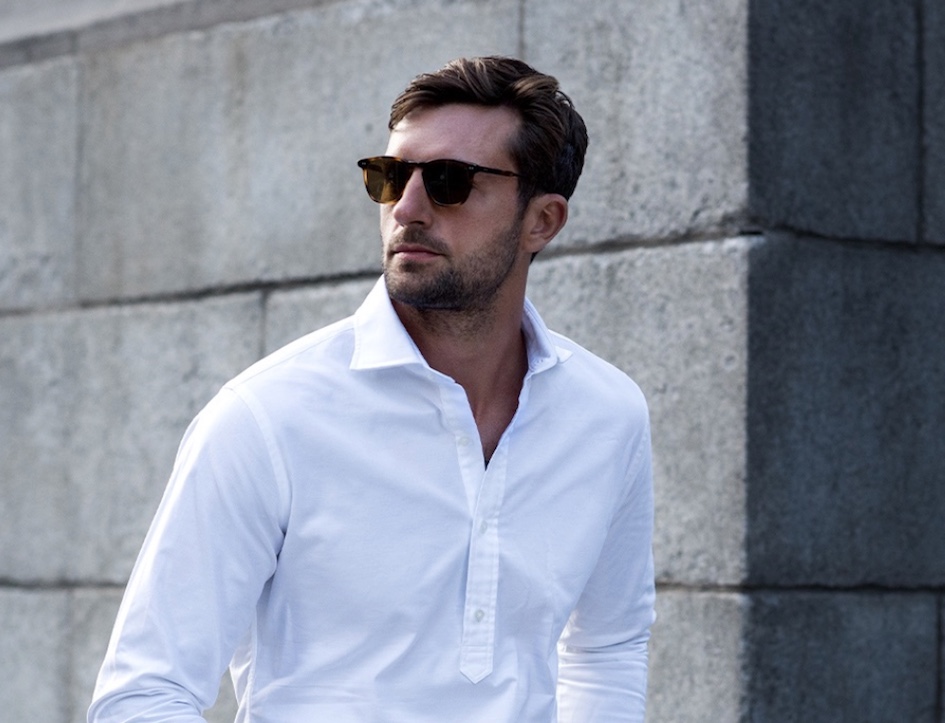
Flash back to the 1960s, the New Haven-based brand Gant took the standard sport shirt and made some interesting tweaks. Ending the placket at the bottom of the chest was a bold move and ended up becoming the popover we know and love today (deriving its name from “popping” it on over your head).

Style

The popover is decidedly a casual style, but one that is versatile enough to pair with an unstructured sport coat. Similar to the soft front placket, but with only 4 buttons at the top. This style cannot be unbuttoned fully, so be sure it’s not too tight to put on or take off!

Widen the Chest and Midsection

To ensure that your popover shirt will be reasonably easy enough to put on or take off, we suggest making a few adjustments to your shirt size. Since the shirt goes on over your head, you’ll need some increased ease in the chest and midsection. Adding 0.5” to the chest width and the midsection width will make the overhead experience much easier. Those who favor the Tailored, or particularly the Very Tailored, or Max Tailored Upper Sleeve fit and a trimmer bicep (sleeve width) may also want to opt for the Full Upper Sleeve fit when creating a popover size.

Shorten the Shirt Length for an Untucked Fit

Last, like any casual shirt, you’ll want to widen the midsection and shorten the shirt length relative to your tucked-in dress shirt size. If you already have a casual, untucked shirt size you may not need to make any adjustments at all.

For an untucked shirt fit, we recommend shortening the shirt length 1.0” to 2.5”. Remember, you’ll have to fit this shirt over your head without unbuttoning the bottom half of the shirt, so extra space in the torso is necessary.

Dress Shirt Back Pleat Options

No Back Pleats

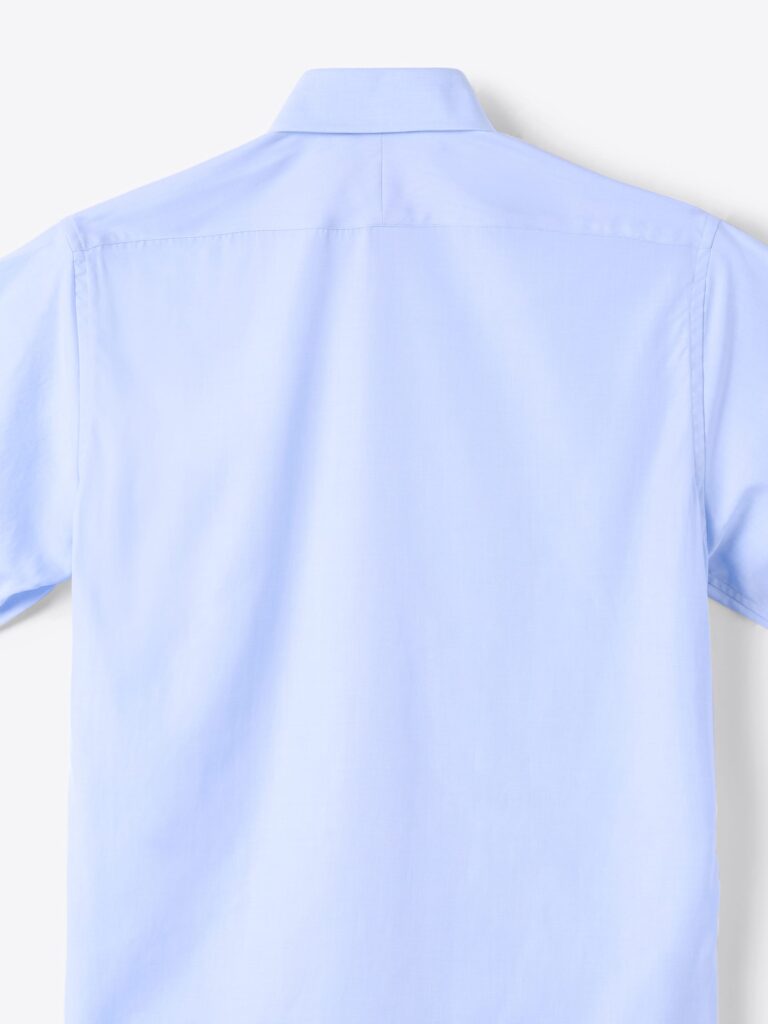
Shirt with no back pleats.

No pleats on the back of the shirt makes for a clean, minimal look. If you’re going for a more modern, slim look that is fitted through the chest and midsection then this will be the best choice, visually.

Rear Side Pleats

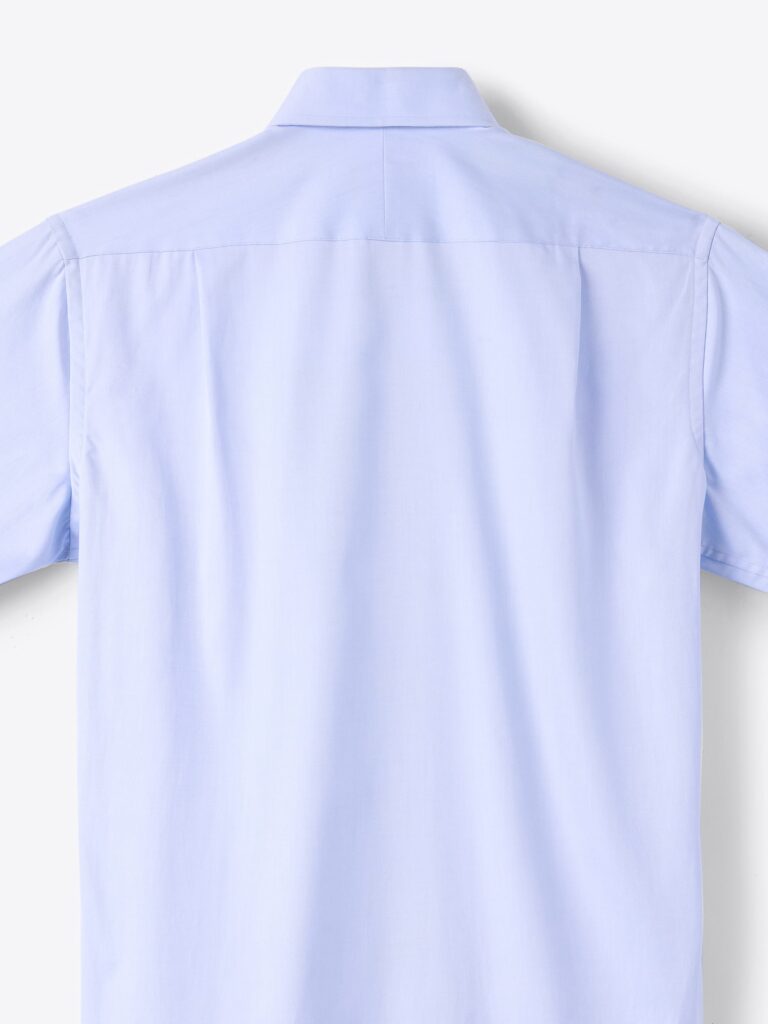
Shirt with rear side pleats.

Rear side pleats, also sometimes called “knife pleats,” are placed just below the yoke, out towards the ends of the shoulders. Each pleat is 0.5” wide. Selecting rear side pleats will add a total of 2″ of additional fabric to the upper back of the shirt while keeping the yoke and chest width the same. Rear side pleats are a great option if you want to increase range of motion when reaching forward.

Center Box Pleat

Shirt with a center box pleat.

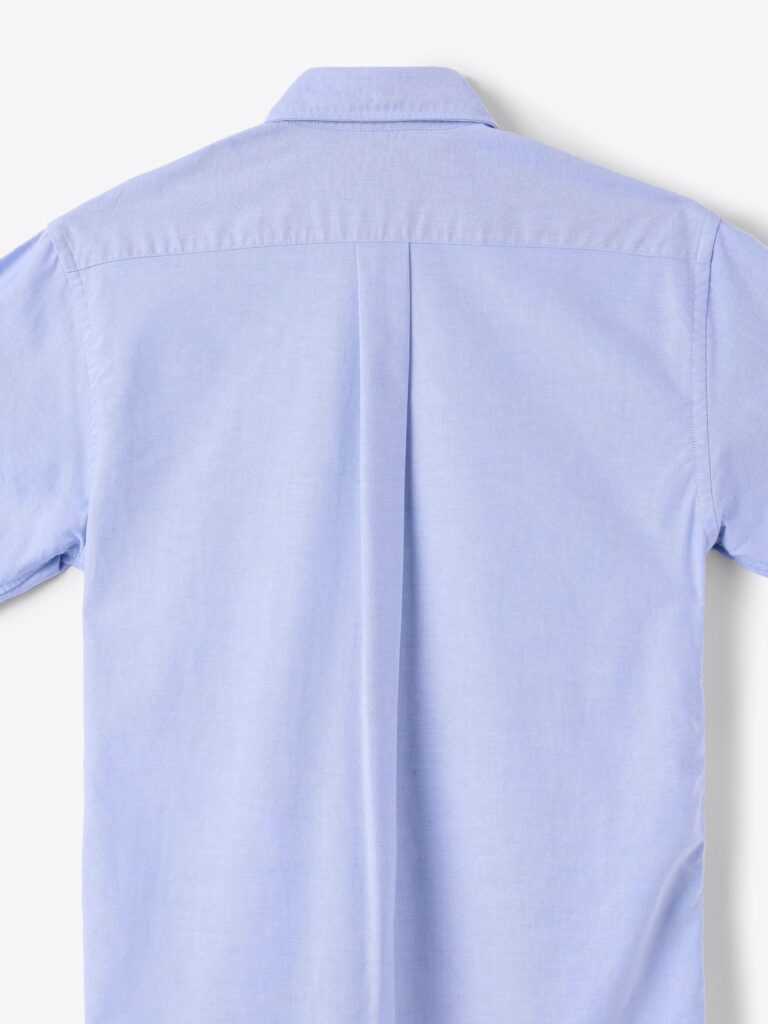
The center box pleat is a classic design detail and a more casual option traditionally seen on Brooks Brothers’ button downs or similar styles. Each side of the pleat adds 0.75” to the upper back of the shirt, for a total of 3″, to increase range of motion when reaching forward. In terms of style, the center box pleat is not the go-to recommendation for super slim-fitting dress shirts due to its classic/conservative design association.

Locker Loop Box Pleat

Shirt with a locker loop box pleat.

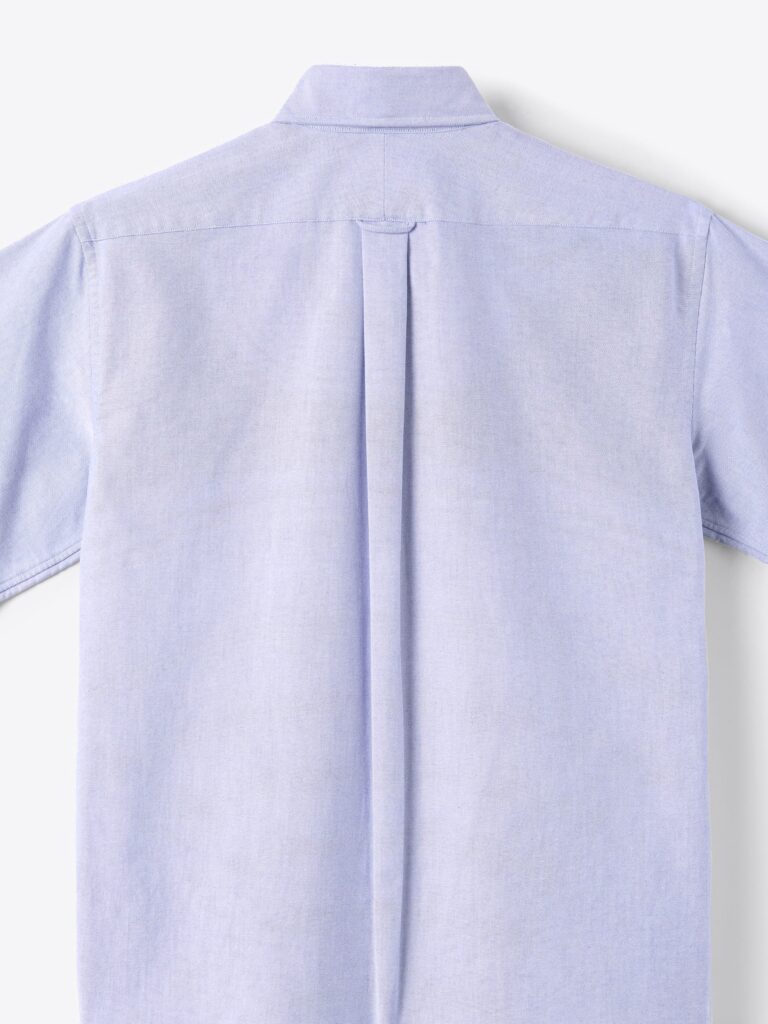
The locker loop is a vintage sport shirt detail originally designed to make it easy to hang up your shirt in, well, a locker. Located at the back of the shirt, it’s attached where the bottom center of the yoke meets the top of a center box pleat and is an especially popular choice for traditional American styles like oxford and madras shirts. The center box pleat component adds a total of 3” to the upper back of the shirt to increase range of motion when reaching forward.

Western Yoke and Back Pleats

Back pleats are not compatible with the Western Yoke design option. If you order a shirt with the Western Yoke style in a size profile that includes side pleats or a center box pleat option, the shirt will be constructed with a Western Yoke and no pleats.

Glen Plaid Fabric

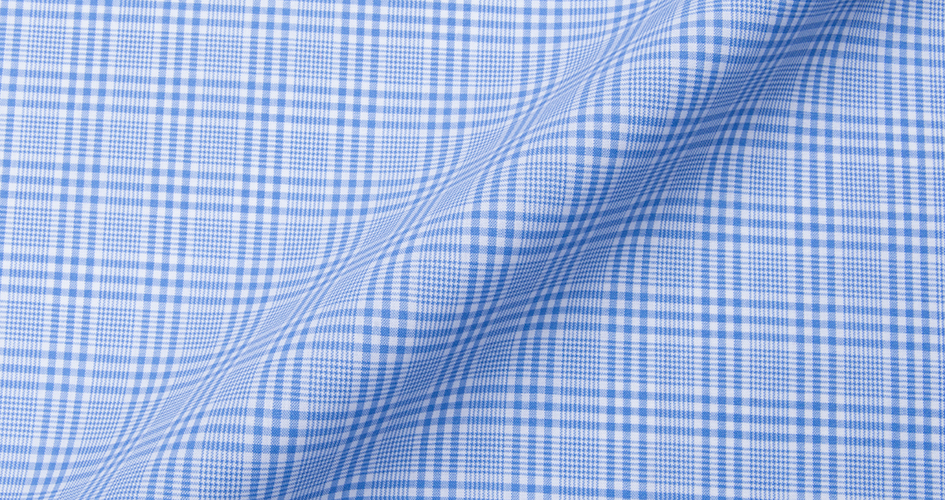
Glen plaid fabric is a common dress shirt check pattern that features large and small plaids within the same pattern. Glen plaid is sometimes nicknamed the Prince of Wales check as the Duke of Windsor, while he was the Prince of Wales, wore the pattern often.

Glen Plaid Fabric Pattern

Style

It’s typically a bolder dress shirt pattern and great for those who want something that makes more of a statement–to be avoided if you’re looking for an interview shirt.

We suggest pairing a glen plaid shirt with a solid suit and tie in most cases. Glen plaids are one of the boldest patterns, so keeping the rest of your outfit toned down will keep you from looking too aggressive.

Glen Plain custom shirt fabrics.

How to Choose a Dress Shirt Cuff Style

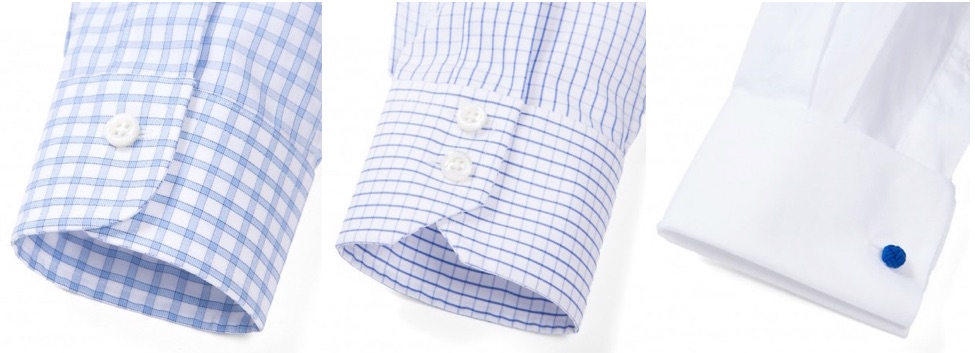
All of the little details count, so consider the various cuff options when designing a dress shirt. Below is a breakdown of the decisions you can make.

dress shirt cuff styles

Barrel Cuff vs French Cuff

The first step is to decide if you’d like to go for a Barrel Cuff or French Cuff. You’ll need cuff links or cuff knots to close your French Cuffs, whereas Barrel Cuffs have simple button closures. French cuffs are definitely more formal and are the natural choice if you’re buying a tuxedo shirt or wedding shirt.

Some guys love French Cuffs, others love Barrel Cuffs. Typically French Cuffs will be “more work” and be more of a statement, whereas Barrel Cuffs are more common and subtle.

One Button vs Two Button

If you want a Barrel Cuff, the next choice is whether you’d like a one-button or two-button cuff. One-button cuffs are a little more subtle and shorter in length than their two-button counterparts. Those who want a slightly more formal look should consider the longer, two-button cuffs—also think about these if you have particularly long arms.

Long One Button vs Standard One Button

If you’re going with a one button barrel cuff, consider our new, slightly longer version, which clocks in at 2.875”. Inspired by the cuffs common among the great Neapolitan shirtmakers, our long one button cuff is super balanced and is especially recommended for guys with arms over 34” (though it looks great on all, and comes in both fused and soft versions). Put it on any shirt you’d wear with a standard one button cuff.

Rounded vs Mitered vs Straight Cuffs

Some cuffs are rounded, others are mitered, and some have a straight cuff end. Rounded cuffs are most common and subtle, whereas mitered are generally considered more elegant and formal. The straight edge cuff is a less common barrel cuff design, but can be great on a casual shirt.

Fused Construction vs Soft Construction

Similar to collars and plackets, one can get their cuffs in a crisp, fused construction or a soft, unfused construction. We typically suggest keeping construction consistent with collar and placket—if you have a fused collar, get a fused cuff. Fused is a better choice for a shirt meant to be worn in business contexts, while soft construction is ideal for casual wear or a more ‘sprezzy’ dressy look.

Custom Shirt Cuff styles and descriptions.