Our site is optimized to support the latest web browsers.
We support the current versions of Chrome, Microsoft Edge, Firefox, and Safari.
Found some functionality that isn’t working properly? Let us know.
Our site is optimized to support the latest web browsers.
We support the current versions of Chrome, Microsoft Edge, Firefox, and Safari.
Found some functionality that isn’t working properly? Let us know.

The Everyday Mask
The Proper Cloth Everyday Mask
You’ll need a few things to clean your cloth face mask effectively.


You’ll want to adjust your mask washing schedule according to how much time you spend outside in public. We recommend washing it nightly after use.
Now your mask is fresh and clean!
The Everyday Mask
Hand Washing
Some
Machine Washing
Drying
Quick Fixes
A few extra tips:


The addition of knit fabric options for custom shirts also introduces new front placket design options exclusive to these casual, stretchy fabrics.
A timeless One Button Polo Front style. For those who want to show a little more chest or enjoy a lower top button placement, the One Button Polo Front is your best bet. For an extra casual look, the placket can be left completely unbuttoned (as pictured above).
The button is placed 2.8125″ below the collar band.

Another classic design option, the Two Button Polo Front allows for a little more versatility in terms of top button placement. The first button below the collar band is a little higher than in our One Button Polo Front design, showing less chest or undershirt. If there are times when a lower buttoning point is desired, however, one can fasten the lower button only.
The top button is placed 1.75″ below the collar band.

Due to the shorter overall length of the One and Two Button Polo Front plackets, custom ‘Top Button Placement’ settings from one’s saved shirt size are not applied during the construction of shirts featuring these polo placket options. Reference the descriptions above for the top button placement specifications for each of the Polo Front placket options.
While the Polo Front options are a no-brainer for knit fabric shirts, most of our traditional front placket options can also be used to create unique designs. Custom Shirt front placket styles and descriptions.

When choosing a collar, one should consider more than just the spread of the collar–size will also be an important consideration. We made our President Spread collar for those who want something larger–a particularly good choice for bigger guys. The collar band is higher, so it sits up higher on the neck, and the collar points are 1/4″ longer so it’ll tuck in under a jacket really well.
While you don’t have to be built like an NFL linebacker to wear the President Spread collar, it’s definitely a collar that should be considered by anyone on the taller end of the spectrum.
Father’s day is coming up and it’s time to get a gift for dad. And what could be better than a custom dress shirt designed just for him?
Not only will it fit him perfectly, it will be designed by you – giving it a personal touch.
Even better, it’s a gift he can actually use. Frequently. That is, unless he is retired and living on a boat in Thailand.
Other fun, silly gadgets will give everyone a laugh when he opens it, and maybe even a few minutes of entertainment figuring out how it works, but nothing can be as practical as the dress shirt – something he needs to wear everyday.

Whatever dad’s favorite color, Proper Cloth has a dress shirt he’ll love. If you’re not sure of the color’s he likes, it probably means he’s not that particular, so it’s up to you. Go with your gut. Whatever custom dress shirt gift you give him, he will be sure to love.
So, when you’re looking for the perfect father’s day gift, remember that the best gift for dad this year is a custom dress shirt. Not only is it guaranteed to fit, it is guaranteed to come in the style he likes.
And if you’re in a hurry, maybe there’s not enough time to have a custom dress shirt made for dad. In that case, we offer the custom dress shirt gift kit. This is a beautiful gift with measuring tape, fabric samples and a gift card in the amount you choose. The entire package is free for gift card amounts over $100.
Design Dad a Custom Shirt Today.
Block – A clean, modern font with minimal detail. As simple as it gets.

Serif –

Script –

Monograms can be applied to one of six different places on custom dress shirts.

The Western Shirt embodies the classic American southwest look with a pointed, stylized yoke extending over the front and back of the shoulders as a staple. Dual pockets on the chest always come in handy and functional snap buttons finish the look.

Western Style Details including the Western Front, Western Yoke, Western Flap Pockets, and Snap Buttons can be applied to any fabric in most any combination. Typically, casual chambray and denim fabrics are the base for Western shirts, but textured plain weave fabrics with similar heft are also recommended. Casual soft collars and cuffs are common, but you can order the designs of your choice to combine with the Western Style Details.

Denim Dress Shirt Fabric
Using the Design-A-Shirt tool, first select the fabric of your choice. From the Style tab, select your desired Collar and Cuff design. A Soft Point Collar is the perfect option for achieving that classic Western shirt look.

Then, skip to Front options and choose Western Front:

Make sure Yoke is set to Western Yoke as well to complete the look.

Head to Buttons and add the Snaps.

(Optional) Western Flap Pockets are recommended, but you can always specify your preference here as well.

The ‘Shop Gallery‘ features shirts that Proper Cloth has designed, produced, and photographed to simplify the ordering process. To add a pocket to one of the pre-designed Shop Gallery shirts before adding it to your bag, simply click on the image of the shirt, then click the ‘Customize’ button to modify the design as you wish.

Note: Nearly all business and business casual shirts featured in the Shop Gallery will not feature a pocket by default. Many casual shirts pictured will feature one of our pocket styles, but not all.
After clicking the Customize button, you will find yourself able to edit the style of your shirt in our Design-A-Shirt (DAS) tool. Similarly, if you create a custom shirt beginning with our DAS tool, you have the option to add one of our many pocket styles to your shirt once you’ve selected a fabric.
No matter if you load a pre-designed shirt for editing or create a custom shirt from scratch in DAS, to add a pocket to the chest of your shirt, click Pocket under the Style section. Then choose the pocket design you wish to apply to this shirt.

Note: Under the Style section of the Design A Shirt tool, you can set a default ‘Saved Style Profile’ for future use. More information about custom shirt Saved Style Profiles.
 Lay your dominant hand flat, fingers together, palm facing upwards. Wrap the measuring tape around your palm, just below the knuckles, not including the thumb. Glove size should be measured in inches. Round up to the nearest half inch. For Proper Cloth gloves, we highly recommend purchasing a half inch larger size (e.g. if your hand measures 8.5″, purchase a glove size 9).
– If your hand measures 7.5″, choose glove size 8
– If your hand measures 8″, choose glove size 8.5
– If your hand measures 8.5″, choose glove size 9
– If your hand measures 9″, choose glove size 9.5
Note: Above conversions applicable to Proper Cloth gloves. May differ from other glove makers.
Over time, leather gloves will form to the hand with wear. Proper Cloth leather gloves are not waterproof. Avoid getting wet, if possible. If they do become wet, air drying is recommended. If after drying the gloves are left feeling stiff, natural hand oils will soften them again with wear. For suede gloves, a waterproofing chemical treatment can be applied for protection.
Measuring a belt you already own that fits well is the best way to determine your belt size. Lay the belt on a clean, flat surface. Start the tape measure at the hole you use and measure to the end of the belt, where it meets the buckle. Belts are measured in inches and you should round to the nearest inch. If you measure 36 inches, you will want to purchase a size 36 belt.

Note: This measurement technique is standard for Proper Cloth belts. This may not reflect other makers’ measuring standards. For example, some will include the buckle in the belt length measurement.
An easy way to determine belt size is to simply “add 2″ to your off-the-rack pant size. For example, if you wear a 36”-waist trouser, then a 38 belt size will be a safe bet. Most will find this simple formula works best for pants worn at a traditional height—close to the natural waistline. For a belt to wear with low rise trousers or jeans, consider adding 3 or 4 to your pant size.
– If your pants size = 32, choose belt size = 34
– If your pants size = 34, choose belt size = 36
– If your pants size = 36, choose belt size = 38
– If your pants size = 38, choose belt size = 40
Note: Belt sizes shown in US/UK standard size.
To measure your body for optimal belt size, start by threading the tape measure through the belt loops of your trousers. It’s important to stand in a relaxed, natural position—do not push out your belly or suck it in—when taking the measurement. The measuring tape should be snug. Measure in inches and round to the nearest inch. Choose the belt size closest to this measurement.
Over time, leather belts tend to stretch. Braided belts even more so. It’s good to keep in mind that a belt that fits snug initially will likely wear more comfortably down the road.
Here we provide the definitive overview of the different types of fabrics commonly used in dress shirts. By understanding what the different weaves mean for a fabric you can be sure to find the ideal dress shirt fabric for your needs.
Broadcloth—often referred to as poplin—is a tightly woven fabric with a very simple over-under weave and very little sheen, which makes it nice and professional. Broadcloths are great for guys looking for as little texture as possible in their fabrics. They are generally a thinner, lighter fabric. White broadcloth fabrics in particular can be slightly transparent. Broadcloths generally wear the smoothest out of all weaves thanks to their lack of texture, but can also be the most prone to wrinkling.
Learn more about broadcloth fabrics here or browse our selection of broadcloth fabrics here.
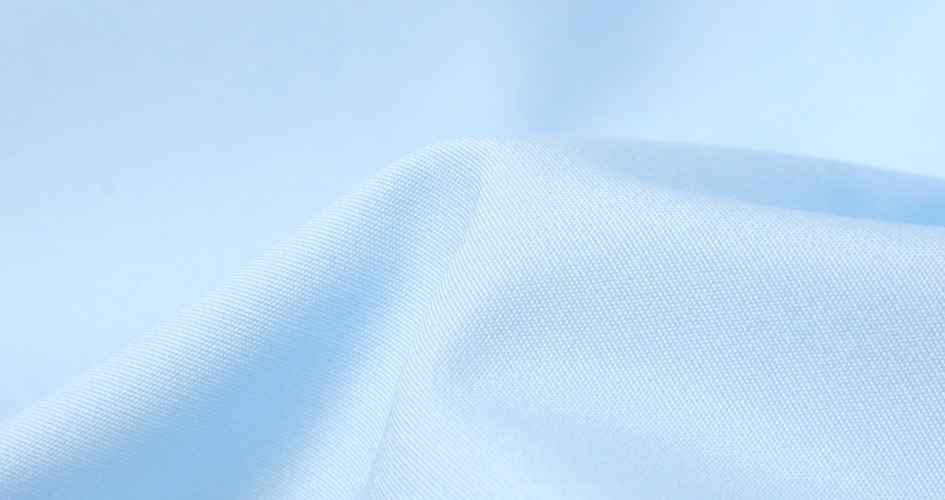
Broadcloth Dress Shirt Fabric
Twill fabrics are easily recognizable because they will show diagonal weave or texture. The diagonal effect can range from very fine, subtle twills to much larger Imperial or Cavalry twills. Twills will almost always have a bit of shine, though the degree can depend on the weave, color, and cotton used. Twill is a tight weave that can come in extremely high thread counts, some of which might be mistaken for silk. Because of the diagonal texture twill is a bit softer than broadcloth and will drape more easily. Twill won’t give you the same “crisp” look that freshly pressed broadcloth can, but it’s relatively easy to iron and more resistant to wrinkles.
Learn more about twill fabrics here or browse our selection of twill fabrics here.
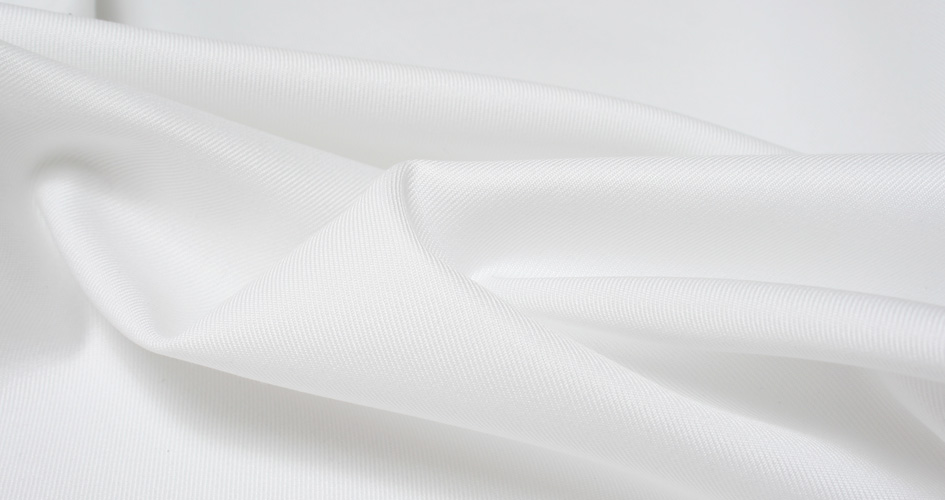
Twill Dress Shirt Fabric
Pinpoint (also referred to as pinpoint oxford) has the same weave as oxford cloth, although it uses a finer yarn and tighter weave. It is more formal than oxford cloth, but less formal than broadcloth or twill. Think of them as great everyday work shirts, but not necessarily the first recommendation for special events. Pinpoint fabrics are generally not transparent and are slightly heavier and thicker than broadcloths. Because of their heavier construction, pinpoints are fairly durable fabrics. Opt for a twill or broadcloth if you’re looking for a formal shirt.
Learn more about pinpoint fabrics here or browse our selection of pinpoint fabrics here.
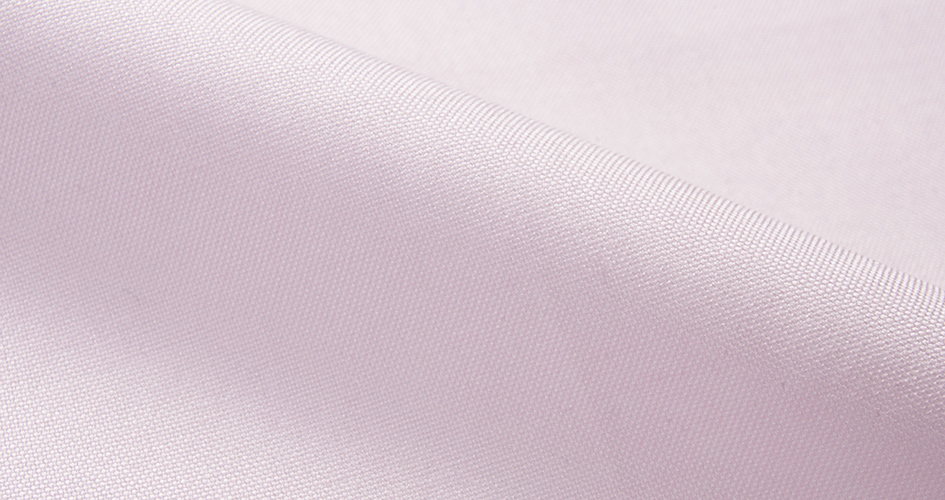
Pinpoint Dress Shirt Fabric
Chambray is a plain weave fabric. That means it has a similar construction to broadcloth, though it is generally made with heavier yarns for a more relaxed or workwear appeal. Generally there will be white threads running in the weft/width direction such that the fabric has an inconsistent color to it. This could be compared to an end-on-end, though chambray is generally much heavier and more appropriate for casual wear than dress.
Browse our selection of chambray fabrics here
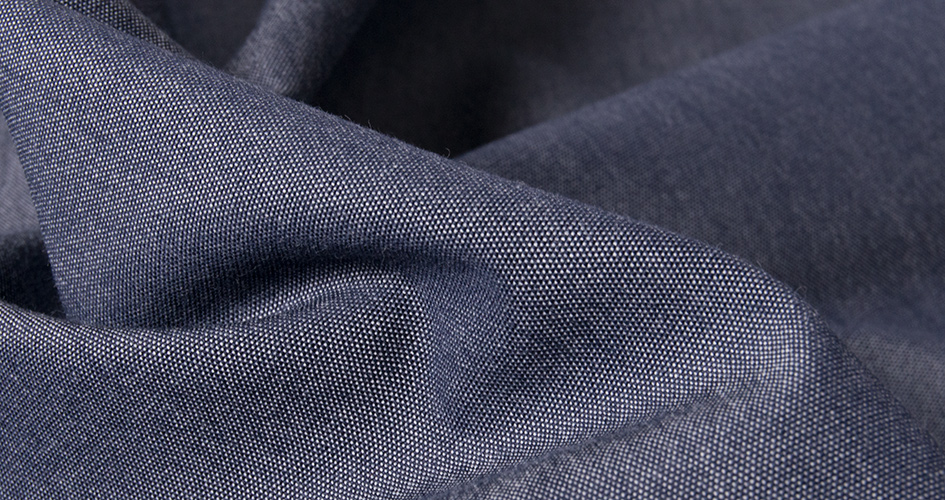
Chambray Fabric
We all know denim as the fabric of our jeans. But construction wise, denim is a twill fabric. A sturdy, possibly coarser twill often dyed with indigo. For the most part though, when it comes to denim shirting, you’re mostly going to find much softer, lighter versions of the fabric than what your jeans are made of. Denim shirting can come in many forms but generally have a different color on the inside than the outside.
Browse our selection of denim and chambray fabrics here.
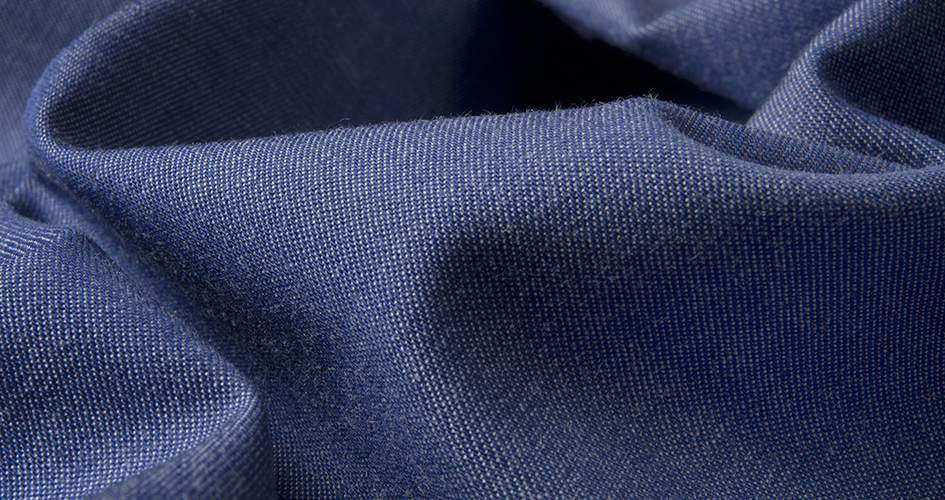
Denim Shirting Fabric
Dobby (which is very similar to jacquard, although technically different) can vary widely. Some versions are quite similar to broadcloth in terms of thickness and weight, while others can be thicker or woven to almost look like twill. Many dobby fabrics have stripes woven into them, although some are solid colors. The solid colors tend to have a faint stripe or dotted patterns woven in the same color as the base cloth.
Learn more about dobby fabrics here or browse our dobby fabrics here.
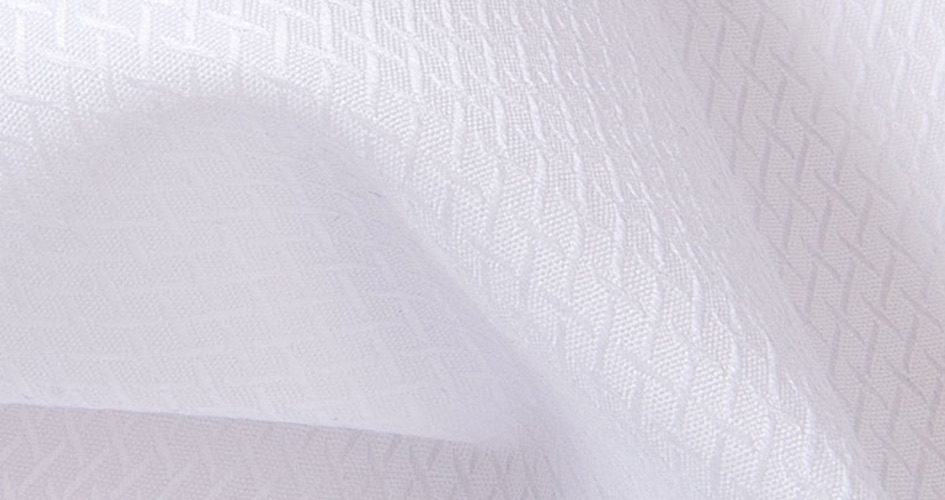
Dobby Dress Shirt Fabric
End-on-end broadcloths are a very popular type of dress shirt fabric with a distinct contrast coloring. Woven with colored thread in the warp and white thread in the weft, it looks like a true solid from a distance, but has more visual texture when seen up close. Typically a lighter-weight fabric, it’s a great choice for those living in warmer climates.
Browse our End-on-End fabrics here.
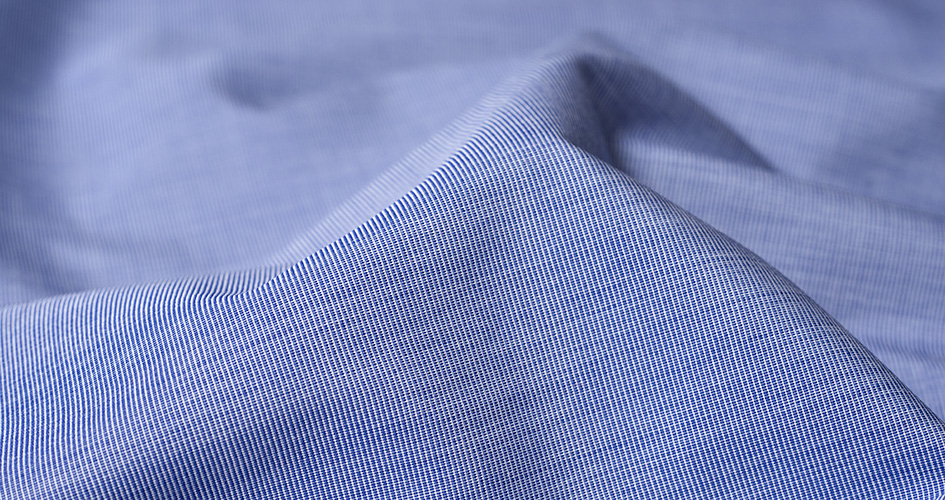
End on End Dress Shirt Fabric
A fall/winter favorite. Flannels are warm, fuzzy fabrics that are most often brushed twill or brushed poplin fabrics. While they’re most regularly 100% cotton, they sometimes can come in blends of cotton and wool, and even cotton/cashmere blends for added warmth. Usually made in thicker weaves, these are decidedly casual fabrics that are great for cold weather.
Browse our selection of flannel fabrics here.
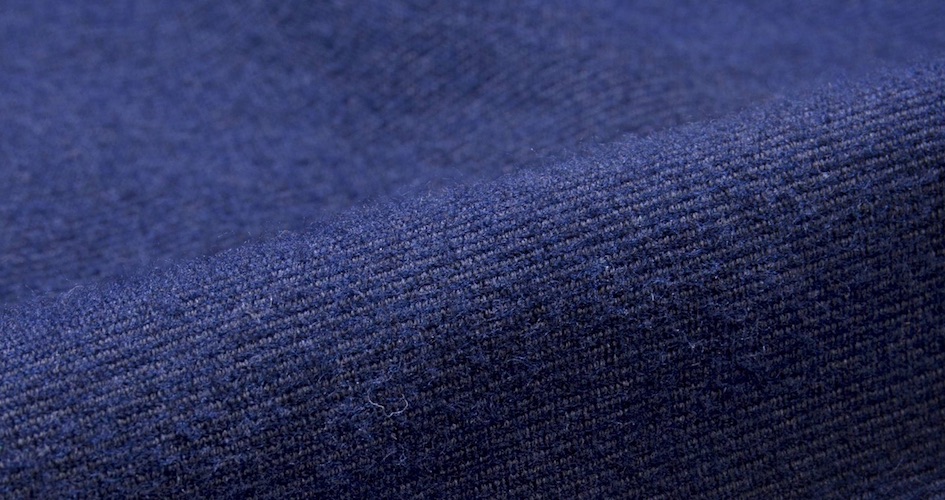
Flannel Fabric
Melange fabrics can come in every sort of weave—poplin, twill, royal oxford, etc.—and are woven using multi-colored yarns. Each yarn will be dyed this way, most often with 2-3 subtly different hues. These unique yarns can help achieve a heathered, intentionally inconsistent, somewhat organic look. Melange fabrics are different from mouline fabrics, as mouline fabrics are made from consistent, one-color yarns that are twisted together to achieve a multi-color look.
Browse our selection of melange fabrics here.
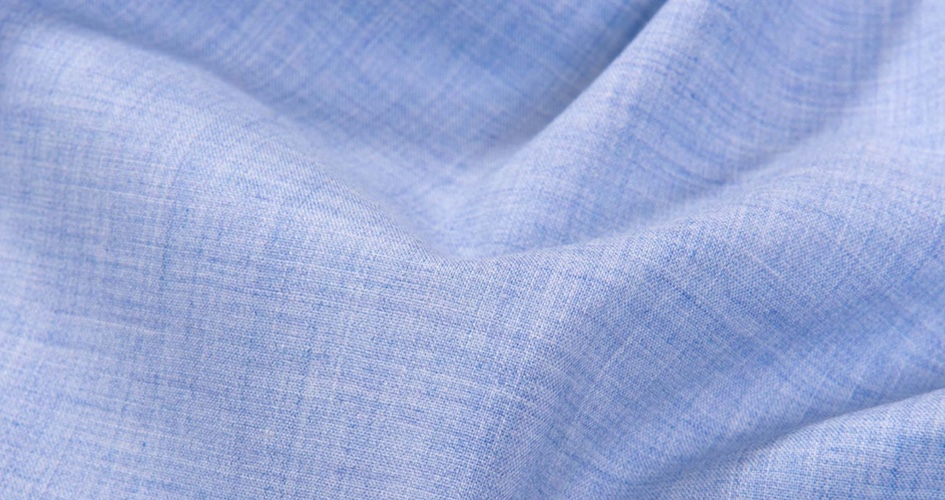
Melange Dress Shirt Fabric
Oxford cloth is very similar to pinpoint oxford, except it uses a slightly heavier thread and looser weave. It has a slightly rougher texture but is more durable than most fabrics. It’s composed of a symmetrical basketweave where one yarn may cross two yarns. It was originally developed for sportswear, so it’s the least dressy, and (in some circles) not considered appropriate for office or formal wear. Oxford cloth has always been a staple in traditional American button-down polo shirts. It can be worn slightly wrinkled straight from the dryer and still look great.
Learn more about oxford cloth here or browse our selection of oxford cloth here.
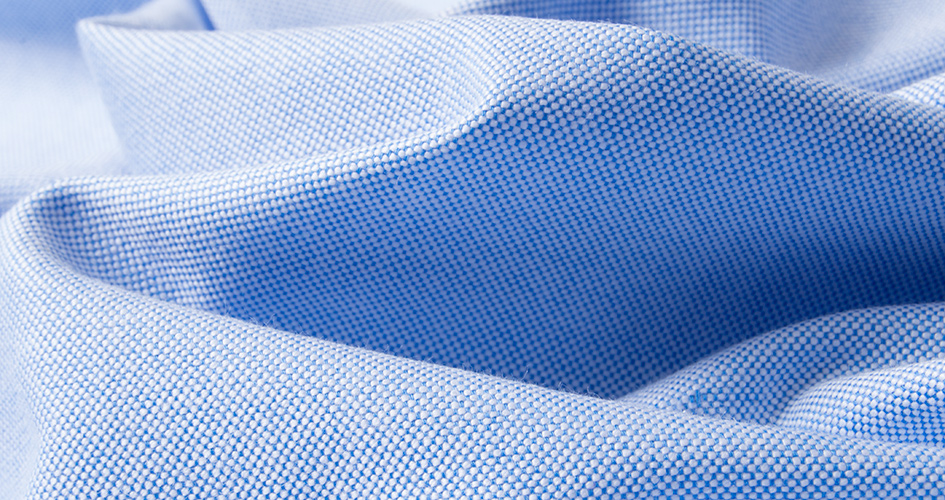
Oxford Cloth Shirt Fabric
Poplin is so similar to broadcloth that we decided not to distinguish between the two in our fabric descriptions. For all practical purposes you can equate the two. They are both a plain weave fabric that is going to be quite thin, smooth, and flat. That said, poplin is technically different from broadcloth in that poplin can have different weight yarns in the warp and weft while broadcloths will have a symmetrical construction. For example, broadcloths could be 100/2×100/2 (meaning 100s two-ply in the warp and weft) while a poplin could be 100/2×60/1 (meaning 100s two-ply in the warp and 60s single-ply in the weft).
Browse our selection of poplin fabrics here.
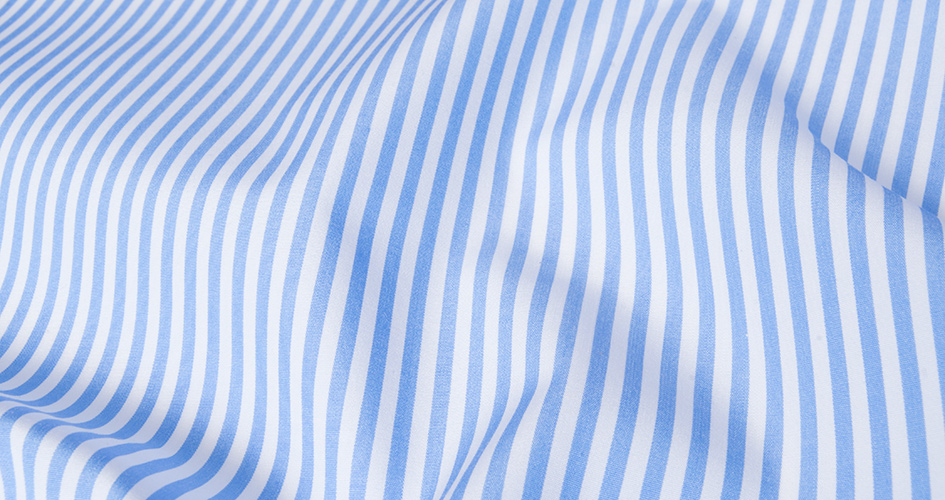
Poplin Dress Shirt Fabric
Royal oxford is what we call a “pretty fabric.” Although the name is similar, it is not at all similar to pinpoint oxford or oxford cloth. It is a dressy fabric with a distinctive shine and texture. With a more prominent weave than broadcloth or pinpoint, it’s ideal for those interested in a dress or formal shirt with visible texture.
Learn more about royal oxford fabrics here or browse our selection of royal oxford fabrics here.
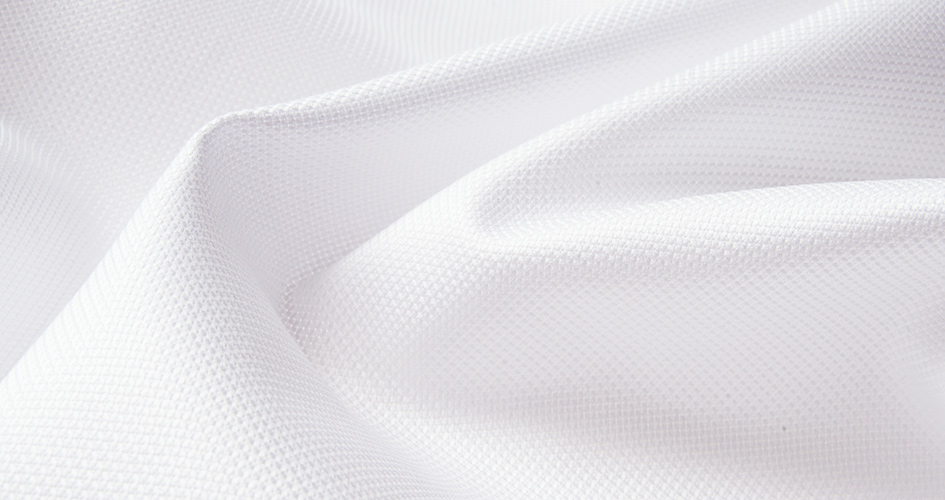
Royal Oxford Dress Shirt Fabric
Herringbone shirts are popular, more textured shirts for both dress and casual wear. Herringbone is essentially a twill that is mirrored when woven to create the sort of chevron, “V-shaped” look. The fabric’s name comes from its resemblance to the bones of a herring fish.
Browse our selection of herringbone fabrics here.
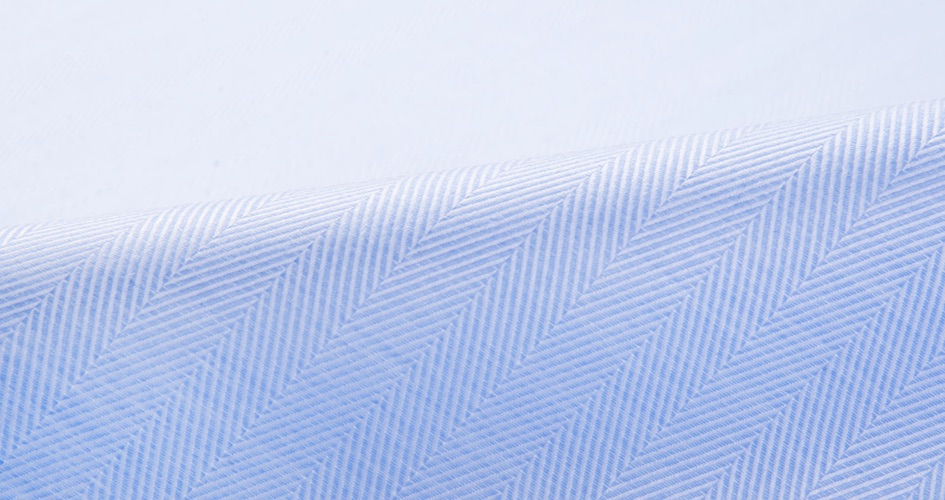
Herringbone (Twill) Dress Shirt Fabric
Seersucker is a fabric primarily used to make shirts for warm weather, and is known for its distinctive puckered appearance. This puckered look is created in the finishing of the fabric, after it’s woven, and helps to promote air flow when worn. This helps make seersucker very comfortable in the summer. While seersucker fabrics can come in any color or pattern, blue and white striped seersucker is most popular.
Browse our selection of seersucker fabrics here.
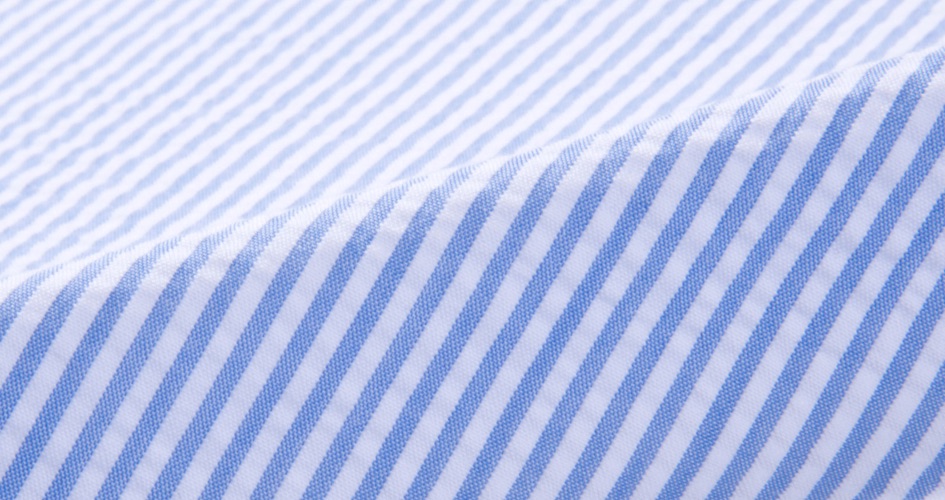
Seersucker Shirting Fabric
Linen fabrics are incredibly breathable and, like seersucker, typically made to be worn in hot climates. Linen is made from the fiber of the flax plant, and can be very labor intensive to produce. Typically linen will be more loosely woven and sheer than most cotton fabrics, and has a very unique, dry hand to it that is unlike cotton. Linen also tends to wrinkle more easily than cotton and generally feels much more relaxed because of this. While we love the look and feel of linen, some people prefer cotton/linen blend shirts as you can achieve much of the coolness of a linen shirt while reducing the wrinkling.
Browse our selection of linen fabrics here.
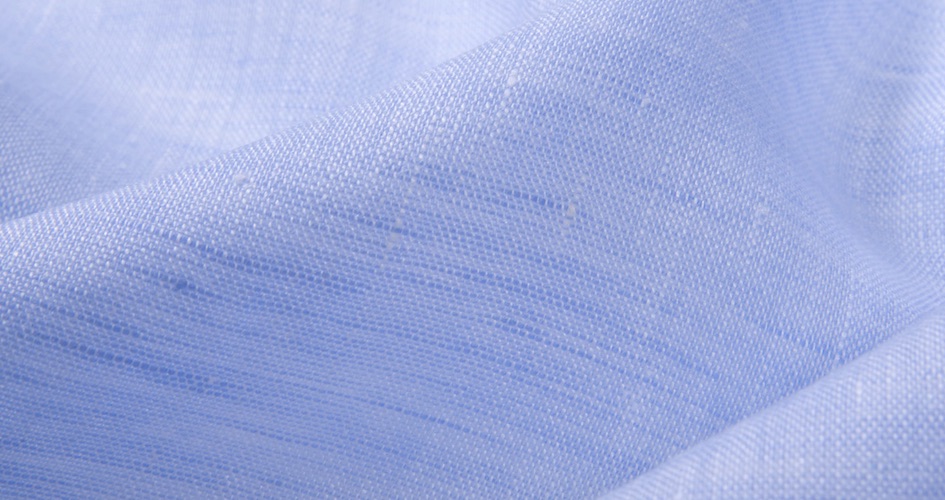
Linen Dress Shirt Fabric
When you hear about Egyptian, Sea Island, or American Pima cotton you should know that this is not referring to the type of weave, but to the type of cotton used to make the weave. For practical purposes, Pima cotton, Sea Island, and Egyptian cotton are all cottons derived from originally the same plant: Gossypium Barbadense. These are more desirable cottons because they are typically “extra-long staple length” cottons (length greater than 1 3/8″), which allows them to be spun into finer, stronger yarns.
All three of these cottons are typically regarded as high-end, luxury raw goods. Egyptian and American Pima will be the most readily available, while Sea Island cotton is well-known for being incredibly rare. American Pima will often be woven into fabrics of a slightly lower quality than Egyptian cotton as it is not as clean of a fiber, despite having similar staple lengths.
There is also a famous, rare form of Egyptian cotton called “Giza 45” that is specially used for some of the world’s finest shirting fabrics—notably Thomas Mason Goldline fabrics. This is a highly acclaimed form of cotton found in a particular portion of the Nile Delta that can be woven to produce incredibly fine yet strong yarns. Fabric made from Giza 45 cotton tends not to degrade over time as much as other Egyptian or American Pima cottons.
Accounting for just .0004% of the cotton supply available, Sea Island cotton is the rarest in the world. What makes Sea Island Cotton so desirable is its unique combination of characteristics: extra-long staple length, remarkable fiber strength, incredibly uniform growth, and a significant brightness in color.
While other high-end shirting cottons like Egyptian cotton and American Pima can boast extra-long staple length above 1 3/8″, it’s Sea Island cotton’s durability, consistency, vibrant color, and silky luster that make it different from these. The uniformity, strength, and “hairlessness” of the fiber allows fabric woven from it to last an incredibly long time, and actually become smoother each time it’s laundered.
The best Sea Island Cotton comes from Barbados because the incredibly uniform, humid climate of the island allows for the cotton plants to grow in a consistent way throughout the year. The cotton in Barbados is also picked by hand to ensure the highest quality levels.
Making matters a bit confusing, there are trademarks filed around the names “Sea Island” and “Supima.” Keep an eye out for “Certified Sea Island Cotton” vs. “Sea Island Quality,” as only the former will be authentic and it’s something we often see on the market.
Learn more about Sea Island Cotton dress shirts or browse our selection of Sea Island Cotton fabrics here.
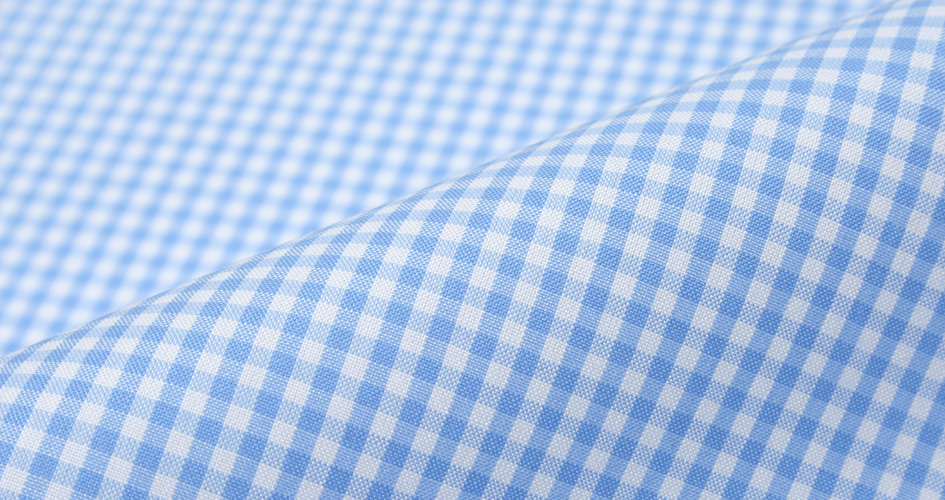
Egyptian Cotton Dress Shirt Fabric
If everything else is the same (weave, ply, mill, and type of cotton), higher thread count means a smoother, silkier, more expensive fabric. Thread count is often referred to with a number like 50s, 80s, 100s, 120s, 140s, 170s, etc., up to 330s. These numbers refer to the yarn size, but keep in mind that typically a thread count above 100 will imply a two-ply fabric.
Though there are some exceptions when extremely fine single-ply yarns are used, these higher-number thread counts will be two yarns twisted together. For example, 120s thread count means that two 60s yarns are twisted together. Generally this fabric will be more durable than a 60s single-ply, but it won’t necessarily be smoother. 140s thread counts are typically two 70s yarns twisted together. And so on and so forth.
While thread count can be an indicator of quality, remember that ply, mill, and quality of cotton will have just as much to do with how luxurious the fabric is.
Ply is how many yarns are twisted together to make a single thread. Shirting fabrics are most often two-ply or single ply. Two-ply means that two yarns are twisted together to make a single thread that is then woven into the fabric. (Note that this is not at all like two-ply toilet paper!). Two-ply fabrics are generally superior to single-ply fabrics in their durability. Three-ply fabrics are rare, but can be found occasionally.