The Everyday Mask vs The TechKnit Mask

Which Proper Cloth mask is right for me?

We developed each of our mask designs with particular applications in mind, however the main way to choose between them is simply by deciding which one looks better to you, or goes better with your style of dressing.

In the event that you still can’t decide, we’ve compiled a list of the masks’ attributes that may help tip the scales one way or the other for you.

the everyday mask

The Everyday Mask

The Everyday Mask

A more sartorial design that’s great if you need to wear a mask for an extended period of time.

  • Both around-the-ear and over-the-head elastic strap styles available.
  • Available in both Large and Small sizes.
  • Full-coverage silhouette that touches the nose bridge and wraps underneath the chin.
  • Hand-sewn from a variety of solid and patterned cotton, linen, cotton/linen blend, and merino wool shirting fabrics.
  • Moldable metal nose bridge for a better seal and to prevent glasses from fogging.
  • Wraps under the chin for maximum coverage and security.
  • Our 3.0 mask Includes a BFE ≥99% and PFE ≥95% lab-test certified 3-layer polypropylene filter.
  • 5-layer structure (2 outer and inner fabric layers sandwiching the 3-layer filter).
  • Hand or machine washable.
the techknit mask

The TechKnit Mask

The TechKnit Mask

A sportier, more modern design that’s great if you need to wear a mask for a short period of time, or need to remove and put your mask back on frequently.

  • Available in both Large and Small sizes. The TechKnit Mask’s measurements for both sizes are slightly smaller than those of the Everyday Mask.
  • Minimal silhouette designed to cover the front of the face, from the nose bridge to the front of the chin.
  • Available only with around-the-ear elastic straps.
  • Hand-sewn from Italian Reda merino wool knit shirting fabric (outer layer) and premium Japanese performance poly mesh (innermost layer).
  • Moldable metal nose bridge for a better seal and to prevent glasses from fogging.
  • Includes a BFE ≥95% and PFE ≥85% lab-test certified 3-layer polypropylene filter.
  • 5-layer structure (2 outer and inner fabric layers sandwiching the 3-layer filter).
  • Hand or machine washable.

Still can’t decide?

In-depth descriptions are provided for all of the various products types and size charts in the list that follows.

The Everyday Mask – Description and Specifications

The TechKnit Mask – Description and Specifications

Proper Cloth Mask Sizes and Specifications

Tips for Wearing a Face Mask with Hearing Aids

If you have hearing aids, you’re no stranger to the problems posed by face masks since the advent of COVID-19. The elastic bands of most masks interfere with behind-the-ear hearing aid placement, making them especially uncomfortable and inconvenient.

The following are the best mask-wearing tips we’ve found for wearers of hearing aids.

over head mask style

The Proper Cloth Everyday Mask with over-the-head elastic straps.

1. Over or Behind the Head Mask Straps

Masks with elastic straps that bypass the ears and wrap around the back of the head are a great alternative to around-the-ear styles for hearing aid wearers. They eliminate ear discomfort and interference with hearing aids, and also allow the mask to be worn comfortably for extended periods of time. The mask in the photo above is the Proper Cloth Everyday Mask in the Over Head style, which can be found here.*

2. Mask Strap Extenders

Masks with around-the-ear straps can be converted into behind-the-head styles with strap extenders. Sometimes referred to as “ear savers,” which can be purchased online or made at home, these handy contraptions connect the straps and anchor them behind the head instead of behind the ears. You can use a piece of elastic, ribbon, or fabric to tie the straps together for the same result, too.

3. Tie Your Hair Back

If you have long hair, pull it back into a bun or ponytail and secure it with an elastic band to keep it from getting in the way of your mask straps and hearing aids. This will also make mask removal easier and reduce the chances that your hearing aids will get caught and fall out when you remove the mask.

4. Remove Your Mask Indoors in an Open Area

In case your hearing aids do fall out when you remove your mask, it’s a good idea to do so in an environment that will reduce the chances of losing your hearing aids. Removing your mask at home or indoors in an open area will allow you to see and retrieve fallen hearing aids easily and quickly.

*Our customers with hearing aids love our Everyday Mask!

“This mask is excellent. It fits great, the filter insert is effective without hindering my breathing, it does not fog my glasses, and it does not interfere with my hearing aids. This is the fifth mask I have tried in the last six months, and it is a keeper. I won’t be using the others.” – Douglas in San Jose, CA

“High quality, comfortable masks. The placement of the elastic bands works well for those with hearing aids.” – Deborah in Durham, NH

“I’d been looking for a mask that didn’t attach at the ears. I wear hearing aids and those elastic cords cause too much interference. I ordered the over-the-head style of The Everyday Mask in light gray. Best mask I’ve ever worn! My only regret is that I didn’t just buy three of them initially. Do yourself a favor and just add three to cart! You will not be disappointed.” – Ed in Flint, MI

The Proper Cloth TechKnit Mask: Design, Fabric & Filter

Black TechKnit Mask

The TechKnit Mask in black

The sleek silhouette and extra stretch of our TechKnit Mask are inspired by sophisticated casual style and the momentum of daily life. We wanted to create something with a pared-back profile, something comfortable, easy to throw on and take off, to match your most casual ensembles, and with the same advanced protection as our Everyday Mask.

Anatomy of the TechKnit Mask

  • Pared-Back Silhouette. A rounded, minimal shape that stays put when you speak without wrapping all the way under the chin. Both the Large and Small sizes of the TechKnit Mask are smaller in measurement than the Large and Small Sizes of the Everyday Mask v1.0-2.0.
  • Moldable Nose Piece. A metal piece at the bridge of the nose allows for a more secure air-seal at the nose and under the eyes.
  • Adjustable Over-Ear and Around-Head Elastic Straps. A secure, comfortable fit, however you like to wear your mask.
  • 5-Layer Design. 
    • Layer 1: Italian merino wool knit shirting fabric (exterior)
    • Layer 2-4: 3-layer non-woven 100% polypropylene filter with meltblown core
    • Layer 5: Premium Japanese polyester mesh (interior)
  • Sewn-In Filter. The filter is sandwiched between the two fabric layers and sewn in for extra security and a cleaner look.

Mask Fabric

Exterior: The outer layer of the TechKnit Mask versions 1.0 and 1.1 is made from naturally antimicrobial, temperature regulating, and stretchy Reda merino wool knit shirting fabric. Merino wool’s impressive natural performance characteristics provide both comfort and protection without the use of synthetic materials or treatments like SILVADUR™, which we use to boost the protection factor of our Everyday Masks. It is also a more environmentally friendly fabric option than cotton, and Reda’s vertically integrated production includes a cruelty-free life for their sheep.

For the TechKnit Mask version 1.2 we changed the exterior fabric to a 100% Italian performance knit jersey with excellent moisture-wicking, breathability, and protection properties.

Interior: Premium Polyester Mesh. The innermost layer of the TechKnit Mask v1.0 is made from a Japanese 100% polyester mesh fabric, and an Italian 100% polyester mesh for the TechKnit Mask v1.1 and v1.2. We chose these as the fabrics closest to the face for their smoothness, stretch, and quick-dry and moisture-wicking properties.

Filter

In the middle of the mask is a non-woven 3-layer 100% polypropylene filter with a meltblown core. This filter is sewn-in for security and to maintain a clean silhouette for the mask overall. It has been tested for its PFE (particle filtration efficiency) and certified PFE PM0.1 >85. This means the filter is lab test certified to filter out 85% or greater of .1 micron-sized particles. The average coronavirus particles are 0.125 microns.

For the TechKnit Mask version 1.2, we upgraded the filter to a BFE ≥99% and PFE ≥95% lab test certified one.

Care

The TechKnit Mask is both hand- and machine-washable, although we prefer and recommend hand washing. Hang it up or lay it flat to dry. Mask care instructions.

Custom Shirt Button and Snap Options

Milano Buttons

A slim, high quality faux-horn button made from durable plastic resin, these are incredibly resistant to cracking. They feature a beautiful color variation and a subtle off-white hue. While these plastic resin buttons will not crack, over a long time (+30 washes) the plastic can become degraded by the combination of intense chemical cleaners and high-heat dryers. 7/16″ in diameter (18L).

Roma Plastic Resin Button

A beautiful mottled plastic button in a smaller width than our Standard White Resin Buttons. Made from a high quality plastic resin, these are incredibly resistant to cracking. The material is in between the pure white color of our Standard Buttons and the golden hue of our Mother of Pearl buttons. 3/8″ in diameter.

Standard Mother of Pearl Buttons

Mother of Pearl buttons are a classic detail favorited by high-quality shirt makers. Made from the inner layer of pearl oysters (also called nacre), they have a little more depth of color than plastic resin buttons do. These buttons can have a tendency to crack, but usually only do this with particularly brutal dry cleaners. They do not dissolve after repeated washes like resin plastic buttons can. 7/16″ in diameter, 2.8mm in thickness.

Australian Mother of Pearl Buttons

Our Australian Mother of Pearl buttons are a beautiful finishing touch for a high quality custom shirt. Measuring at 3.7mm tall, these thick buttons are not quite as thick as our Tall Mother of Pearl option, but definitely thicker than the standard MOP.  They have a slightly more mottled, iridescent shine than our other Mother of Pearl offerings and have a slightly smaller diameter for a more sartorial look. 3/8″ in diameter.

Smoke Mother of Pearl Buttons

A detail favored by high-quality shirt makers. These black shell buttons are made from the inner layer of oysters and have more depth of collar than plastic buttons. A bit smaller than our [standard] Mother of Pearl button, these are 3/8″ in diameter.

Pearl Snap Buttons

A beautiful off-white snap button. Slight color variation that replicates the look of vintage bone buttons. Perfect for a western shirt. These are 7/16″ in diameter.

Natural Corozo Buttons

A natural, sustainable button made from the seeds of the tagua palm tree. Great for casual shirts like flannels, where a larger, off-white button is more suitable. The Natural Corozo buttons are 9/16″ in diameter and attach to the shirt with the center “cat’s eye” detail vertically oriented.

Black Plastic Resin Buttons

Made from a dark, smokey, black plastic resin, these buttons go particularly well with black shirt designs. They are durable just like our white plastic resin buttons, and may begin to dissolve after repeated washing like those buttons, as well. 7/16″ in diameter.

Brown Horn Buttons

Most popular in tailored clothing, horn buttons can also be a great, sporty choice for shirting. While some horn buttons are made from real deer antler or buffalo horn, we use a very durable faux-horn alternative with the same look and feel. They have a variety of brown tones from light tan to dark brown. 7/16″ in diameter.

Slate Horn Buttons

An updated take on the horn button, this one is a particularly unique slate blue color that pairs well with dark, casual fabrics. Made from a very durable faux-horn alternative, the slate horn buttons have a variety of color tones from slate to navy blue, and are the perfect finishing touch for shirts with indigo undertones. 7/16″ in diameter.

Gray Horn Buttons

Another spin on the classic horn button, this one’s charcoal color pairs well with gray-based, casual shirt fabrics. Made from durable faux-horn plastic, our gray horn buttons have a variety of color tones from light gray, to charcoal, all the way to black. A perfect alternative when our black plastic button is a little too dark and shiny. 7/16″ in diameter.

Cream Horn Buttons

A fresh take on the classic brown horn button, this one’s creamy color pairs well with light-colored casual shirt fabrics. Made from durable faux-horn resin, our Cream Horn buttons have a variety creamy light and medium tones. A more rustic alternative when our plastic Roma button feels a little too dressy. 7/16″ in diameter.

Coconut Shell Buttons

Coconut shell buttons—often used in the making of authentic Hawaiian Aloha shirts—are a great choice for casual summer styles, and darker fabrics in particular. Made from natural coconut shell, they’re very strong and feature a deep chocolate brown color sprinkled with small flecks of beige and a unique cat’s eye-shaped indent in the center. 1/2″ in diameter.

Brown Horn Snap Buttons

A beautiful faux-horn snap button with brass trim that’s perfect for western shirts. These are 7/16″ in diameter.

Black Snap Buttons

A rich black faux-pearl snap button that’s perfect for western shirts in dark fabrics with black or gray tones. These are 7/16″ in diameter.

Replacement Buttons Available for Sale

Should you need replacement buttons for your Proper Cloth shirts, full replacement button sets are available for purchase. A local tailor or dry cleaner should be able to attach your replacement buttons for a small fee.

Replacement Mother of Pearl and plastic resin button sets.

Note: Snap buttons cannot be replaced if lost or damaged due to the nature of their attachment mechanism.

Proper Cloth Custom Washed Indigo Shirts

In 2015, Proper Cloth became the first menswear brand to offer custom Washed Indigo shirts. Here you’ll find answers to the most common questions we get about them.

Washed Indigo shirt

A Washed Indigo shirt from our December 2020 collection.

What is Washed Indigo?

Washed indigo shirts go through a unique garment washing process. Starting with raw, indigo-dyed fabrics, they are cut to your custom size and design, then washed in different solutions to achieve the desired final look and feel. This process is extremely time consuming and intensive, which is why it’s usually done by traditional off-the-rack brands that can produce huge numbers of dyed items at a time. We found a way to do it on a made-to-measure that allows us to create your custom fit and design with these one-of-a-kind fabrics.

How do I wear a Washed Indigo shirt? Is it casual or formal?

Washed Indigo shirts are decidedly casual. They’re made from fabrics that are heavier than those of your typical business dress shirts, and are often woven for more texture and intentional irregularities that are not generally appropriate for business or formal attire. That doesn’t mean you can’t style your Washed Indigo shirts with tailored pieces, though. We recommend wearing them however you like to do your casual dressing—and the more creative you get, the better. Wear them untucked with chinos, tucked into wool dress pants, with sneakers, loafers, or Chelsea boots, with a tie, over a t-shirt, under a cashmere sweater, with an unstructured sport coat. We like to, and have done, all of these things, and they’re just a few of your options.

How should I design a Washed Indigo shirt?

Because the unique dyeing and washing process they go through is so intensive, our Washed Indigo shirts are available for custom design with soft fused or unfused style options only. Frankly, we’d recommend only soft construction details anyway to compliment the distinctly relaxed look common to Washed Indigo shirts. Washed Indigo featured shirts.

Can I order a Washed Indigo fabric sample?

Due to the unique production process of these fabrics we are unable to provide fabric samples.

When will my Washed Indigo shirt be delivered?

Due to the garment washing process, washed indigo shirts take about 4-5 weeks to be delivered. The turnaround time is accurately reflected (based on your delivery address) on the product pages and in the shopping bag.

Where can I see the latest Washed Indigo collection?

Washed Indigo featured shirts.

The Custom Knit Shirt

Knit shirts have long been a staple of business casual menswear. Comfortable and versatile, they can be styled with garments of different texture, weight, and formality to achieve a wide variety of looks. Our custom knit shirts are fully customizable in both size and design so you can look your best no matter your style or body type. 

wearing a knit shirt with a jacket

A knit shirt styled with an unstructured jacket and chinos.

Benefits of Knit Dress Shirts

Knit shirts offer the perfect balance of comfort and style. Our knit fabrics are woven from incredibly soft and flexible performance blends with a loose weave for both increased breathability and the unique texture you expect from a knit. The performance materials (polyester, spandex) with which we blend cotton to create these shirts feature moisture-wicking and quick-dry properties to ensure that you stay cool and feel fresh throughout the day.

While knit shirts are slightly more casual than your typical dress shirt, they are extremely versatile. They can be designed as a polo or popover for casual wear, or with a full button front for a relaxed yet sophisticated look you can wear with tailored clothing. Below are our tips for both styling and designing your knit shirts for maximum impact and wearability. 

Knit Shirt Design and Styling

Knit shirts are primarily worn in business casual settings, though they can be styled differently to be worn on a variety of occasions.

polo front knit shirt

A knit shirt with a two-button polo front.

The Polo Front

The classic polo shirt typically features a shorter collar style, such as our Soft Franklin Spread or Colorado Button Down, short sleeves, a polo hem, and a one- or two-button polo front. In cooler months, you can also style a polo as a long sleeve shirt. Polo shirts can be worn with shorts or chinos accompanied by sneakers or loafers to create a relaxed business casual vibe great for a casual evening or a daytime event.

You can also pair your polo with a tailored jacket to dress it up. We suggest selecting a more substantial collar for your knit shirt for these occasions, such as our Soft President Spread, Soft Roma Cutaway, Soft Ivy Button Down, or Soft Roma Button Down. Resist the urge to put on a tie.

Please note that the one-button and two-button polo front options are only applicable to knit fabrics. While no top button position adjustments are available for them, the two polo front styles offer different button placement options.

a popover knit shirt

A knit shirt with a popover front.

The Popover

A popover knit shirt is a more sartorial take on the polo shirt. It’s similar to the polo, but with a longer soft front placket and three buttons below the collar, creating a larger opening in the front of the shirt that allows you to “pop it over” your head. You can pair your popover with shorts or chinos for a casual look. 

Popover knit shirts are easy to dress up. Tuck them into trousers or chinos and add a jacket—we recommend a more unstructured jacket style, like our Waverly. A popover with a larger collar pairs best with a jacket. Try our Soft President Spread, Soft Roma Cutaway, Soft Ivy Button Down, or Soft Roma Button Down, and ditch the tie.

a knit dress shirt

A knit shirt with a no-placket dress shirt design.

The Knit Dress Shirt

Though not appropriate for formal interviews and serious business settings, knit shirts make a great relaxed business look when styled with dressier tailored clothing. 

We suggest designing your knit dress shirt with no placket (a French front) or a Soft Front placket. As with the polo and popover styles, we recommend pairing your knit dress shirt with medium to larger sized collars when wearing a jacket. Although this is a more dressed-up take on the knit shirt, we still do not recommend wearing a tie with it.

Things to Avoid

Knit shirts are a great tool for having fun with your style, however there are a couple of things to avoid. If you’re looking for a tuxedo shirt, we suggest sticking to a more formal fabric, such as a twill, broadcloth, or royal oxford, as knit shirts don’t have the appropriate structure for formalwear. Reserve French cuffs for those more formal fabrics as well—the softer material of knits performs better with button cuffs.

Caring for Your Knit Shirts

We recommend following the care instructions on the tag sewn inside your knit shirts. Cold water and hanging them to dry is always safe, but certain knits may be better served by going in the dryer. Again, consult the tag on your shirt for specific care instructions.

Perfecting Your Straight Hem Shirt Size

short sleeve shirt with straight hem

A short sleeve shirt with a straight hem.

We offer three hem shape options for your custom shirt design: the Rounded Hem, Straight Hem, and Polo Hem. The Straight Hem and Polo Hem are great options for casual shirts you intend to wear untucked, as they’re considered less formal than the Rounded Hem and can make a decidedly relaxed sartorial statement.

straight hem shirt

The Straight Hem

polo hem shirt

The Polo Hem

You can change the bottom hem of any shirt in any size you like, however there are a few size adjustments we recommend if you choose a Straight Hem or Polo Hem and are looking to achieve a more casual look and fit. 

Increase Midsection Width

The Midsection Width is a key factor in the overall casual or formal silhouette of a shirt. For a casual shirt with a Straight or Polo Hem, increase the Midsection Width of a slimmer dress fit anywhere from .5” to 1” to ensure the shirt will have a more relaxed look. If you’re starting with an already looser untucked shirt size, consider increasing that Midsection Width another .5” to 1” anyway, especially for traditionally quite loose styles like Aloha shirts.

Decrease Shirt Length

A casual shirt’s length should generally be shorter than that of a business shirt, or any shirt you wear tucked. When designing a shirt with a Straight or Polo Hem, you’ll likely want to shorten the length by about 2”. If you’re changing from an untucked size, typically ordered with a round hem, a smaller decrease of just .5” should do the trick. This will prevent the shirt not only from looking too long, but from getting in the way of your pants pockets.

Increase Bottom Width

The Midsection Width and Bottom Width go hand-in-hand, so it’s best to keep those dimensions close in measurement to one another. Keep an eye on the Bottom Width of your shirt relative to the adjustment you make to the Midsection Width. Ideally, the Bottom Width won’t be more than 1.5” larger than the Midsection Width, as this proportion helps to maintain a straight shape and drape from the middle of the torso down to the bottom of the shirt. 

Note: The Bottom Width can be set to a specified number by clicking “Automatic” next to the Bottom Width parameter in the sizing profile. Alternatively, clicking “Specified” will return the Bottom Width to “Automatic” so the Midsection Width, Chest Width, and Shirt Length all automatically inform a recommended measurement. 

Body Measurements vs. Shirt Dimensions

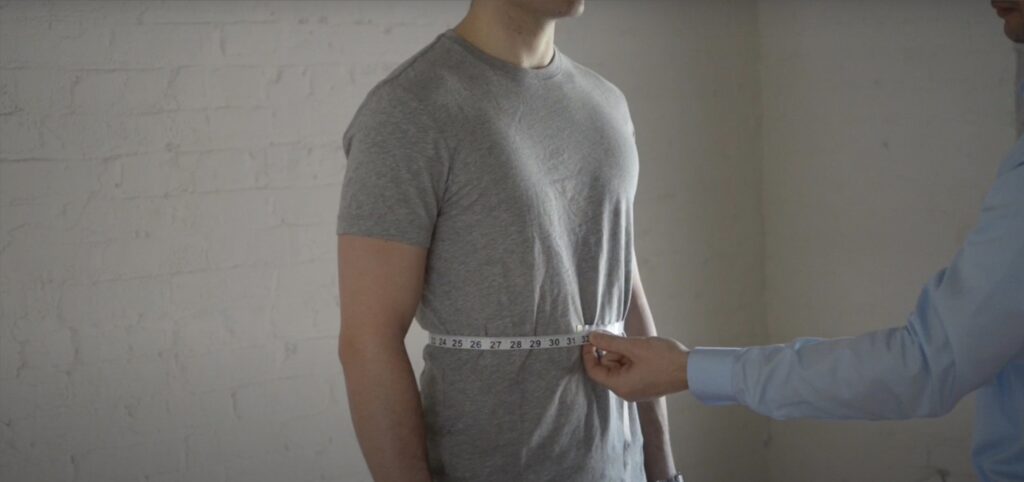
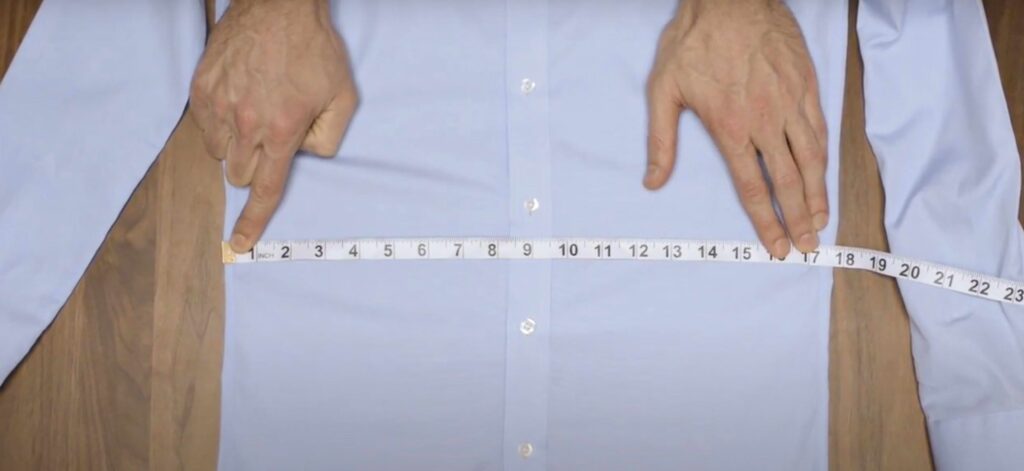
Body measurements and the shirt dimensions stored in your Proper Cloth account are quite different. Chest Width, Midsection Width, Bottom Width, and Sleeve Width are all taken from a shirt laying flat on a surface. Thus, multiplying them by 2 will yield the actual circumference of the shirt in these areas. For other measurements such as Collar Size and Sleeve Length, the true measurements will be stored.

For example, here’s how you would measure around your waist:

Measuring tape around a waist

Compared to how we measure and store the Midsection Width dimension:

Measuring tape on a flat shirt showing midsection width

What’s the difference between 5-pocket casual pants and other types of pants?

5-pocket pants

5-Pocket Pants

Several fit, fabric, and design elements set 5-pocket pants apart from other casual pants and dress trousers. These are the key ways in which they differ, so you can best decide how you want to design and style them.

Casual Design

Pockets: As you might expect, 5-pocket pants have five pockets: two rear, two front hip, and one watch or coin pocket inside the right front hip pocket. Chinos and dress pants have no more than four pockets (two front and two rear), and they are generally discreet, whereas the pockets on 5-pocket pants tend to be a little more visible.

Metal Hardware: Instead of the horn buttons you find on chinos and dress pants, 5-pocket pants have metal tack buttons. They are also reinforced by metal rivets at the corners of the three front pockets. These metal details give the pants a more utilitarian, workwear look that echos the functional aspect of the original 5-pocket pants created by Levi Strauss in the late 1800s. Our durable rivets, tack buttons, and zippers are all made to last by Riri in Italy.

Denim Waistband & Hem: The denim waistband found on 5-pocket pants looks a regular button-through closure, but it has no extra stitching around the bottom of the waistband piece and no split back, both of which are features of chinos and other types of casual pants. The hem is about 5/16″ wide and secured with a chain stitch, making it much narrower than the hem found on casual pants and dress pants, which is about 1.5″.

The Perfect Custom 5-Pocket Fit

A 5-pocket pant typically has a straight fit through the leg. The waist should sit at the hip bones, a bit lower than your chinos, and allow 2-3 fingers to fit inside the waistband but still sit in place without a belt. The inseam length you choose should be the same as your usual retail size. We recommend creating a fit that’s specific to your 5-pocket pant—our guide can help.

Hard-Wearing Fabrics

The original 5-pocket pants were made from heavy-duty denim that could stand up to the physical work of the men who wore them. And while you may not be doing any mining or carpentry when you wear your own 5-pocket pants, they still look and wear best when they’re made from heavier casual fabrics. Dress pant fabrics, which are most often made from wool and wool blends with materials like silk, linen, and cashmere, have a gentler drape and weigh less despite offering a broad range of options in terms of warmth and breathability. Chinos are typically found in cottons and cotton blends and are lighter, smoother, and have a more “crisp” look and feel. The weight of heavier fabrics adds structure and durability to 5-pocket pants, and more pronounced textures add visual weight as well, so the bolder visual impact of the pants’ design elements are properly balanced. Denims are a no-brainer, of course, but corduroys and heavier moleskins are also great options for 5-pocket pants.

How to Create the Perfect Custom 5-Pocket Pant Fit

There are a few ways you can create the perfect custom size for your 5-pocket pants. We make it easy to start from scratch, or to tweak an existing fit to make a slightly different one.

custom 5-pocket casual pants

Custom 5-Pocket Pants

Create your custom pant size with Smart Sizes

Our Smart Sizes survey will create a custom pant size for you in seconds. This is the quickest and easiest way to create your 5-pocket pant size—just answer 10 questions about your body type and fit preferences, and our algorithms will do the rest.

Start with the pant size you select at any retail store

If you’re creating your first custom casual pant size on our site, we recommend selecting a base size with the waist measurement you would select for the same type of pants at any retail store.* For 5-pocket pants, the waist should sit at the hip bones, a bit lower than your chinos, and allow 2-3 fingers to fit inside the waistband but still sit in place without a belt. The inseam length you choose should also be the same as your usual retail size.

*Vanity sizing typically amounts to a 0.5″-1.0” difference between an item’s labeled size and the item’s actual measurements. If you usually purchase pants with a 34” waist from an American retail store, the pants will likely measure between 35” and 36” around the waist.

Use your existing Proper Cloth casual pant fit

If you already have a slim fit for your Proper Cloth chino/casual pant size, your 5-pocket pant may not require any fit changes at all.

You may want to consider making a few changes to that fit, however, if you’d like your 5-pocket pants to fit more like jeans. To achieve a fit more typical of jeans, which are generally a bit slimmer and more close-fitting than chinos, we recommend the following adjustments to your casual pant or chino fit:

  • Consider a Smaller Hip Width: Reduce the hip width by only .3”-.5” (total reduction of .6”-1”) for a slightly tighter fit around the hips.
  • Consider More Taper in the Leg: Reduce both the knee width and leg opening width by only .3”-.5” (total reduction of .6”-1”) for a slimmer taper through the leg.

Measure a pair of pants you already own and like

If you’d like your 5-pocket pants to fit like a pair of pants or jeans you already own, you can create a new size in your account with those measurements. Follow the detailed instructions in our guide to measuring pants to measure them and recreate the fit.

What are 5-Pocket Pants?

5-pocket pant fit

5-Pocket Pants

The 5-pocket pant traces its origins back to the 1800s, when its functional design and reinforced construction made Levi Strauss a household name. They’re the pants you think of when you think of your favorite jeans—casual, practical, and crafted with understated precision and durable fabrics. 

They’re more casual than chinos

While our 5-pocket pants are made to pair well with both casual and tailored pieces, they make a distinctly relaxed impression that reaches further into the casual spectrum than chinos do. The lighter weight and generally smoother finish of chino fabrics, along with the use of horn buttons, makes chinos naturally a bit more elegant and appropriate for business casual and office dressing that can skew even more formal depending on the level of formality of the accessories and tailored items with which they’re paired. The hardier, heavier fabrics, use of metal hardware details, and more conspicuous pockets in the design of the 5-pocket pant, on the other hand, offer the opportunity for more rugged dressing that will give a casual tone to any tailored items you wear with them.

They have 5 pockets

While chinos and dress pants have two front hip pockets and two back pockets, the 5-pocket pant has an additional watch or coin pocket sewn inside the front right hip pocket. This fifth pocket was originally intended to keep a pocket watch (a typical item carried by men in the late 19th century) and it remains in the design mostly for aesthetic purposes today. This small pocket is not actually “the fifth pocket”—that’s the rear left pocket, as the original Levi’s design had only one rear pocket on the right side and the rear left one was added later. The two front hip pockets feature a curved shape that makes their contents easily accessible, and the two rear patch pockets are angled at the bottom to offer a traditional Western look.

They’re made from hard-wearing fabrics

The fabrics that make the best 5-pocket pants are sturdy and hard-wearing, like the hardy denims from which the originals were made so many years ago. Thicker, heavier fabrics play to the casual nature of the pants’ design and balance the substantial hardware (rivets, tack buttons) that reinforce their seams. You don’t necessarily need to be doing hard labor to wear these fabrics, or to find ones that are made from the highest quality materials. We’ve chosen fine Japanese denim and rich Italian corduroy to start our collection—both heavy yet luxe options that dress up as well as they dress down.

Create your 5-pocket pant fit with our guide.

Mask Filters and Filter Replacements

There are different versions of our Everyday Mask, some of which have different types of filters or filter integration. This page explains which versions have which filters and whether they are sewn into the mask or removable. The Everyday Mask – Description and Specifications.

Everyday Mask 3.0 (Sewn-In Filter): These masks feature sewn-in filters with lab-test certified BFE ≥99% and PFE ≥95% ratings. These filters were shown to maintain their efficiency for at least 20 washes, however we did not test beyond 20 washes. Everyday Mask 3.0 test results.

Everyday Mask 2.0 (Sewn-In Filter): These masks feature sewn-in filters with lab-test certified BFE ≥95% and PFE ≥85% ratings. These filters were shown to maintain their efficiency for at least 20 washes, however we did not test beyond 20 washes.

Everyday Mask 95 (Sewn-In Filter): These masks feature sewn-in filters with lab-test certified BFE ≥99% and PFE ≥95% ratings for an even higher level of protection. These filters were shown to maintain their efficiency up to 20 washes, and to have PFE ≥85% thereafter. Everyday Mask 95 test results.

Everyday Mask Versions v1.0-v1.4 (Removable Filter): The earliest versions of our Everyday Mask feature removable filters with lab-test certified BFE ≥95% and PFE ≥85% ratings. These filters were shown to maintain their efficiency for at least 20 washes, however we did not test beyond 20 washes.

Everyday Mask Performance v1.5 (Sewn-In Filter): These masks feature sewn-in filters with lab-test certified BFE ≥95% and PFE ≥85% ratings. These filters were shown to maintain their efficiency for at least 20 washes, however we did not test beyond 20 washes.

Replacement Filters

Everyday Mask versions 1.0-1.4 have removable filters. At this time we do not have replacement filters available for sale. In terms of third-party filter replacements, we recommend using meltblown non-woven polypropylene filters that do not exceed 6” x “4 in size.
Our removable filters look like this:

mask and removable filter

One of our masks with a removable filter.

Washing Mask Filters

All of our masks and filters are washable. Detailed instructions for washing your Proper Cloth masks and filters. Note, that for masks with sewn-in filters, simply omit the filter removal step.

Face Mask Sizing

The Everyday Mask

Proper Cloth’s Everyday Face Masks come in two sizes, Small and Large. Taller adults (> 5’6”) most often find the Large to be an ideal fit. Shorter adults (under 5’5”) most often find the Small to fit best.

Size Large. Our male model is 5’11” and wears a Large mask. He describes himself as someone who would wear a medium/large size hat. 

model wearing size large mask

Model wears a size Large mask.

Size Small. Our female model is 5’4” and wears a Small mask. She typically wears a size small hat. 

model wearing size small mask

Model wears a size Small mask.

When in Doubt, Go Large. Overall, the size Large has been most popular among our customers, so if you’re on the fence about which size to order, we recommend going with a Large. If you have a bigger head, a beard, are very tall, or just want maximum coverage for your face, the Large is your safest bet.

We Now Have a Mask for Children. We recommend the Child Size mask for children under 4′ tall. It fits most children ages 3+.

Size Small Can Work for Bigger Kids. A size Small works well for children at least 4’ tall. In our limited testing, we’ve found a Small to fit a 5 year old relatively well (but good luck getting them to keep it on). 

Everyday Mask Size Charts

Everyday Mask size specs v1.1-v1.5

The Everyday Mask v1.0-1.5 Size Specifications

everyday mask v2.0 specs

The Everyday Mask v2.0 Size Specifications

diagram of everyday child mask dimensions

Everyday Child Mask Size Specifications

The TechKnit Mask

We recommend choosing a TechKnit Mask in the same way you would choose an Everyday Mask. The TechKnit Mask, however has a more minimal, sleek fit and silhouette that does not wrap as far under the chin as the Everyday Mask does, and it therefore has smaller measurements.

TechKnit Mask Size Charts

diagram of techknit mask v1.1 dimensions

TechKnit Mask v1.0 and v1.1 Size Specifications

TechKnit Mask v1.0 and v1.1 (v1.1E and v1.1H). These versions of the TechKnit Mask are identical in their dimensions, but for v1.1 we reduced bulk at the outer edges to improve the fit along the sides of the mask. We also added an over-the-head elastic band option.

diagram of techknit mask v1.2 dimensions

TechKnit Mask v1.2 Size Specifications

TechKnit Mask v1.2 (v1.2E and v1.2H). We heard your feedback on v1.0 and v1.1. We increased the size and updated the shape of the masks to improve fit and better follow the contours of the face. These masks are available with over-the-ear and over-the-head elastic bands and still feature a sewn-in filter.

The Everyday Mask: Version Specifications

Since we launched our Everyday Mask in April of 2020 we’ve made several improvements to its design. You’ll note that different versions of the mask are available on our site, identifiable by the “v1.3,” for example, in the product name. Here you’ll find an explanation of the differences among them and the specifications of each.

Everyday Mask 3.0 (v3.0E and v3.0H)

We kept the same overall mask construction as our Everyday Mask 2.1 and upgraded the filter. The new filter is lab-test certified BFE ≥99% and PFE PM0.1 ≥95%, which is the same as our Everyday Mask 95 and Everyday Mask for Kids filter.

Everyday Mask for Kids (95EC and 95HC)

These masks are made with the same construction and materials as our Everyday Mask 95, just downsized to fit children 3 years+. They feature sewn-in filters with lab-test certified BFE ≥99% and PFE ≥95% ratings for an even higher level of protection. These filters were shown to maintain their efficiency up to 20 washes, and to have PFE ≥85% thereafter. 

Version 2.1 (v2.1E and v2.1H)

This version of the Everyday Mask is identical in its dimensions to Version 2.0, but we’ve reduced bulk at the outer edges to improve the fit along the sides of the mask.

Everyday Mask 95

These masks feature sewn-in filters with lab-test certified BFE ≥99% and PFE ≥95% ratings for an even higher level of protection. These filters were shown to maintain their efficiency up to 20 washes, and to have PFE ≥85% thereafter. 

Version 2.0 (v2.0E and v2.0H)

We made multiple adjustments to the Everyday Mask design this time around. We updated the shape of the mask to create a more flattering silhouette and provide more breathing space inside, lengthened the side pleats slightly to improve fit, and made small sewing adjustments to give the mask a cleaner finish. We also opted to sew the filter into the mask to prevent it from moving out of place during wear.

everyday mask v2.0 specs

The Everyday Mask v2.0 and v2.1 Size Specifications

Version 1.5 (v1.5)

This version is sewn from performance knit fabrics and features an over-the-head elastic band design. We sewed the filters into these masks to ensure they remain secure during vigorous activity. This version has the same dimensions as v1.1.

Everyday Mask size specs v1.1-v1.5

The Everyday Mask v1.1-v1.5 Size Specifications

Version 1.4 (v1.4E)

This version features an around-the-ear elastic band design. We used a new type of elastic with adjuster pieces to allow for band size adjustment. This version has the same dimensions as v1.1 and a removable filter. The first batch of this version was made with our original (larger) label; the rest have the newer, smaller label.

Version 1.3 (v1.3)

We updated the attachment of the elastic band for more security, joining it with an extra stitch on the wearer’s left side. We also added another layer to the top edge piping to improve comfort and construction around the nose wire. This version features an over-the-head elastic band design, a removable filter, and the same dimensions as v1.1.

Version 1.2 (v1.2)

We decreased the size of the labels located on the wearer’s right side on the masks. This version features an over-the-head elastic band design, a removable filter, and the same dimensions as v1.1.

Version 1.1 (v1.1)

We heard your feedback on v1.0 and updated the size and shape of the masks to better follow the contours of the face. These masks also feature an over-the-head elastic band design and removable filter.

Everyday Mask v1.0 size specifications

The Everyday Mask v1.0 Size Specifications

Version 1 (v1.0)

This was the first batch of masks we produced. These masks feature an over-the-head elastic band design and removable filter.


9 Style Tips for Shorter Guys

Dressing for your height can be tricky, but we’ve got you covered. Here are our best style tips if you’re under 5’8”.

@adamgonon wears one of our Bedford jackets.

1. Slim Fit is Flattering

A slim or more tailored silhouette can instantly improve the impression you make. It will help you look more put-together, regardless of your body type, and can even help you appear taller. By contrast, an oversized fit can make you look wider and shorter.

2. Ditch the Belt

The horizontal line a belt creates across your waist interrupts the clean lines of an outfit and can make you appear wider than you are. If you find that you need one, though, be sure to select a slim belt with a minimal buckle. Large buckles can create a focal point that draws attention downward and away from the face.

3. Rounded, Slim-Profile Shoes

We recommend selecting a classic shoe, like a loafer, with a rounded toe and a profile that more closely follows the contours of your foot. Look for a shoe whose top line or collar hits lower on the ankle, as this will also lengthen your appearance (square toe or wide shoes have the opposite effect, so steer clear of them). A substantial, hard sole can also add some height. 

4. Skip the Trouser Cuffs

Cuffs on your trousers can add weight, dragging your appearance down and making you look shorter. Slim trousers with clean, uninterrupted lines give the impression that you’re taller than you actually are. 

5. Shorter Jacket Length, Sleeve Length & Inseam

Finding the right length for your clothes is arguably the hardest part of shopping off the rack. Custom clothing eliminates the guesswork, though, as you can modify your jacket length, sleeve length, and inseam length precisely to your own proportions and taste. In general the bottom hem of your jacket should hit just below the seat or fly, but you might benefit from a slightly shorter jacket length (particularly if your torso is on the longer side) as this can draw the eye upward and create better visual proportions. Take note of the length of your jacket sleeves—their ends should hit at your wrist bones and show about .25” to .5” of shirt cuff, so any excess fabric stacking along your forearm or hidden shirt cuffs will indicate that they’re too long. We recommend no break or negative break for your trousers, as well. This means the trouser hems won’t touch your shoes, ideally showing a bit of ankle and creating a clean line from hip to heel. Bunched excess fabric around the ankle gives the impression that your trousers are too long for your legs.

6. Medium and Narrow Lapels are Best

The choice between a medium and narrow width lapel should be determined by your body type. The short and skinny guy should opt for a narrow lapel, and the short and stocky guy should opt for a standard or slightly slimmer lapel, though not necessarily narrow. The lapel proportion should, in a sense, echo your frame. It’s also important to consider the type of collar on the shirt you’ll wear with the jacket. A narrow lapel will match better with a shorter or smaller collar style, while a standard or slightly smaller collar size will go better with a standard lapel width. 

7. Modern Collar Styles

Modern collar styles tend to have a profile more proportionate to a shorter guy’s stature and build. Our Franklin Spread and English Spread collars are great examples, as they have the appearance of the popular spread collar many men gravitate toward (like our President Spread collar) but don’t overwhelm a shorter neck. A very tall collar will make one’s neck and head look disproportionately small.

8. Medium or High Rise Trousers

Trousers with a higher rise elongate the legs and draw the eye up toward your face, making you look taller. Conversely, low rise trousers pull the eye downward and elongate the torso and shorten the legs.

9. Small Patterns and Matching Colors

Keep it simple. Dressing for your height means thinking about your proportions. Patterns and colors can help you create the proportions for the impression you want to make. Vertical stripes, solid colors and monochromatic color schemes, and patterns of a small scale like ginghams, pindots, and small florals, will prevent you from being overwhelmed by your outfit. A matching suit is a great choice, too, as it will lengthen your silhouette, whereas two separates will break it up.

Dress Shirt Hem Types

The shirt hem, often defined by its shape, is the bottom end of the shirt, which is folded and hemmed to create a finished edge on the garment. Proper Cloth has three types of hems to choose from for both business and casual shirts.

Rounded Hem

Rounded Shirt Hem

Rounded Hem Design

The rounded hem is the most common choice for business and business casual shirts. It features a 2” rise on each side of the shirt, curving up towards the side seams, which gives a rounded shape to the front and back shirttails. Our shirts are reinforced at the highest point of the rise with side seam gussets, a design detail that both strengthens the shirt at this point of stress and signifies high-quality construction. 

Straight Hem

Straight Shirt Hem

Straight Hem Design

The straight hem is a popular choice for casual, and particularly untucked, shirts. It is, as the name suggests, cut straight across all the way around the bottom of the shirt, and features a 2.5” vent in the bottom of the side seam on each side of the shirt.

Sizing Tips: We suggest making two small adjustments to your shirt size if you apply a straight hem to your shirt design. First, ensure that the midsection width is the same as or very close in measurement to the bottom width, as this will help to create an optimal relaxed look without the “hourglass” shape typical of more formal shirts. Second, you might also consider decreasing the shirt length by about .7″ so the shirt doesn’t feel too long when you’re wearing it untucked.

Polo Hem

Polo Shirt Hem

Polo Hem Design

The polo hem is traditionally a design feature of classic polo shirts. It’s cut straight across all the way around the bottom of the shirt, but the back shirttail is 1” longer than the front shirttail. It includes side seam vents on each side of the shirt, much like the straight hem does, however given the difference in front and back shirttail lengths these vents are 1” long.

How to Adjust the Shirt Length When Applying a Neck Posture Adjustment

In order to maintain equal Shirt Front and Shirt Back Lengths when applying a neck posture adjustment to an existing shirt size, we suggest adjusting the Shirt Back Length. The front shirttail length is controlled automatically, based on several other sizing factors, and adjusting the Shirt Back Length according to the posture adjustment you choose will have the desired effect of evening the lengths of the shirttail at both the front and back of the shirt. These changes are particularly important if you plan to wear your shirt untucked. 

When adding a Neck Forward setting:

  • For Neck Forward 1”, increase the Shirt Back Length by 1″
  • For Neck Forward 0.5”, increase the Shirt Back Length by 0.5”

When adding a Neck Back setting:

  • For Neck Back 1”, decrease the Shirt Back Length by 1”
  • For Neck Back 0.5”, decrease the Shirt Back Length by 0.5”

Suggested Size Adjustments – Shirt Size Update June 4, 2020

We’ve launched exciting new improvements to our custom shirt sizing. The major changes these improvements make are:

  1. Tenth inch (0.1″) increments for all shirt dimensions.
  2. More consistent bottom button distance for all shirt lengths.
  3. Better alignment of front and back shirttails for sizes with posture adjustments.

If you ordered a shirt with a size that included a posture adjustment prior to June 4th, 2020, reordering with that size will result in a different Shirt Front Length on the new shirts from the older shirts. 

With the Shirt Front Length changing, even though the Shirt Back Length stays the same, the overall length of the shirt will likely feel different. 

To maintain an overall length that feels consistent with shirts you’ve ordered in the past, we suggest customers with sizes that include posture adjustments make the following size adjustments: 

    • If your size has Neck Forward 1”, increase Shirt Back Length by 1”
    • If your size has Neck Forward 0.5”, increase Shirt Back Length by 0.5”
    • If your size has Neck Back 1”, decrease Shirt Back Length by 1”
    • If your size has Neck Back 0.5”, decrease Shirt Back Length by 0.5”

Why did we make this update? So we can ensure perfect alignment of the front and back shirttails for a more attractive untucked fit. 

More information about the June 4th, 2020 update.

If you have any questions about these changes, or would like us to take care of them for you, please Contact Us with your request.

How Does Proper Cloth Ensure Precision in Custom Clothing?

Producing custom clothing for thousands of customers quickly and efficiently is no small task. Here are some of the steps we take to ensure your garments are produced perfectly in every way, every time. 

  1. All of your order information is processed and handled completely digitally. We don’t use any paper forms, phone calls, fax machines, hand-written notes, or any other human-factor communication method to process your order. This level of digital integration is rare, difficult to create, and critical for avoiding mistakes or misunderstandings, and it provides you with the perfect product every time. 
  2. On the factory floor, all of our custom shirts, tailored clothing, and casual pants are digitally patterned. Avoiding hand-drawn paper patterns and human decisions when developing a pattern enables us to ensure a consistent pattern every time. 
  3. In most cases we use a robotic cutter to cut the shirt components from our fabric. Robotic cutting is fast and efficient, and more importantly, further removes the chance for human error.  
  4. Our custom products are then hand-sewn (using sewing machines) by experienced sewers. Our sewing lines are completely optimized for custom clothing and our sewers are some of the best in the business. 
  5. Finally, every shirt, suit, trouser, and casual pant goes through a rigorous quality-control process to ensure that it is sewn beautifully, has the right design details, and has the correct finished dimensions. 

Shirt Size Update June 4, 2020

We’re excited to announce that we’ve made some updates to our custom shirt sizing algorithm. Here are the updates, what they provide, and how they will affect custom sizes created prior to the updates.

Tenth Inch (0.1″) Increments for All Dimensions

We’ve changed the increment in which you can adjust all shirt dimensions from 0.25” to 0.1”. This gives you even more control over the fit of your shirt. While 0.1” increments may seem overly specific to some, we think this finer control will be a big help for perfecting dimensions like cuff around and sleeve width. 

If you have a saved size that has some dimensions set to values ending in .25” or .75”, these values will not change and you can continue to order in those sizes. Going forward, however, any adjustments made to dimensions with values ending in .25” or .75” will change their measurement increment to 0.1”. 

Note: This update does not change the fundamental precision with which the shirts are made. Our accepted sewing tolerances remain the same (and in most cases are 0.25”). 

Displaying Front Length, Button Spacing, and Bottom Distance

An important factor in getting the right untucked fit is the distance from the bottom button to the bottom of the shirt. In the past this distance was not specified explicitly, and you were left to guess what would happen as you adjusted the shirt back length and top button placement. 

With today’s update, we’re now doing everything we can to make these dimensions extra clear by displaying these values on your saved sizes page.  

  • Front Length is the measurement from the base of the front collar band to the bottom of the front shirttail
  • Button Spacing is the distance between each button (not including the collar button and the 2nd button) measured from button center to button center
  • Bottom Distance is the distance between the center of the bottom button to the bottom of the front shirttail

For your convenience, these values are controlled automatically. The update enables you to see them clearly, and see how they change as you make changes to other settings like Shirt Back Length, Neck Posture, and Top Button Placement. 

More Consistent Bottom Distance for All Shirt Lengths

Some customers will recall that prior to this update, at certain shirt lengths, increasing the shirt length by just 0.25” would cause the Button Count to increase and the Bottom Distance to become significantly smaller. In practice, we found that Bottom Distance plays a critical role in a shirt’s fit, and having it change in an unpredictable way when other small changes are applied has made getting a perfect fit more challenging. 

Today’s update includes changes to maintain a more consistent Bottom Distance for all shirt lengths. We’ve achieved this by adding a third option for spacing between each of the buttons on the shirt front. While buttons were previously spaced at either 3 1/8” or 3 3/8” apart depending on other size settings, in some cases we will now space the buttons up to 3 1/2” apart. 

As with many other aspects of our shirt sizes, the Button Spacing setting is controlled automatically, with the primary goal of producing the optimal space between the bottom button and the bottom of the front shirttail. 

Changes to Button Counts and Button Spacing

These updates affect the number of buttons on the front of the shirt and spacing between those buttons. For some saved sizes, ordering from today onward may result in slightly different Button Count, Button Spacing, or Bottom Distances versus ordering with the same size prior to the updates. In general, these changes will be minimal and an improvement. We don’t suggest customers adjust their saved sizes to try to compensate for this. 

Aligned Front and Back Shirttails for Every Posture Setting

The major change here is that we’ve updated how we adjust a shirt’s pattern when a Neck Posture adjustment is applied. We’ve changed this such that the front length of the shirt will always match the back length of the shirt, regardless of posture adjustment.  

Prior to the update, if you applied a Neck Posture adjustment we did not adjust the shirt front length. This had the advantage of avoiding any surprise changes to the number of buttons on the front of the shirt or the distance to the bottom of the shirt. It had the negative effect, however, that the front of the shirt would not align perfectly with the back of the shirt. For example, if you had Neck Forward 1”, the front shirt tails would hang 2” lower than the back shirt tails. With our updated size system, the front and back shirt tails will always align perfectly. 

How to Update Your Size If You Have a Neck Posture Setting

If you’re going to reorder with a saved shirt size that has a Neck Posture adjustment and you don’t make any changes to it, you may notice that the shirt’s front length comes out different from that of your previous shirts. For that reason, we would suggest the following adjustments. 

  • If your size has Neck Forward 1”, we suggest increasing Shirt Back Length by 1″
  • If your size has Neck Forward 0.5”, we suggest increasing Shirt Back Length by 0.5”
  • If your size has Neck Back 1”, we suggest decreasing Shirt Back Length by 1”
  • If your size has Neck Back 0.5”, we suggest decreasing Shirt Back Length by 0.5”

These changes are particularly important if you’re wearing your shirt untucked.  

How Can I Tell If My Saved Size Will Change with This Update?

Due to practical user interface factors it can be difficult to present this information clearly, but here is the best way to compare a saved size you are planning to order with, with the dimensions and button counts of an order you had placed prior to this change.  

  • On the Order History page, for orders placed before or after the update, you can find Button Count, Button Spacing, Front Length, and Bottom Distance in the shirt size according to the logic that would have been used to make the shirt. 
  • On your Saved Sizes page, however, all saved sizes will show Button Count, Button Spacing, Front Length, and Bottom Distance according to the new logic. The potential confusion is that order–based sizes from before the update will show the newer values if viewed on this page.  

To tell if your shirt size is changing, or how it’s changing, you can compare the Button Count, Button Spacing, Front Length, and Bottom Distance from an old order on your Order History page to the same values of the size used for that order on your Saved Sizes page.