The Proper Cloth Antimicrobial Finish

Our Everyday Masks are treated with a non-toxic silver-ion finish called SILVADUR™ that improves the mask’s ability to protect you from microorganisms. Here’s everything you need to know about it. 

Who makes it?

DuPont—a science and technology company with more than 200 years of history—developed the SILVADUR™ antimicrobial solution to inhibit the growth of microorganisms on fabrics. 

What is it?

SILVADUR™ is a solution made with bound silver ions (Ag+), a natural antimicrobial agent that has been trusted and used for over 2,000 years. When fabrics are dipped in it, the solution provides them with reliable and durable antimicrobial protection against microorganisms that may accumulate on textile surfaces. SILVADUR™ is made specifically for fabrics and prolongs garment life.

Is it safe?

Yes. SILVADUR™ has been assessed as harmless to humans and the environment, and it’s on the International Oeko-Tex® Association’s list of approved active chemical products. The treatment eventually fades (after about 50 washes) from fabrics that are dipped in it, and the bound nature of the silver ions ensures no free silver is released into the environment.

Certifications

SILVADUR™ is registered with the U.S. EPA and its active ingredient (silver ions) is supported under the EU Biocidal Products Registry (BPR). Its antimicrobial technology meets REACH requirements in the European Union.

The Proper Cloth Everyday Mask: Design, Fabric & Filter

mask for protection

The Everyday Mask

Most face masks on the market are uncomfortable, ineffective, or—to be perfectly honest—unattractive. So we spent four weeks developing a mask that we’d actually want to wear. Something beautiful, comfortable, and most of all, functional. After countless iterations, we settled on a design we think accomplishes all of this.

Anatomy of the Everyday Mask

  • Rounded Silhouette. The shape has a larger section under the chin than most masks for a more secure fit that doesn’t slide up and down the nose when you talk or move around.
  • Moldable Nose Piece. A metal piece at the bridge of the nose allows for a more secure air-seal at the nose and under the eyes.
  • Behind-the-Head Elastic Straps. Two elastic straps wrap around the back of the head and neck for a secure fit.
  • Side Pleats. Two pleats at each side of the mask enable a close fit at the cheeks and prevent uncomfortable tightness around the nose and jaw.
  • 5-Layer Design.
    • Layer 1: Premium Shirting Fabric with antimicrobial treatment
    • Layer 2: 3-layer non-woven 100% polypropylene filter with meltblown core
    • Layer 3: Premium Shirting Fabric with antimicrobial treatment

Mask Fabric

The first and third layers order the Everyday Mask are made from premium shirting fabrics. Several options are available, each of which we chose specifically for its breathability, comfort, and ability to successfully take antimicrobial treatment. The fabrics are washable, durable, and easy to care for. They’re also treated with SILVADUR™ antimicrobial solution for extra protection against microorganisms and can be washed up to 25 times before the treatment begins to wear off.

Filter

The middle layer of our mask consists of a non-woven 3-layer 100% polypropylene filter with a polypropylene meltblown core. This filter in versions 1.0-1.5 of the Everyday Mask can be removed and washed up to 20 times before it loses effectiveness and should be replaced. Starting in the 2.0 mask the filter is sewn into the mask and is washable along with the fabrics of the outer and inner fabrics layers.

Our Everyday Mask 3.0 is made with a filter whose lab-tested efficacy ratings are BFE ≥99% and PFE ≥95%. This means the filter is lab test certified to filter out 95% or greater of .1 micron-sized particles. The average coronavirus particles are 0.125 microns. 

How Often Should You Wash a Cloth Face Mask?

mask hygiene

The Proper Cloth Everyday Mask

Wash Fabric Masks Nightly After Use

Every time you wear your mask in public you run the risk that virus particles land on it, and you’re therefore at risk of exposure when handling the outside of the mask. So, you’ll want to adjust your mask washing schedule according to how much time you spend outside in public.

We find that the best, most practical strategy is to wash your cloth face mask at the end of each day before going to bed. That way it can dry fully and be ready for use again by the next morning. Of course, if you don’t wear your mask one day there’s no need to wash it that night. 

Why Should You Wash Your Face Mask?

Washing your mask regularly is about more than just preventing coronavirus infection. There are many great reasons to wash your cloth face mask regularly!

  • To disinfect lingering virus particles. Washing your face mask regularly will ensure you destroy and remove any virus or bacteria particles that may have landed on the mask while you were wearing it. This will prevent those particles from moving to other surfaces and ultimately infecting you. 
  • To prevent and remove stains. Washing your cloth face mask regularly will help prevent stains from food, sweat, or other things you encounter throughout your day from forming. This will ultimately keep your cloth face mask in great condition and make it last longer.
  • To prevent breakouts and reduce skin irritation. Washing your mask regularly will keep it free of facial oils and other contaminants that can cause breakouts or other problems for your complexion. 
  • To improve comfort. If your mask gets greasy or sweaty, it will become less comfortable against your skin. Like a freshly washed pillow case, a clean mask just feels better against your skin.

How Many Times Can You Wash a Proper Cloth Face Mask?

The Proper Cloth fabric face mask can be washed up to 25 times before the SILVADUR™ antimicrobial treatment stops being effective. You can certainly continue to use your mask after this point, however we’d suggest more frequent, careful washing be done after this point to ensure your mask does not accumulate any bacteria or virus particles on it. Keep in mind that how you wash your face mask is also very important for extending the life of your mask!

The filter can be washed up to 20 times before it should be replaced. Be sure to be gentle when washing the filter as it can be fragile. We are not currently able to produce replacement filters, however there are others on the market that will do a fine job. The key is to maintain 3-layer protection in the mask, and the filter is a crucial part of this.

How Many Masks Do You Need?

Keep a few washable, reusable cloth masks on hand so you can rotate among them. This will allow washed masks to air dry completely between wears and prolong the life and usability of each mask. 

How to Wash a Cloth Face Mask

How should you wash a face mask?

With soap and warm water. In order to prolong the life of your cloth mask, hand washing is best. The following method is especially good for fabric face masks like ours.

Step 1: Get set up

You’ll need a few things to clean your cloth face mask effectively.

  1. A large pot or empty sink you can fill up.
  2. Warm water.
  3. A few drops of soap: laundry detergent, hand soap, or dish soap will all work fine.
  4. A clean towel for drying.

Dish soap can effectively clean your cloth face mask.

Step 2: Create some soapy water

Fill the pot or sink with at least 3-4 inches of warm water, and add a few drops of soap to the mix. Stir things around so you get plenty of soapy bubbles. You don’t need to use a lot of soap—just a few drops should be fine.

pot with soapy water

Step 3: Hand wash your mask and filter in the water

Put your fabric mask in the soapy water and move it around gently. If your face mask has a removable filter, take the filter out and add it to the soapy water as well. Our TechKnit Mask and Everyday Mask 2.0 have a sewn-in filter which should remain inside the mask when you wash it. Massage the mask in the water gently, ensuring that the soapy water goes through the fabric thoroughly, but don’t be too rough with it either. Be particularly gentle with the filter as it can be delicate. Do this for at least 30 seconds and then leave the cloth mask and filter to sit in the soapy water for an extra few minutes. 

Step 4: Rinse thoroughly with cold water

Take the cloth face mask and filter out of the soapy water and give it a good squeeze to get rid of as much excess water as possible. Then hold the mask under running cold water and rinse it gently until the mask no longer has any soap on it. 

Step 5: Set the mask out to dry

When rinsing is complete, give the face mask one final squeeze to remove as much water as you can. The mask will still be damp, and it will be a crumpled mess, so the next step is very important. Carefully form the cloth mask back into its original shape, smoothing out any wrinkles as you do so. The smoother you can get it the better, as this will help the mask look its best when it has dried. Do the same for the filter. Then set them out on a dry towel and leave them to dry.  

mask laying out to dry

Step 6: Wait for the mask to dry

Depending on the fabric your mask is made of and the humidity of your house, the drying process can take between 3-10 hours. It’s usually best if you can let your mask dry overnight. If you need to accelerate things, a hairdryer can be a big help. Note: DO NOT put your cloth mask in the microwave as the metal nose-bridge piece can cause problems there. 

Step 7: Put the filter back in the mask

After everything is dry, carefully put the filter back in the cloth face mask. The top of the triangle should be positioned tight to the top of the nose bridge of the face mask. The sides should spread evenly to each side, but still be neatly hidden behind the interior piece of fabric. 

Step 8: Repeat the washing process depending on how frequently you use your mask

You’ll want to adjust your mask washing schedule according to how much time you spend outside in public. We recommend washing it nightly after use.

Now your mask is fresh and clean!

How to Care for a Cloth Face Mask

caring for your mask

The Everyday Mask

In March 2020, the CDC began recommending that “everyone should wear a cloth face cover when they have to go out in public” to prevent the spread of COVID-19. Seven states (and counting) have made wearing face coverings mandatory when outside, and today many stores and businesses require customers to wear a mask to enter. 

It’s a strange new world that requires the incorporation of a strange new accessory and its proper care into our daily routines for the foreseeable future.

So we spent the last four weeks developing a face mask that we’d actually want to wear. Something beautiful, comfortable, and most of all, functional. And throughout development and testing we learned how to properly care for cloth face masks in a way that is safe and easy.

How often should I wash a face mask?

Best practice is to wash your face mask at the end of every day. 

While viruses cannot live on fabric forever, early research suggests COVID-19 can live on fabric for anywhere from several hours up to a full day. Additionally, if you were to leave the mask on a surface after you’ve worn it, there is a chance it could transfer the virus to that surface. So rather than take any risks, you’ll want to wash the mask as soon as you’ve finished wearing it for the day. 

Also, when you go to wash your mask, try not to touch your face.

What’s the best way to wash my mask?

Hand Washing

Some masks are hand–wash only, while other masks are machine washable. You’ll want to check with the supplier of your mask for their recommendations.

Washing a cloth face mask by hand is really easy. You can wash it in a sink using warm, but not scalding hot, water. Just add a bit of either soap or detergent—enough that there is definite bubbling and frothing happening throughout the mask as you lather it. If your mask has a removable filter, like ours does, you should remove this and wash it along with your mask. 

A minute or two is a good safe amount of time to spend washing the mask. That’s it.

Machine Washing

Some masks, including ours, are machine washable, but we still prefer to wash them in the sink. It’s a big waste of water to run a mask though a washable machine if it’s not going through with a full load. If you do plan to wash your mask in a washing machine, wash on cold or medium heat. 

Drying

Air drying is the way to go. Set the damp mask on a towel overnight and it’ll be ready to wear again in the morning. Don’t dry your mask in the dryer, as this can irreparably damage it. 

Quick Fixes

If you’re in a jam and don’t have access to a sink or some way to wash your mask, what’s the best thing to do? We suggest taking a disinfectant wipe to all surfaces of your mask. Less thorough than washing with soap, but certainly better than doing nothing.

A few extra tips:

  • Never share your face mask. Each mask is intended for one user and it comes in such close contact with your mouth and nose that it is very risky to use another person’s face mask, even if they seem symptom–free.
  • Stop using a mask if you notice any odd smells or unknown stains on it. 
  • If your mask has a filter, check how many times the supplier says it can be washed. For instance, ours can be washed at least 20 times before the filter begins to lose its effectiveness. 

How to Wash and Care for Casual Pants

Proper Cloth’s casual pants are a great wardrobe staple for anyone’s closet, and they’re extremely easy to care for. They’re super versatile, as they can be dressed up with a blazer or styled more casually with a polo or t-shirt, and you can customize the fit and design them however you like. In general, our casual pants are an easy, less–formal alternative to our dressier tailored trousers, and the washing method you choose and care you take of them can enhance their desired appearance over time. 

Wash at Home to Maintain a Casual Look

Proper Cloth’s casual pants are garment washed during production for a softer and more relaxed feel and to minimize potential shrinkage over time. As with denim, we recommend washing them every few wears—not quite as often as you wash your shirts. Launder them at home with cold water and like colors on your washing machine’s delicate or hand-wash setting, and then hang them to dry. We don’t recommend using bleach or hot water as this can cause fading and shrinkage. We also don’t recommend drying the pants in the dryer—this may shrink them below their original size and can fade the fabric and encourage puckering around the seams. Shrinkage may vary depending on the fabric type and the heat of the dryer, but it’s best to avoid the dryer completely. 

Reducing Wrinkles

Air drying your chinos will, of course, leave them a little wrinkled once they’ve dried, but the wrinkles will naturally disperse with wear. Alternatively, you can remove the wrinkles quickly with a steamer. Avoid using an iron, though, as the harsh creasing will clash with the pants’ casual aesthetic. Lastly, although we don’t like to do this ourselves, putting your chinos in the dryer for just a few minutes on a very low heat (making sure to not let them dry fully) can also reduce wrinkles before wear.

Dealing with Stains

Fortunately, stains are easily removed from our casual pant fabrics. Just use a stain-removal pen or any other spot treatment before washing. 

Professional Cleaning – A Little More Formal

If you prefer to have your Proper Cloth casual pants professionally cleaned, we recommend a wash and press rather than dry cleaning. Note, however, that professional cleaners tend to iron or press garments pretty aggressively, which may result in a sharp crease in your casual pants. If a slightly more dressy look is your aim, professional cleaning may be the way to go.

Spare Buttons

All of the buttons on Proper Cloth pants are shanked for extra durability, but if for some reason you lose one a spare button can be found sewn on the inside of the pants. If you need another button, reach out to our Customer Experience Team for a replacement.

Knit Shirt Front Placket Options

The addition of knit fabric options for custom shirts also introduces new front placket design options exclusive to these casual, stretchy fabrics.

One Button Polo Front

A timeless One Button Polo Front style. For those who want to show a little more chest or enjoy a lower top button placement, the One Button Polo Front is your best bet. For an extra casual look, the placket can be left completely unbuttoned (as pictured above).

The button is placed 2.8125″ below the collar band.

One button polo.

Two Button Polo Front

Another classic design option, the Two Button Polo Front allows for a little more versatility in terms of top button placement. The first button below the collar band is a little higher than in our One Button Polo Front design, showing less chest or undershirt. If there are times when a lower buttoning point is desired, however, one can fasten the lower button only.

The top button is placed 1.75″ below the collar band.

Two button polo.

Custom Top Button Placement Not Applicable to Polo Fronts

Due to the shorter overall length of the One and Two Button Polo Front plackets, custom ‘Top Button Placement’ settings from one’s saved shirt size are not applied during the construction of shirts featuring these polo placket options. Reference the descriptions above for the top button placement specifications for each of the Polo Front placket options.

Other Front Placket Options

While the Polo Front options are a no-brainer for knit fabric shirts, most of our traditional front placket options can also be used to create unique designs. Custom Shirt front placket styles and descriptions.
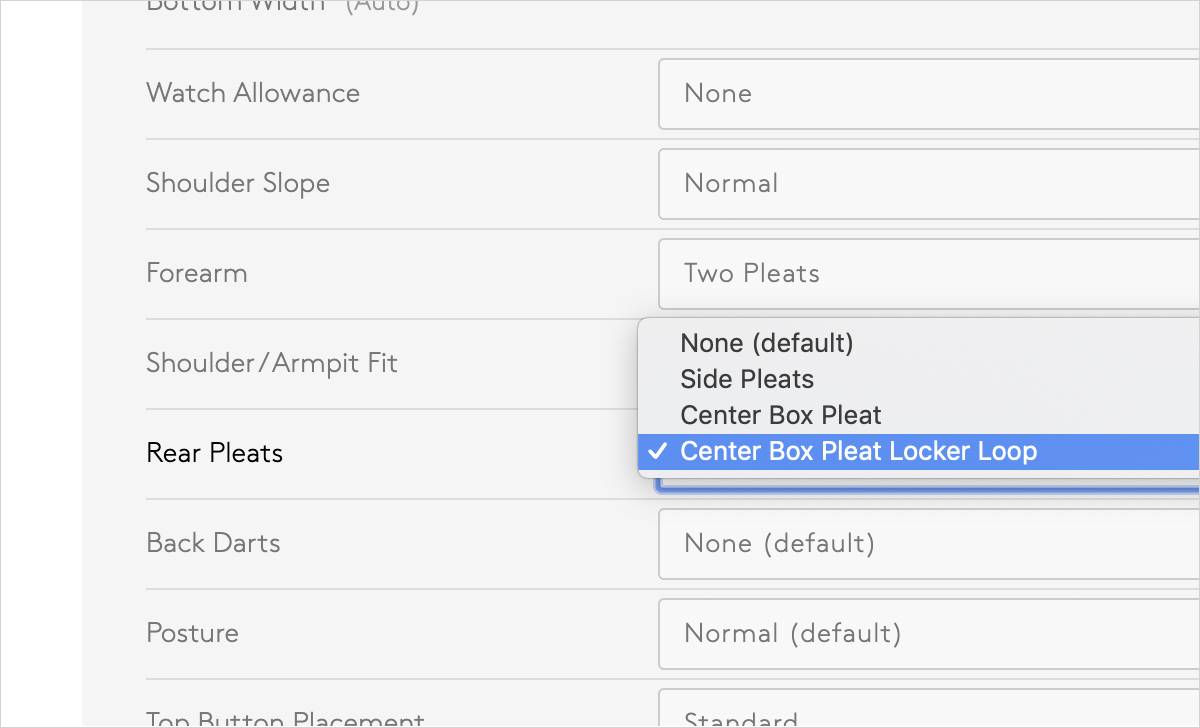
How to Add Rear Pleats, a Center Box Pleat, or Locker Loop to Your Shirt

To add rear side pleats, a center box pleat, or center box pleat with a locker loop to your shirt, simply change the “Rear Pleats” selection within the Saved Size you want to use for the shirt, as follows:

  1. Make sure you’re logged in to your account and click this link to your Saved Sizes.
  2. Click on the Saved Size to which you would like to add Rear Pleats, a Center Box Pleat, or Locker Loop.
  3. Near the bottom of the list of shirt dimensions you’ll see “Rear Pleats.” Click on the dropdown menu next to it and choose the style of pleat you’d like.
  4. At this point you can either save this change by clicking “Save” on the upper right hand side of the page, or you can click the arrow button next to “Save” to save this as a new size, separate from the original size you chose. If you choose to do this, give it a clear name, such as “Favorite Fit with Pleats” or “Casual Locker Loop Fit,” so you’ll be able to identify it easily when you want to use it.

To learn more about dress shirt back pleat options, head over to this reference page we created.

Why am I being charged Sales Tax?

While customers in New York are well accustomed to being charged Sales Tax by Proper Cloth, in 2019 Proper Cloth began collecting sales tax for customers in other US states as well.  While we’re not lawyers, we’ll do our best to explain what’s going on here. 

On June 21, 2018, the Supreme Court ruled in the case South Dakota v. Wayfair, Inc that “states may charge tax on purchases made from out-of-state sellers, even if the seller doesn’t have a physical presence in the taxing state.”  

Prior to this decision, ecommerce companies were only required to charge Sales Tax to customers in the states they had physical operations in, but with this ruling, the Supreme Court determined that ecommerce companies can be liable for Sales Tax in other states as well. 

Immediately after the Supreme Court decision, it was unclear how each state was going to handle collecting sales tax from out-of-state retailers, so we didn’t take any action.  However, more recently many states have made it clear they intend to chase out-of-state ecommerce companies for Sales Tax charges (we’ve gotten a lot of scary letters in the mail). 

Not every state is approaching this the same.  Some states have decided they won’t collect sales tax from out-of-state retailers at all.  Other states have set thresholds based on the number of transactions or total revenue that an out-of-state retailer has in their state.  Based on these guidelines, Proper Cloth collects US sales tax wherever we believe we will be liable for it.

What Makes a Fabric Wrinkle Resistant?

Overview

A fabric’s tendency to wrinkle – or not wrinkle – depends on several factors. Typically, weight, weave complexity, composition, and treatment (if any) dictate the level of a fabric’s wrinkle resistance. As a general rule, the more weight, the more treatment, and the more complex the weave construction, the more resistant to wrinkling it will be, and vice versa. Several of these factors are often at play in a single fabric, and certain combinations can help increase a fabric’s wrinkle resistance. 

Below you’ll find a breakdown of how weave complexity, material composition, and treatment affect the wrinkle resistance of fabrics.

Complex Weaves are More Wrinkle-Resistant

A fabric’s weave type can dictate its natural wrinkle resistance. More visibly pronounced weaves like royal oxfords, imperial twills, and jacquards will tend to wrinkle less, whereas broadcloth (or poplin) and plain weave fabrics with a very smooth, flat appearance will tend to wrinkle more. 

Weave density plays a further role. The diagonal line weave of twills is particularly dense, so they will often resist wrinkles better than oxfords and pinpoints of similar weights. Oxfords and pinpoints, with their “dot” weave construction, are less dense and have slightly “looser” and more “open” structures, and are therefore less wrinkle resistant. Broadcloth is more difficult to weave with a very high density, so most broadcloths will tend to weigh less than twills, oxfords, and pinpoints. Broadcloth is therefore among the most wrinkle-prone dress shirt fabrics.

Wools & Synthetics are more Wrinkle Resistant than Cottons & Linens

The material from which a shirt is made will also affect its wrinkle resistance. Shirts with wool woven into them resist wrinkles very well, while 100% linen or cotton/linen blends are naturally more wrinkle-prone. Fabrics made from synthetic materials with inherent resilience, like nylon and spandex, are very wrinkle resistant as well.

Non-Iron and Wrinkle-Resistant Treated Fabrics are most Resistant to Wrinkles

Finally, a fabric may be chemically treated to help it resist wrinkles. Treatments range in strength, from “wrinkle-resistant” — meaning the fabric will need to be ironed or steamed after washing, but will hold up well against wrinkling throughout a day of wear — to “non-iron”. Non-iron fabrics have a stronger treatment that prevents them from needing to be ironed or steamed post-wash. If they’re hung to dry, they’ll be ready for wear immediately, and daily activity will hardly cause them to wrinkle at all. Fabrics that do not have these extra treatments generally cannot be expected to perform as well, though there are some exceptions, such as merino wool fabrics, which need no treatment in order to stay completely wrinkle-free.

Wrinkle Resistance Ratings

Wrinkle resistance is entirely a matter of personal preference. Some guys will want their shirts to look freshly-pressed at all times, while others may not mind the lived-in look some wrinkles can give a shirt after a day’s wear. Our wrinkle resistance ratings can help you decide which fabrics you’ll most likely prefer.

We rate our fabrics on a 1-5 scale, with 1 being the least wrinkle–resistant and 5 being the most wrinkle–resistant.

5/5 – Extremely Wrinkle-Resistant

We don’t expect anyone to have an issue with the wrinkle resistance of fabrics with this rating. It’s typically reserved for our non-iron fabrics, though some exceptions, like our Reda Merino wool fabrics, are in this category as well.

If you machine wash these fabrics, they should have little to no wrinkling after they’ve hung to dry.

4/5 – Wrinkle–Resistant

This level of wrinkle resistance should work for most guys. This is typically reserved for fabrics that have a wrinkle-resistant treatment. They’ll hold up well against any wrinkling that would otherwise occur during normal wear.

If you machine wash these fabrics, they will still have some wrinkling after they’ve hung to dry.

3/5 – Slightly Wrinkle–Resistant

This rating is typical of untreated dress shirt fabrics like 100s 2-ply twills and 80s 2-ply pinpoints. They have some natural ability to resist wrinkles.

We recommend having these shirts washed and pressed professionally. If you machine wash these fabrics, we strongly suggest ironing them before wear.

2/5 – Wrinkle-Prone

This level of wrinkle resistance should work for guys who have their shirts pressed after each wear or who enjoy the natural look of some wrinkling throughout the day. Those who are concerned about the wrinkle resistance of their shirts should steer clear of fabrics with this rating.

We recommend having these shirts washed and pressed professionally. If you machine wash these fabrics, we strongly suggest ironing them before wearing.

1/5 – Very Wrinkle-Prone

This would describe some of our most lightweight fabrics, especially linens. At this rating, you need to embrace the lived-in appeal of these fabrics as they are intended to show wrinkling with wear. Those who are at all concerned about the wrinkle resistance of their shirts should steer clear of fabrics with this rating.

We recommend having these shirts washed and pressed professionally. If you machine wash these fabrics, we strongly suggest ironing them before wear.


Wrinkle Resistance – An Overview

A fabric’s tendency to wrinkle—or not wrinkle—depends on several factors. Typically, weight, weave complexity, composition, and treatment (if any) dictate the level of a fabric’s wrinkle resistance. As a general rule, the more weight, the more treatment a fabric has, and the more complex the weave construction, the more resistant to wrinkling it will be, and vice versa. Several of these factors are often at play in a single fabric, and certain combinations can help increase a fabric’s wrinkle resistance. 

Wools & Synthetics are more Wrinkle-Resistant than Cottons & Linens

The material from which a shirt is made will also affect its wrinkle resistance. Shirts with wool woven into them resist wrinkles very well, while 100% linen or cotton/linen blends are naturally more wrinkle-prone. Fabrics made from synthetic materials with inherent resilience, like nylon and spandex, are very wrinkle-resistant as well.

Complex Weaves are more Wrinkle-Resistant

Additionally, a fabric’s weave type can dictate its natural wrinkle resistance. More pronounced weaves like royal oxfords, imperial twills, and jacquards will tend to wrinkle less, whereas broadcloth (or poplin) and plain weave fabrics with a very smooth, flat appearance will tend to wrinkle more. 

Weave density plays a further role. The diagonal line weave of twills is particularly dense, so they will often resist wrinkles better than oxfords and pinpoints of similar weights—these two weaves are less dense, with slightly “looser” and more “open” structures, and are therefore less wrinkle-resistant. Broadcloth is more difficult to weave with a very high density, so most broadcloths will tend to weigh less than twills, oxfords, and pinpoints. Broadcloth is therefore among the most wrinkle-prone dress shirt fabrics.

Non-Iron and Wrinkle-Resistant Treated Fabrics are most Resistant to Wrinkles

Finally, a fabric may be chemically treated to help it resist wrinkles. Treatments range in strength, from “wrinkle-resistant”—meaning the fabric will need to be ironed or steamed after washing, but will hold up well against wrinkling throughout a day of wear—to “non-iron”. Non-iron fabrics have a stronger treatment that prevents them from needing to be ironed or steamed post-wash. If they’re hung to dry, they’ll be ready for wear immediately, and daily activity will hardly cause them to wrinkle at all. Fabrics that do not have these extra treatments generally cannot be expected to perform as well, though there are some exceptions noted above.

President Spread Collar vs English Spread Collar

Left: President Spread Collar Right: English Spread Collar

Differences between the President Spread and English Spread collar

When choosing a collar, one should consider more than just the spread of the collar–size will also be an important consideration. We made our President Spread collar for those who want something larger–a particularly good choice for bigger guys. The collar band is higher, so it sits up higher on the neck, and the collar points are 1/4″ longer so it’ll tuck in under a jacket really well.

While you don’t have to be built like an NFL linebacker to wear the President Spread collar, it’s definitely a collar that should be considered by anyone on the taller end of the spectrum.

Father’s Day Gift Idea: A Custom Dress Shirt

Father’s day is coming up and it’s time to get a gift for dad. And what could be better than a custom dress shirt designed just for him?

Not only will it fit him perfectly, it will be designed by you – giving it a personal touch.

Even better, it’s a gift he can actually use. Frequently. That is, unless he is retired and living on a boat in Thailand.

Other fun, silly gadgets will give everyone a laugh when he opens it, and maybe even a few minutes of entertainment figuring out how it works, but nothing can be as practical as the dress shirt – something he needs to wear everyday.

Whatever dad’s favorite color, Proper Cloth has a dress shirt he’ll love. If you’re not sure of the color’s he likes, it probably means he’s not that particular, so it’s up to you. Go with your gut. Whatever custom dress shirt gift you give him, he will be sure to love.

So, when you’re looking for the perfect father’s day gift, remember that the best gift for dad this year is a custom dress shirt. Not only is it guaranteed to fit, it is guaranteed to come in the style he likes.

And if you’re in a hurry, maybe there’s not enough time to have a custom dress shirt made for dad. In that case, we offer the custom dress shirt gift kit. This is a beautiful gift with measuring tape, fabric samples and a gift card in the amount you choose. The entire package is free for gift card amounts over $100.

Design Dad a Custom Shirt Today.

Start Now

Dress Shirt Monogram Styles

A monogram is a great way to personalize your custom dress shirt. Add your initials—or a special date or nickname—in a bold or complimentary color to emphasize your style and set your shirt apart. We offer a variety of monogram styles, up to five characters, that can be applied to your custom shirts.

How to Add a Monogram

From the Design-A-Shirt tool, monograms can be added to any custom shirt by following these steps:

  1. Navigate to the Style tab of Design-A-Shirt
  2. Click “Monogram”
  3. Enter your initials or desired monogram characters
  4. Choose a font style
  5. Choose a thread color
  6. Choose where to place the monogram on your custom shirt

Monogram Font Styles

Block – A clean, modern font with minimal detail. As simple as it gets.

Block Font Monogram Style

Serif – The Serif option has a little more character, though it’s still easy to read.

Serif Font Monogram Style

Script – The most decorative option, Script is a nice touch for formal shirts.

Script Font Monogram Style

Numbers and Special Characters

Numbers 0 through 9 and many special characters are included in the monogram options we offer. As with letters, numbers and special characters will be applied in your chosen font and thread color.

The special characters available are as follows: . , / & @ # $ ? ` ~ ! % ^ * ( ) – _ = + ” ‘ ; : .

Monogram Placement Options

Monograms can be applied to one of six different places on custom dress shirts.

  • Back Inside of Collar – A discreet placement option. The monogram will be placed on the center of the inside of the back of the collar band.
  • Left Breast/Pocket – For shirts with a pocket style selected, the monogram will be applied to the center of the top hem of the pocket. For shirts without a pocket, the monogram will be applied to the same spot on the left chest, about level with the 2nd button below the collar.
  • Left Stomach – Similar to the Left Breast/Pocket monogram, the Left Stomach option is applied to the center of the left side of the torso, just lower. This option will be level with the 4th button below the collar.
  • Right/Left Center Cuff – One of the most popular monogram placement options for business dress shirts, this places the monogram right over the face of one’s watch. While we recommend opting for the watch-side cuff (if applicable), or non-dominant wrist, the choice is yours.
  • Left Shirt Tail – Another discreet monogram option, this places the monogram just 2″ above the bottom hem on the front of the left side of the shirt, ensuring the monogram will be completely hidden when wearing your shirt is tucked in.

Shirt Monogram Placements

Monogram Dimensions

All monograms are approximately 6mm tall. Letter and number widths vary depending on the font: Block letters and numbers measure approximately 6mm wide, Serif letters and numbers measure approximately 6mm wide, and Script letters and numbers measure approximately 8mm wide. The size of each special character appears relative to the numbers and letters. As such, the period and comma are each 1mm and 2mm in size, respectively, the ampersand is approximately 6mm tall and 7mm wide, and so on. Monogram length varies according to the number of characters chosen.

Monogram Restrictions

Based on the design of the shirt, some monogram placement options may not be available. For example, Left/Right Center Cuff placement cannot be applied to short sleeve shirts. Additionally, certain chest monogram options are disabled based on the Front design detail chosen. The Pleated Tuxedo Front will disable the Left Breast/Pocket, Left Stomach, and Left Shirt Tail monogram placement options, while the Piqué Bib Tuxedo Front will disable the Left Breast/Pocket and Left Stomach but still allow the shirt tail placement, as it falls below the bib.

The Western Shirt: History and Style

The Western Shirt embodies the classic American southwest look with a pointed, stylized yoke extending over the front and back of the shoulders as a staple. Dual pockets on the chest always come in handy and functional snap buttons finish the look.

The Western Shirt

Fabrics for Western Shirts

Western Style Details including the Western Front, Western Yoke, Western Flap Pockets, and Snap Buttons can be applied to any fabric in most any combination. Typically, casual chambray and denim fabrics are the base for Western shirts, but textured plain weave fabrics with similar heft are also recommended. Casual soft collars and cuffs are common, but you can order the designs of your choice to combine with the Western Style Details.

Denim Dress Shirt Fabric

Ordering a Western Shirt

Using the Design-A-Shirt tool, first select the fabric of your choice. From the Style tab, select your desired Collar and Cuff design. A Soft Point Collar is the perfect option for achieving that classic Western shirt look.

western shirt - add a soft point collar

Then, skip to Front options and choose Western Front:

western shirt - add western front option

Make sure Yoke is set to Western Yoke as well to complete the look.

western shirt - add western yoke option

Head to Buttons and add the Snaps.

western shirt - add snap buttons

(Optional) Western Flap Pockets are recommended, but you can always specify your preference here as well.

western shirt - add western pocket option

How do I add a pocket to my shirt?

Adding a Pocket to a Pre-Designed Shirt

The ‘Shop Gallery‘ features shirts that Proper Cloth has designed, produced, and photographed to simplify the ordering process. To add a pocket to one of the pre-designed Shop Gallery shirts before adding it to your bag, simply click on the image of the shirt, then click the ‘Customize’ button to modify the design as you wish.

how to add a pocket to a photographed shirt step 1

Note: Nearly all business and business casual shirts featured in the Shop Gallery will not feature a pocket by default. Many casual shirts pictured will feature one of our pocket styles, but not all.

Adding a Pocket to your Custom Dress Shirt

After clicking the Customize button, you will find yourself able to edit the style of your shirt in our Design-A-Shirt (DAS) tool. Similarly, if you create a custom shirt beginning with our DAS tool, you have the option to add one of our many pocket styles to your shirt once you’ve selected a fabric.

No matter if you load a pre-designed shirt for editing or create a custom shirt from scratch in DAS, to add a pocket to the chest of your shirt, click Pocket under the Style section. Then choose the pocket design you wish to apply to this shirt.

how to add a pocket to a photographed shirt step 2

Note: Under the Style section of the Design A Shirt tool, you can set a default ‘Saved Style Profile’ for future use. More information about custom shirt Saved Style Profiles.

How to Measure Glove Size

How to measure your hands for glove sizeLay your dominant hand flat, fingers together, palm facing upwards. Wrap the measuring tape around your palm, just below the knuckles, not including the thumb. Glove size should be measured in inches. Round up to the nearest half inch. For Proper Cloth gloves, we highly recommend purchasing a half inch larger size (e.g. if your hand measures 8.5″, purchase a glove size 9).

Hand Measurement to Glove Size

– If your hand measures 7.5″, choose glove size 8

– If your hand measures 8″, choose glove size 8.5

– If your hand measures 8.5″, choose glove size 9

– If your hand measures 9″, choose glove size 9.5

Note: Above conversions applicable to Proper Cloth gloves. May differ from other glove makers.

General Glove Information

Over time, leather gloves will form to the hand with wear. Proper Cloth leather gloves are not waterproof. Avoid getting wet, if possible. If they do become wet, air drying is recommended. If after drying the gloves are left feeling stiff, natural hand oils will soften them again with wear. For suede gloves, a waterproofing chemical treatment can be applied for protection.

How to Measure Your Belt Size

Featured

How to Measure a Belt

Measuring a belt you already own that fits well is the best way to determine your belt size. Lay the belt on a clean, flat surface. Start the tape measure at the hole you use and measure to the end of the belt, where it meets the buckle. Belts are measured in inches and you should round to the nearest inch. If you measure 36 inches, you will want to purchase a size 36 belt.

Diagram of belt size measurements.

Note: This measurement technique is standard for Proper Cloth belts. This may not reflect other makers’ measuring standards. For example, some will include the buckle in the belt length measurement.

How to Choose a Belt Size Based on Pant Size

An easy way to determine belt size is to simply “add 2″ to your off-the-rack pant size. For example, if you wear a 36”-waist trouser, then a 38 belt size will be a safe bet. Most will find this simple formula works best for pants worn at a traditional height—close to the natural waistline. For a belt to wear with low rise trousers or jeans, consider adding 3 or 4 to your pant size.

Pant Size to Belt Size

– If your pants size = 32, choose belt size = 34

– If your pants size = 34, choose belt size = 36

– If your pants size = 36, choose belt size = 38

– If your pants size = 38, choose belt size = 40

Note: Belt sizes shown in US/UK standard size.

How to Measure Your Body for Belt Size

To measure your body for optimal belt size, start by threading the tape measure through the belt loops of your trousers. It’s important to stand in a relaxed, natural position—do not push out your belly or suck it in—when taking the measurement. The measuring tape should be snug. Measure in inches and round to the nearest inch. Choose the belt size closest to this measurement.

General Belt Information

Over time, leather belts tend to stretch. Braided belts even more so. It’s good to keep in mind that a belt that fits snug initially will likely wear more comfortably down the road.

Dress Shirt Fabrics Overview

Featured

Here we provide the definitive overview of the different types of fabrics commonly used in dress shirts.  By understanding what the different weaves mean for a fabric you can be sure to find the ideal dress shirt fabric for your needs.

Broadcloth

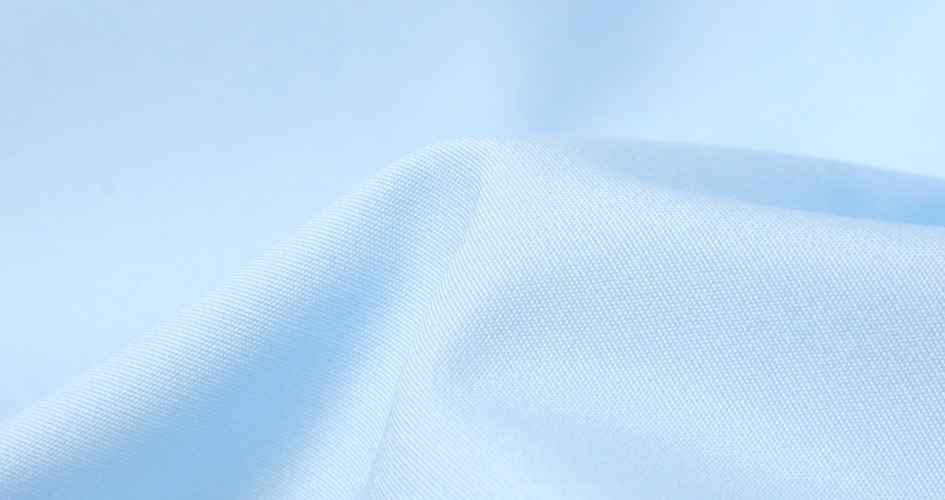
Broadcloth—often referred to as poplin—is a tightly woven fabric with a very simple over-under weave and very little sheen, which makes it nice and professional. Broadcloths are great for guys looking for as little texture as possible in their fabrics. They are generally a thinner, lighter fabric. White broadcloth fabrics in particular can be slightly transparent. Broadcloths generally wear the smoothest out of all weaves thanks to their lack of texture, but can also be the most prone to wrinkling.
Learn more about broadcloth fabrics here or browse our selection of broadcloth fabrics here.
Broadcloth Dress Shirt Fabric

Broadcloth Dress Shirt Fabric

Twill

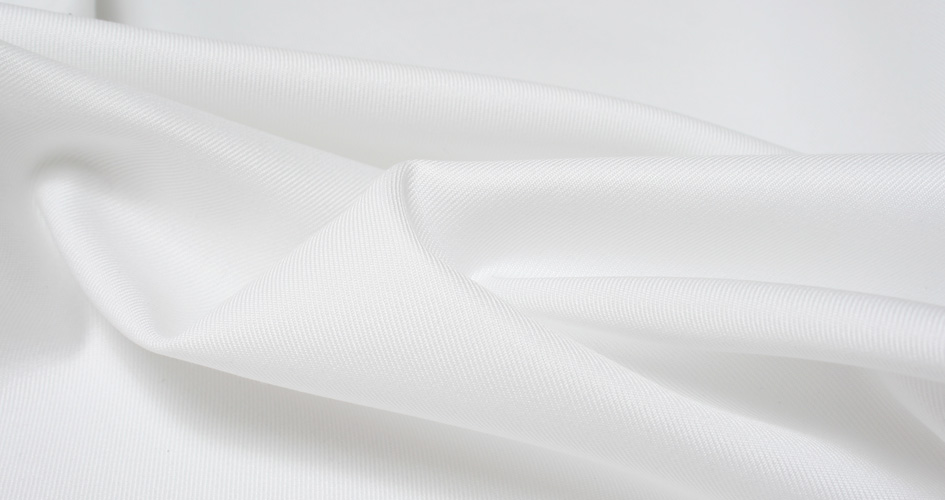
Twill fabrics are easily recognizable because they will show diagonal weave or texture. The diagonal effect can range from very fine, subtle twills to much larger Imperial or Cavalry twills. Twills will almost always have a bit of shine, though the degree can depend on the weave, color, and cotton used. Twill is a tight weave that can come in extremely high thread counts, some of which might be mistaken for silk. Because of the diagonal texture twill is a bit softer than broadcloth and will drape more easily. Twill won’t give you the same “crisp” look that freshly pressed broadcloth can, but it’s relatively easy to iron and more resistant to wrinkles.
Learn more about twill fabrics here or browse our selection of twill fabrics here.
Twill Dress Shirt Fabric

Twill Dress Shirt Fabric

Pinpoint Oxford

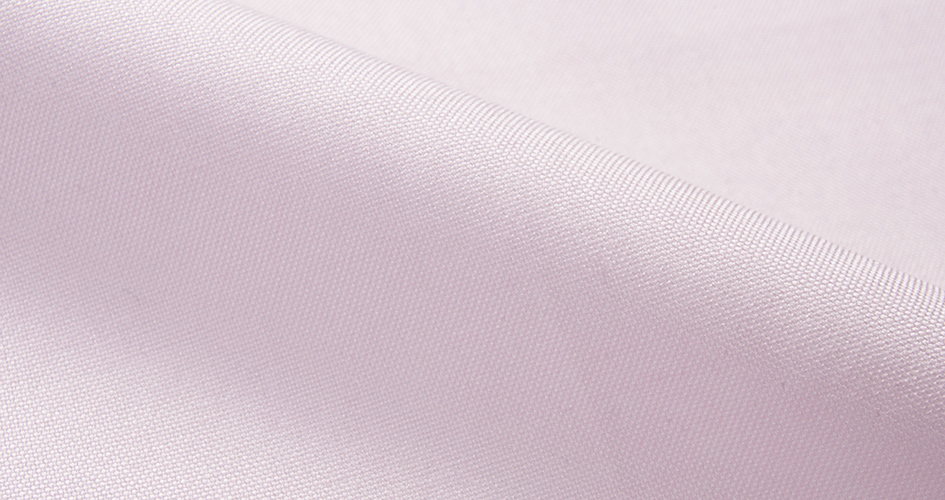
Pinpoint (also referred to as pinpoint oxford) has the same weave as oxford cloth, although it uses a finer yarn and tighter weave. It is more formal than oxford cloth, but less formal than broadcloth or twill. Think of them as great everyday work shirts, but not necessarily the first recommendation for special events. Pinpoint fabrics are generally not transparent and are slightly heavier and thicker than broadcloths. Because of their heavier construction, pinpoints are fairly durable fabrics. Opt for a twill or broadcloth if you’re looking for a formal shirt.
Learn more about pinpoint fabrics here or  browse our selection of pinpoint fabrics here.
Pinpoint Dress Shirt Fabric

Pinpoint Dress Shirt Fabric

Chambray

Chambray is a plain weave fabric.  That means it has a similar construction to broadcloth, though it is generally made with heavier yarns for a more relaxed or workwear appeal. Generally there will be white threads running in the weft/width direction such that the fabric has an inconsistent color to it.  This could be compared to an end-on-end, though chambray is generally much heavier and more appropriate for casual wear than dress.

Browse our selection of chambray fabrics here
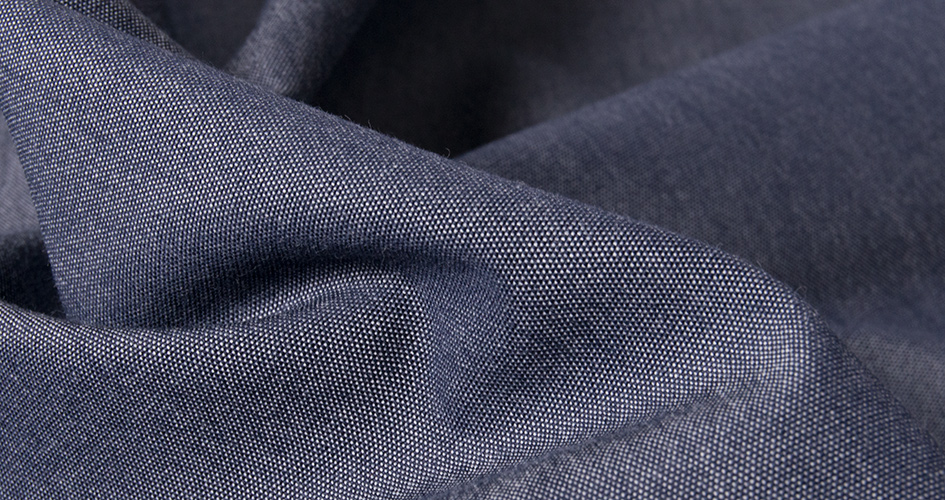
Chambray Fabric

Chambray Fabric

Denim

We all know denim as the fabric of our jeans.  But construction wise, denim is a twill fabric. A sturdy, possibly coarser twill often dyed with indigo.  For the most part though, when it comes to denim shirting, you’re mostly going to find much softer, lighter versions of the fabric than what your jeans are made of.  Denim shirting can come in many forms but generally have a different color on the inside than the outside.

Browse our selection of denim and chambray fabrics here.
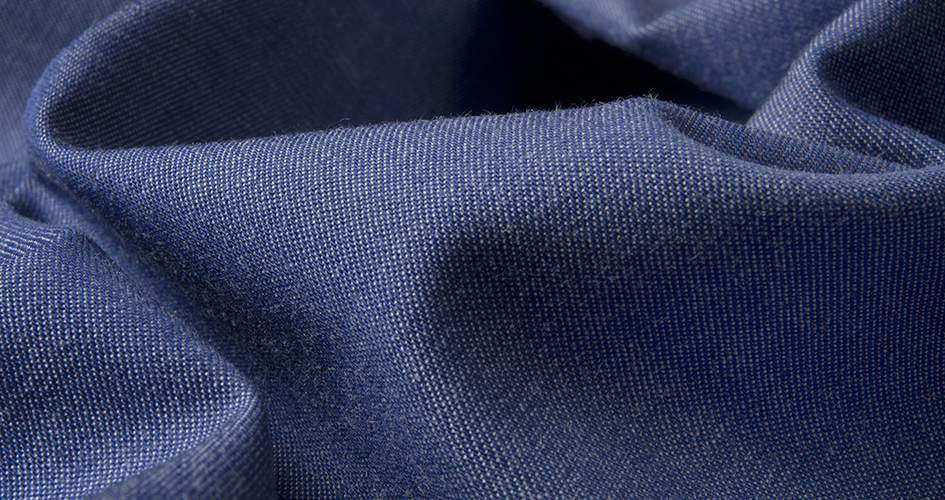
Denim Shirt Fabric

Denim Shirting Fabric

Dobby

Dobby (which is very similar to jacquard, although technically different) can vary widely. Some versions are quite similar to broadcloth in terms of thickness and weight, while others can be thicker or woven to almost look like twill. Many dobby fabrics have stripes woven into them, although some are solid colors. The solid colors tend to have a faint stripe or dotted patterns woven in the same color as the base cloth.

Learn more about dobby fabrics here or browse our dobby fabrics here.
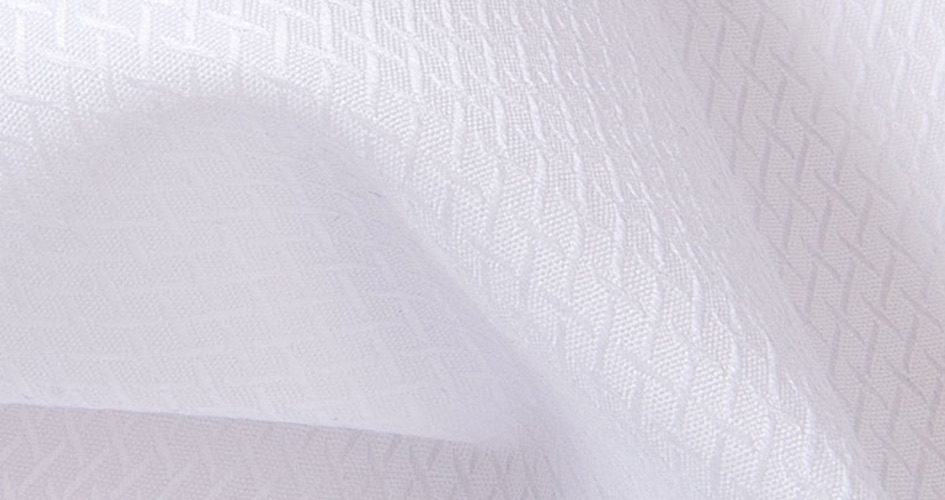
Macro of Dobby Dress Shirt Fabric

Dobby Dress Shirt Fabric

End-on-End

End-on-end broadcloths are a very popular type of dress shirt fabric with a distinct contrast coloring. Woven with colored thread in the warp and white thread in the weft, it looks like a true solid from a distance, but has more visual texture when seen up close. Typically a lighter-weight fabric, it’s a great choice for those living in warmer climates.

Browse our End-on-End fabrics here.
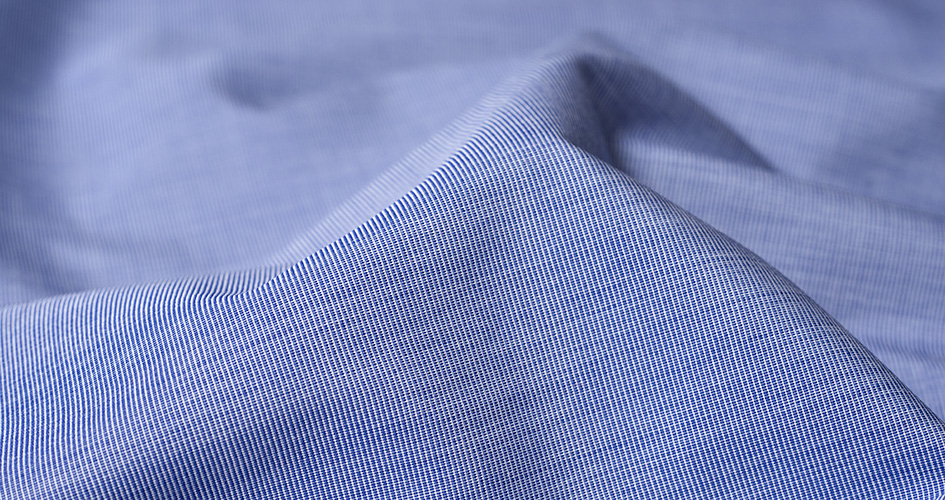
End on End Dress Shirt Fabric

End on End Dress Shirt Fabric

Flannel

A fall/winter favorite. Flannels are warm, fuzzy fabrics that are most often brushed twill or brushed poplin fabrics. While they’re most regularly 100% cotton, they sometimes can come in blends of cotton and wool, and even cotton/cashmere blends for added warmth. Usually made in thicker weaves, these are decidedly casual fabrics that are great for cold weather.

Browse our selection of flannel fabrics here.
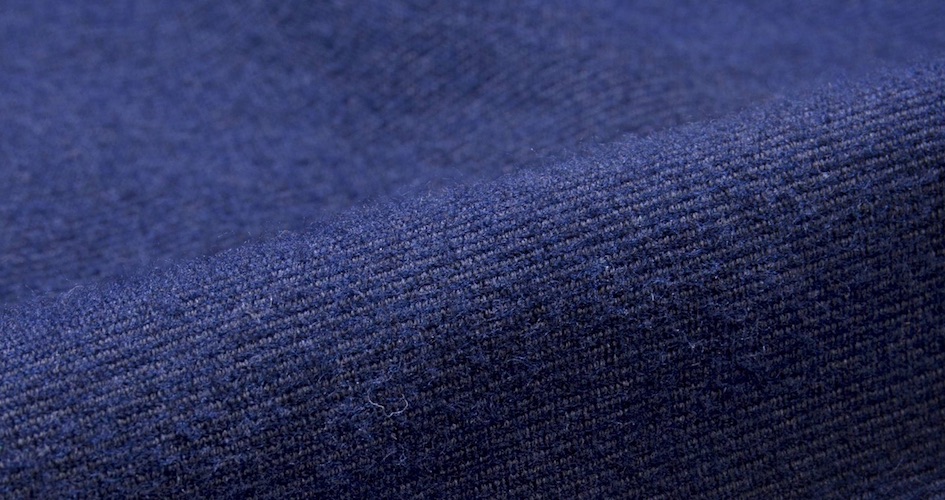
Macro of Flannel Fabric

Flannel Fabric

Melange

Melange fabrics can come in every sort of weave—poplin, twill, royal oxford, etc.—and are woven using multi-colored yarns. Each yarn will be dyed this way, most often with 2-3 subtly different hues.  These unique yarns can help achieve a heathered, intentionally inconsistent, somewhat organic look. Melange fabrics are different from mouline fabrics, as mouline fabrics are made from consistent, one-color yarns that are twisted together to achieve a multi-color look.

Browse our selection of melange fabrics here.
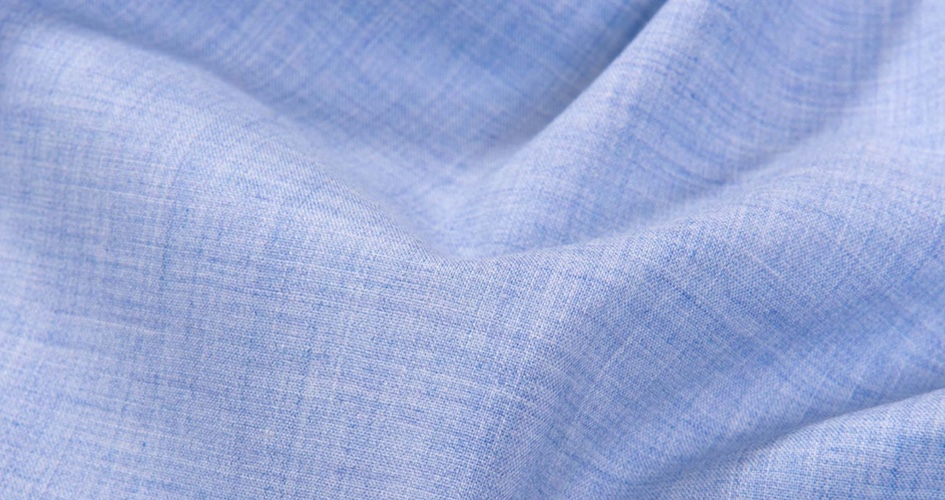
Melange fabric

Melange Dress Shirt Fabric

Oxford Cloth

Oxford cloth is very similar to pinpoint oxford, except it uses a slightly heavier thread and looser weave. It has a slightly rougher texture but is more durable than most fabrics. It’s composed of a symmetrical basketweave where one yarn may cross two yarns. It was originally developed for sportswear, so it’s the least dressy, and (in some circles) not considered appropriate for office or formal wear. Oxford cloth has always been a staple in traditional American button-down polo shirts. It can be worn slightly wrinkled straight from the dryer and still look great.

Learn more about oxford cloth here or browse our selection of oxford cloth here.
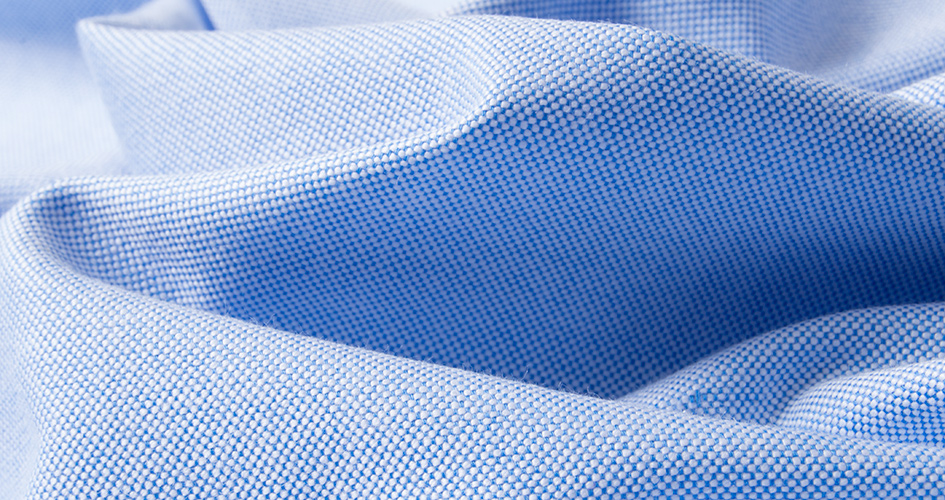
Oxford Cloth Shirt Fabric

Oxford Cloth Shirt Fabric

Poplin

Poplin is so similar to broadcloth that we decided not to distinguish between the two in our fabric descriptions.  For all practical purposes you can equate the two. They are both a plain weave fabric that is going to be quite thin, smooth, and flat. That said, poplin is technically different from broadcloth in that poplin can have different weight yarns in the warp and weft while broadcloths will have a symmetrical construction.  For example, broadcloths could be 100/2×100/2 (meaning 100s two-ply in the warp and weft) while a poplin could be 100/2×60/1 (meaning 100s two-ply in the warp and 60s single-ply in the weft).

Browse our selection of poplin fabrics here.
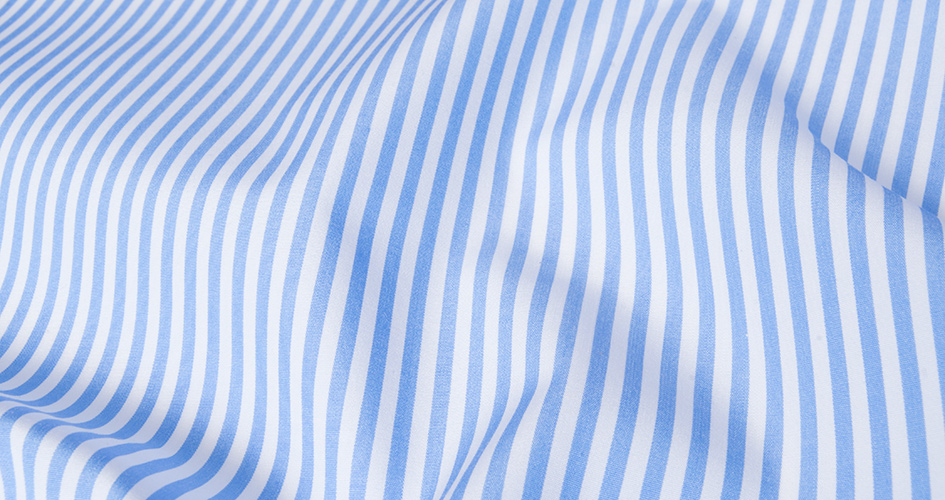
Macro of Striped Poplin Dress Shirt Fabric

Poplin Dress Shirt Fabric

Royal Oxford

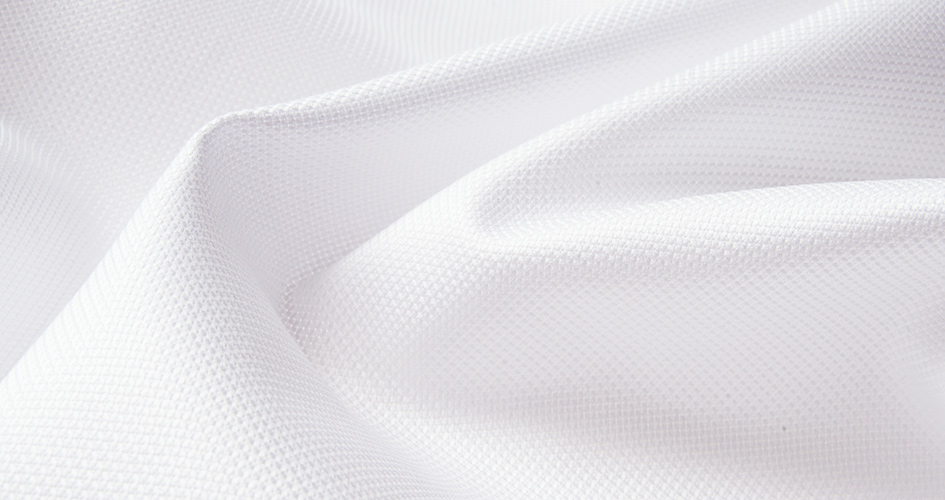
Royal oxford is what we call a “pretty fabric.” Although the name is similar, it is not at all similar to pinpoint oxford or oxford cloth. It is a dressy fabric with a distinctive shine and texture. With a more prominent weave than broadcloth or pinpoint, it’s ideal for those interested in a dress or formal shirt with visible texture.
Learn more about royal oxford fabrics here or browse our selection of royal oxford fabrics here.
Royal Oxford Dress Shirt Fabric

Royal Oxford Dress Shirt Fabric

Herringbone

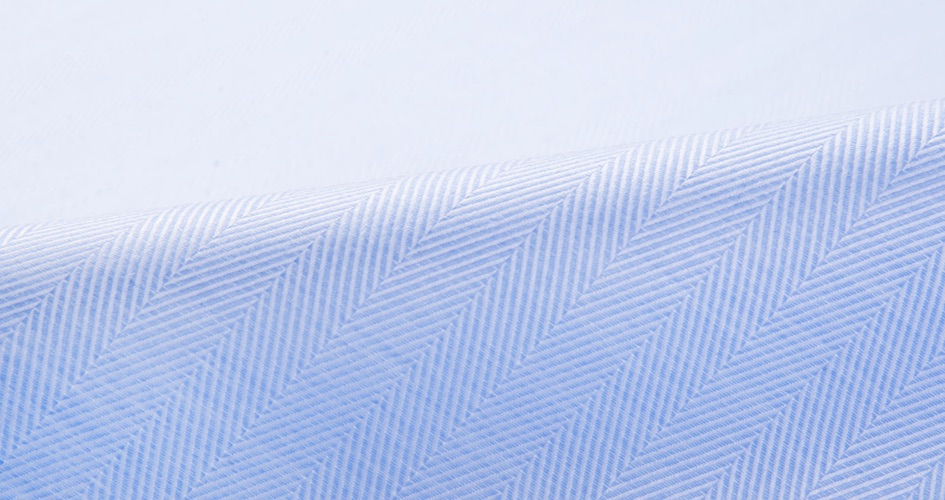
Herringbone shirts are popular, more textured shirts for both dress and casual wear. Herringbone is essentially a twill that is mirrored when woven to create the sort of chevron, “V-shaped” look. The fabric’s name comes from its resemblance to the bones of a herring fish.

Browse our selection of herringbone fabrics here.
herringbone

Herringbone (Twill) Dress Shirt Fabric

Seersucker

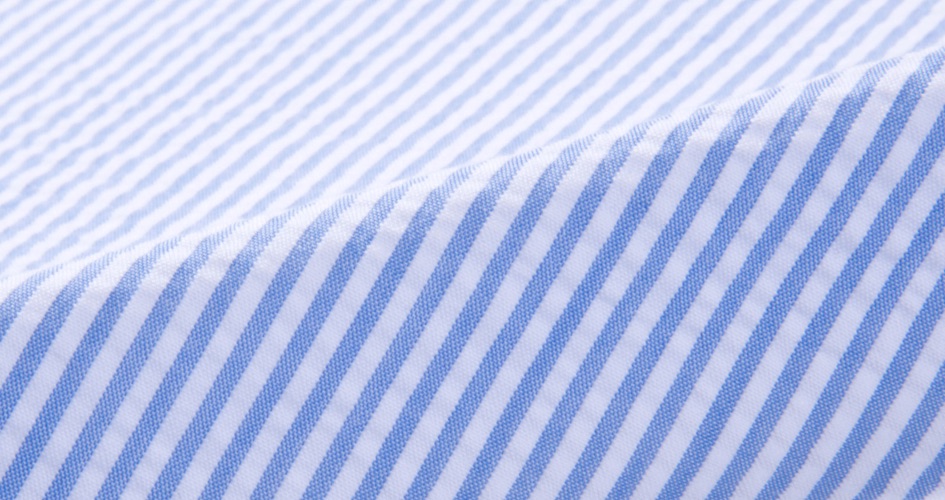
Seersucker is a fabric primarily used to make shirts for warm weather, and is known for its distinctive puckered appearance. This puckered look is created in the finishing of the fabric, after it’s woven, and helps to promote air flow when worn. This helps make seersucker very comfortable in the summer. While seersucker fabrics can come in any color or pattern, blue and white striped seersucker is most popular.

Browse our selection of seersucker fabrics here.
seersucker

Seersucker Shirting Fabric

Linen

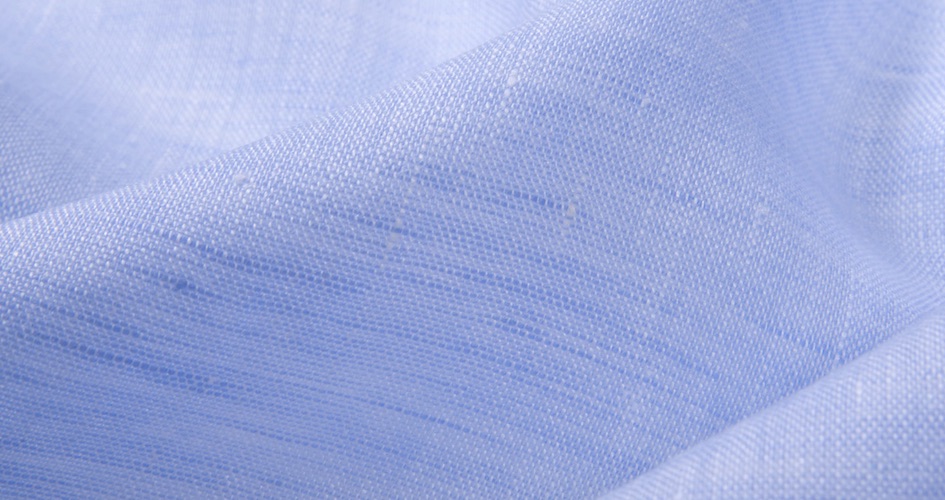
Linen fabrics are incredibly breathable and, like seersucker, typically made to be worn in hot climates. Linen is made from the fiber of the flax plant, and can be very labor intensive to produce. Typically linen will be more loosely woven and sheer than most cotton fabrics, and has a very unique, dry hand to it that is unlike cotton. Linen also tends to wrinkle more easily than cotton and generally feels much more relaxed because of this. While we love the look and feel of linen, some people prefer cotton/linen blend shirts as you can achieve much of the coolness of a linen shirt while reducing the wrinkling.

Browse our selection of linen fabrics here.
Linen

Linen Dress Shirt Fabric

Egyptian, Sea Island, and American Pima Cotton

When you hear about Egyptian, Sea Island, or American Pima cotton you should know that this is not referring to the type of weave, but to the type of cotton used to make the weave. For practical purposes, Pima cotton, Sea Island, and Egyptian cotton are all cottons derived from originally the same plant: Gossypium Barbadense. These are more desirable cottons because they are typically “extra-long staple length” cottons (length greater than 1 3/8″), which allows them to be spun into finer, stronger yarns.

All three of these cottons are typically regarded as high-end, luxury raw goods. Egyptian and American Pima will be the most readily available, while Sea Island cotton is well-known for being incredibly rare. American Pima will often be woven into fabrics of a slightly lower quality than Egyptian cotton as it is not as clean of a fiber, despite having similar staple lengths.

There is also a famous, rare form of Egyptian cotton called “Giza 45” that is specially used for some of the world’s finest shirting fabrics—notably Thomas Mason Goldline fabrics. This is a highly acclaimed form of cotton found in a particular portion of the Nile Delta that can be woven to produce incredibly fine yet strong yarns. Fabric made from Giza 45 cotton tends not to degrade over time as much as other Egyptian or American Pima cottons.

Accounting for just .0004% of the cotton supply available, Sea Island cotton is the rarest in the world. What makes Sea Island Cotton so desirable is its unique combination of characteristics: extra-long staple length, remarkable fiber strength, incredibly uniform growth, and a significant brightness in color.

While other high-end shirting cottons like Egyptian cotton and American Pima can boast extra-long staple length above 1 3/8″, it’s Sea Island cotton’s durability, consistency, vibrant color, and silky luster that make it different from these. The uniformity, strength, and “hairlessness” of the fiber allows fabric woven from it to last an incredibly long time, and actually become smoother each time it’s laundered.

The best Sea Island Cotton comes from Barbados because the incredibly uniform, humid climate of the island allows for the cotton plants to grow in a consistent way throughout the year. The cotton in Barbados is also picked by hand to ensure the highest quality levels.

Making matters a bit confusing, there are trademarks filed around the names “Sea Island” and “Supima.” Keep an eye out for “Certified Sea Island Cotton” vs. “Sea Island Quality,” as only the former will be authentic and it’s something we often see on the market.

Learn more about Sea Island Cotton dress shirts or browse our selection of Sea Island Cotton fabrics here.
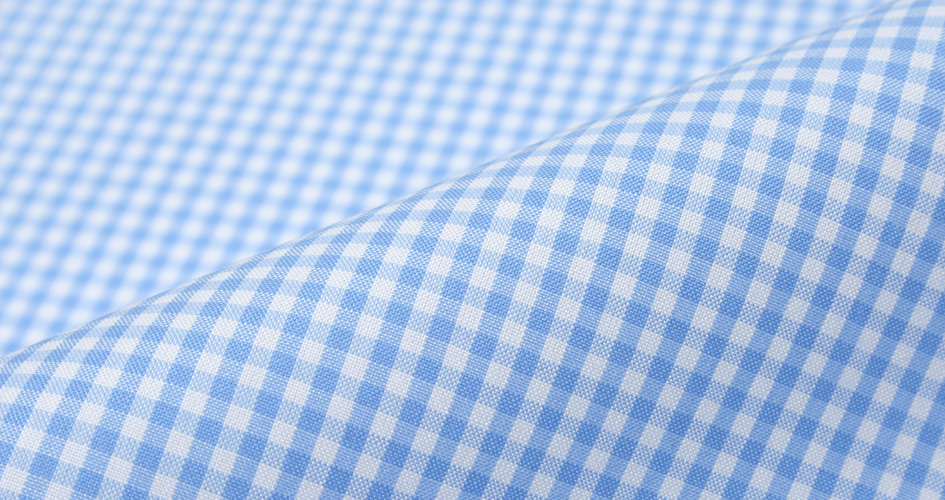
Premium Egyptian Cotton Dress Shirt Fabric

Egyptian Cotton Dress Shirt Fabric

Thread Count

If everything else is the same (weave, ply, mill, and type of cotton), higher thread count means a smoother, silkier, more expensive fabric. Thread count is often referred to with a number like 50s, 80s, 100s, 120s, 140s, 170s, etc., up to 330s.  These numbers refer to the yarn size, but keep in mind that typically a thread count above 100 will imply a two-ply fabric.

Though there are some exceptions when extremely fine single-ply yarns are used, these higher-number thread counts will be two yarns twisted together. For example, 120s thread count means that two 60s yarns are twisted together. Generally this fabric will be more durable than a 60s single-ply, but it won’t necessarily be smoother. 140s thread counts are typically two 70s yarns twisted together. And so on and so forth.

While thread count can be an indicator of quality, remember that ply, mill, and quality of cotton will have just as much to do with how luxurious the fabric is.

Two-Ply vs Single-Ply

Ply is how many yarns are twisted together to make a single thread. Shirting fabrics are most often two-ply or single ply. Two-ply means that two yarns are twisted together to make a single thread that is then woven into the fabric. (Note that this is not at all like two-ply toilet paper!). Two-ply fabrics are generally superior to single-ply fabrics in their durability. Three-ply fabrics are rare, but can be found occasionally.