How to Submit Fit Photos

Featured

Submit a Fit Advice Request

If you want to get a second (experienced) opinion, don’t hesitate to submit a Fit Advice Request through your Proper Cloth account. Our Fit Specialists are very experienced at helping clients perfect their fit and we are more than happy to assist. 

1) Click ‘Get Started’ and you’ll see a list of your custom garments from the last 24 months

Submitting a fit advice request.

2) Choose the garment for which you wish to receive fit advice 

Select products which you like a fit advise on.

3) Upload your photos (see below for examples and tips for providing the best fit photos)

Add current fit photos.

4) Complete a quick survey, providing feedback on any and all areas of the garment where you would like advice on improving the fit. A space for additional comments is also available.

Complete a quick survey about fit and comment any adjustments you would like.

5) The Fit Specialist will respond with a new size profile, a list of their recommendations, and any next steps. 

Best Practices for Photos

Please consider the following guidelines to make your photos the most effective based on the custom garment type.

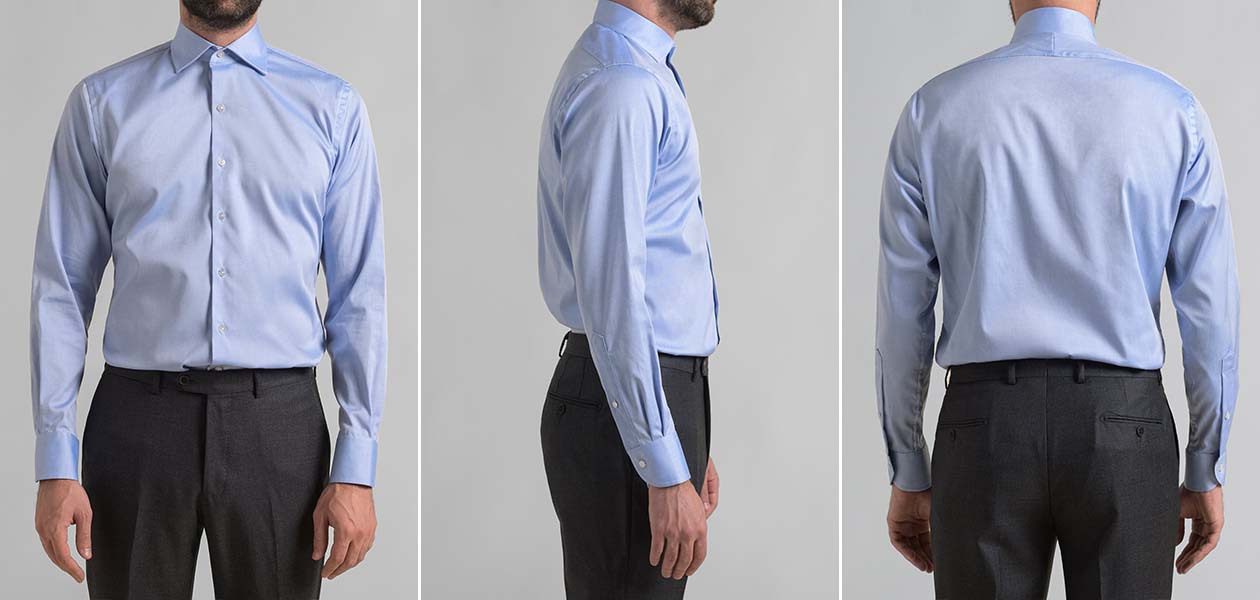
For all types of garments, we suggest uploading 3 photos:

  • The first should be of you facing the camera, arms at your sides, looking straight ahead.
  • The second should be of you in the same position, but facing 90 degrees to the camera, so that we can assess your posture/profile.
  • The third should be of you in the same position with your back to the camera.
  • If you want to provide additional photos, that’s fine, too. Just be sure to include the three photos of yourself in the suggested poses, excluding your face.
  • We’ll run you through a checklist of all the applicable dimensions to get your feedback. However, if there’s any additional information you’d like to provide, there’s a space for additional comments.

Dress Shirts:

Reference photo suggestions of how to take better fit images for dress shirt.
  • All photos should go as high as your neck/chin and as low as your thighs. 
  • Look straight ahead with your arms at your sides for all photos.
  • Wear the shirt as you intend to wear it. Either tucked or untucked, with an undershirt or without an undershirt, and buttoned at the collar or unbuttoned.

Dress & Casual Pants:

Reference photo suggestions of how to take better fit images for dress and casual pants.
  • All photos should show as high as your stomach and include your shoes. Wear the style of shoes you’re most likely to wear with your pants.
  • In all photos you should be looking straight ahead with your legs shoulder width apart.
  • If you plan to wear these pants without a tucked-in shirt, be sure to make the waist, hip and seat area of the pants visible in your photos.

Jackets:

Reference photo suggestions of how to take better fit images for jackets.
  • All photos should show as high as your chin and as low as your thighs.
  • In all photos you should be looking straight ahead with your arms at your sides.
  • We recommend wearing the jacket over a dress shirt tucked into pants. In general, we can best assess the proportions of your jacket and optimize its fit when we can see it worn in the way you’re most likely to wear it.

Tips for Taking Your Own Fit Photos

The following tips will help you to take better quality fit photos by yourself. 
  • Use the front camera and set a timer of at least 5 seconds to give yourself enough time to stand back.
  • Place your phone vertically on a surface at approximately the height of your waist.
  • The phone should slightly lean back on an object.
  • Place your phone 6-8 inches from the edge of the surface it’s sitting on.
  • Stand back 2-4 feet from where the phone is located.

A Note on Photo Submission

Photo submission is subject to the Proper Cloth Privacy Policy and Terms & Conditions.

Care Instructions – All Product Types

Featured

Custom Shirts – See Label

At Proper Cloth, we offer a wide range of shirt styles, and depending on the type of fabric used for the shirt, the care instructions will be different. Washing your shirt according to the suggested care instructions will help ensure that the shirt lasts a long time and will look its best. 

Custom Shirt care instructions by material type.

Casual Pants – Wash Cold, Air Dry

Proper Cloth’s casual pants are garment washed during production for a softer and more relaxed feel and to minimize potential shrinkage over time. As with denim, we recommend washing them every few wears—not quite as often as you wash your shirts. Launder them at home with cold water and like colors on your washing machine’s delicate or hand-wash setting, and then hang them to dry. 

Casual Pant care instructions.

Tailored Clothing – Dry Clean Sparingly

Dry cleaning is the recommended cleaning method for tailored clothing (jackets, dress trousers, suits, and tuxedos), though it should be done as infrequently as possible—after several wears or once per season, not after each wear. Garments cleaned less frequently will last longer than garments cleaned more frequently.

Tailored Clothing care instructions.

Sweaters & Knitwear – Hand Wash or Dry Clean

Proper Cloth offers sweaters in a variety of styles and materials. For almost all materials and blends a careful hand wash in cold water is best. After washing, lay the sweater down on a dry towel on a flat, waterproof surface. You may need to reshape the sweater a bit. Don’t stretch it beyond its original size to avoid damage. Once the sweater is shaped to its original size, leave it to air dry.

Note: Specific care instructions should also be included on the tag sewn inside your Proper Cloth sweater. For cashmere and cashmere blend knits, dry cleaning is another option.

Essentials – Machine Wash, Tumble Dry Low

Proper Cloth Essentials, including socks, underwear, and t-shirts are machine washable. Washing similar colors in cold water is recommended to prevent fading or transfer or dye between garments. Tumble dry on a low heat setting or air dry.

Note: Specific care instructions will also be included on the tag sewn inside your Proper Cloth essential or in the original packaging.

Outerwear – Dry Clean Sparingly

Similar to Tailored Clothing, all outerwear items should be dry cleaned only. For outerwear, typically dry cleaning should be done as infrequently as possible or in the event of a stain.

What Is a Pant Break?

Featured

Types of Pant Break

what is a pant break

Pant or trouser “break” refers to the fold in the fabric that occurs at the bottom of the pant leg as it rests on the shoe. This fold “breaks” the clean line of the trouser drape, hence the name. The proper amount of break in a trouser fit is subject to personal preference, and will affect the visual style and fit of the pants. Both the taper through the lower pant leg and the length of the inseam will affect how much of a break pants have.

Note that this information is based on traditional lace-up dress shoes. Loafers tend to have a lower shoe back height, which can affect how much sock is exposed and where the bottom hem of the pant leg hits the shoe.

full break

Full Break

Full Break

A full break is indicated by a significant amount of fabric pooling and folding at the ankle and a wider leg opening width. This is the most old-school and traditional of the break options, and works for looser fitting trousers and people with a more traditional style. To achieve a full break, the length of the trousers should reach well beyond the ankles to at least midway down the back of the shoe, and the opening width should be wide enough for the leg opening to fit around the laces.

a pair of pants breaking half way

Half Break

Half Break

A half break is a more modern alternative to a full break. This look can work well for a slim fit trouser, and is created by some fabric pooling at the top of the shoes with no sock exposed at the ankle. The trouser length should reach the middle to upper part of the back of the shoe and have a notable but not-too-significant bend in the fabric at the front of the trouser bottom. The leg opening width can be cut relatively slim for a more modern business style.

pants with no break

No Break

No Break

Trousers have no break when the length of the pant leg just kisses the top to the shoe, barely touching the shoe’s laces and the top of the back of the shoe. A small amount of ankle and/or sock is exposed when you’re standing. This is a more modern look and is great for office wear, and it works well with more traditionally slim or relaxed trouser fits though is often worn with very slim fits and a more aggressive taper through the lower leg.

pants with negative break

Showing Ankle, or Negative Break

Showing Ankle, or Negative Break

A bolder statement can be made with an even shorter inseam length that shows ankle and/or socks. The pant leg opening will hit above the back of the shoe and not touch it. A great look for a trendy or less formal environment.

For a traditionalist view on pant break, you can check out what the guys over at Gentleman’s Gazette had to say. That said, break, drape, leg-width tend to go in and out of fashion. You can try out different styles and find the one you like, or you can have a wardrobe with variety, bringing out different lengths for various occasions. And of course, you can always have pants tailored. For a deep dive on what a tailor can and can’t do, check out this post.

High-Quality Tailored Clothing

Featured

When choosing a suit, sport coat, or trousers, you’ll want to make sure you’re getting a high-quality garment. There are several details that will help you identify a well-made tailored garment that will stand the test of trend and time. We’ve worked hard to ensure our tailored garments exceed those standards.

elements of suit jacket construction

Elements of high-quality jacket construction.

High-Quality Fabrics

When designing your suit, it’s important to pay close attention to the fabric to ensure it complements your lifestyle. Whether you’re looking for a classic business suit that can be worn year-round, or a casual sport coat for warmer climates, the garment’s fabric will play a large role in its style and comfort. Though it can be difficult to sort through details like fabric composition, weave type, and thread count, we make it easy by ensuring all of our fabrics are of the highest quality and from world-renowned fabric mills. The most common fiber used for high quality tailored garments is wool. 

Fabric Reserve

A fabric reserve is the extra fabric included at the seams of a garment which allows for tailoring. Our tailored garments are made–to–measure, and as such you shouldn’t need many adjustments, if any at all. That being said, if you do want to have a tailor make slight adjustments for any reason, we give you the option to do so by building fabric reserves into all of our garments. We’ve laid out by how much each dimension of our garments can be altered by a tailor.

High-Quality Jackets

Bemberg Lining

Although the lining of your jacket and trousers generally goes unseen, it plays a key role in the wearability of your garments. The ideal lining material for a jacket or trouser is Cupro, which is a cotton fabric with the feel and friction resistance of silk. Some brands line their suits with polyester that feels similar to Cupro, but it locks the heat in and offers little breathability. One of the benefits of using a natural fiber lining like Cupro is that it wicks moisture away from the body. We specifically use Bemberg Cupro, which, because it’s very light, silky, anti-static, and durable, is considered the gold standard of Cupro fabrics. It’s also biodegradable and a renewable natural resource.

Functional Sleeve Buttons & Authentic Horn Buttons

Many off-the-rack jackets feature non-functional buttons affixed to the jacket sleeve to allow for significant sleeve length adjustments. When you’re ordering a made–to–measure jacket, however, there’s no reason to forego the added class and practicality functional buttons can provide. Many people choose to leave one or two of their sleeve buttons undone to display the quality of their jacket. You could even undo all the sleeve buttons and push up the jacket sleeves for a much more casual look. All of our tailored jackets have functional buttons, unless you opt for our ‘unfinished’ sleeve option.

Button material also plays a part in the durability and look of your garment and, of course, its buttons. Horn buttons are incredibly durable, and are therefore very unlikely to crack or break with wear. They’re a great choice in terms of longevity, but also have stylistic benefits. Each horn button is unique, differing in color and pattern, and adds subtle one-of-a-kind visual detail to your jacket and trousers. Additionally, our natural horn buttons are ethically sourced to prevent animal cruelty.

Floating Canvas

Canvas adds shape to a jacket, allowing the fabric to drape nicely over the chest and torso. While some companies will fuse or glue the jacket fabric, or “shell,” to canvas or interlining, we attach the canvas to the main fabric by loosely hand stitching the two together. This is called a “floating canvas,” and it provides more flexibility, reduces strain on the shell, and allows the canvas to more easily mold to the wearer’s body over time.

While a floating canvas is the ideal design for most jackets, an unstructured jacket with no canvas at all can be just as high quality. In addition to our more structured jacket styles, we also offer the Waverly construction option which features no canvas, shoulder padding, or sleeve head to provide a more natural, casual look with the same high-quality materials we use for our structured jackets.

Rolled Jacket Lapel

A signature of quality hand-work in a well-made canvassed jacket is a roll at the bottom of the lapel. This roll forms naturally if the canvas inside the lapel is of superior quality and design. The structure and flexibility provided by the canvas creates a slight curl in the lapel just above the top button. 

High-Quality Dress Pants

elements of high-quality trousers

Elements of high-quality trouser construction.

Fully Curtained Waistband

A curtained waistband provides an additional layer of material around the inside of the waist of a pair of trousers. This gives the trousers a more finished, clean look by covering the seam work inside them and serves a functional purpose by taking pressure off the garment’s fabric, reinforcing the waistband. It allows the pockets of your trousers to drape properly and stay in place, and also adds slight padding around the hips to increase comfort. All of our trousers are constructed with a curtained waistband to ensure a comfortable and durable fit.

Trouser Heel Guard

A heel guard is a strip of fabric sewn around the interior of the bottom hem of your trousers. This extra fabric layer protects the hem of your pants from your shoes and the ground, and adds weight to the hem so your trousers drape nicely over your shoes.

How to Measure Your Belt Size

Featured

How to Measure a Belt

Measuring a belt you already own that fits well is the best way to determine your belt size. Lay the belt on a clean, flat surface. Start the tape measure at the hole you use and measure to the end of the belt, where it meets the buckle. Belts are measured in inches and you should round to the nearest inch. If you measure 36 inches, you will want to purchase a size 36 belt.

Diagram of belt size measurements.

Note: This measurement technique is standard for Proper Cloth belts. This may not reflect other makers’ measuring standards. For example, some will include the buckle in the belt length measurement.

How to Choose a Belt Size Based on Pant Size

An easy way to determine belt size is to simply “add 2″ to your off-the-rack pant size. For example, if you wear a 36”-waist trouser, then a 38 belt size will be a safe bet. Most will find this simple formula works best for pants worn at a traditional height—close to the natural waistline. For a belt to wear with low rise trousers or jeans, consider adding 3 or 4 to your pant size.

Pant Size to Belt Size

– If your pants size = 32, choose belt size = 34

– If your pants size = 34, choose belt size = 36

– If your pants size = 36, choose belt size = 38

– If your pants size = 38, choose belt size = 40

Note: Belt sizes shown in US/UK standard size.

How to Measure Your Body for Belt Size

To measure your body for optimal belt size, start by threading the tape measure through the belt loops of your trousers. It’s important to stand in a relaxed, natural position—do not push out your belly or suck it in—when taking the measurement. The measuring tape should be snug. Measure in inches and round to the nearest inch. Choose the belt size closest to this measurement.

General Belt Information

Over time, leather belts tend to stretch. Braided belts even more so. It’s good to keep in mind that a belt that fits snug initially will likely wear more comfortably down the road.

Dress Shirt Fabrics Overview

Featured

Here we provide the definitive overview of the different types of fabrics commonly used in dress shirts.  By understanding what the different weaves mean for a fabric you can be sure to find the ideal dress shirt fabric for your needs.

Broadcloth

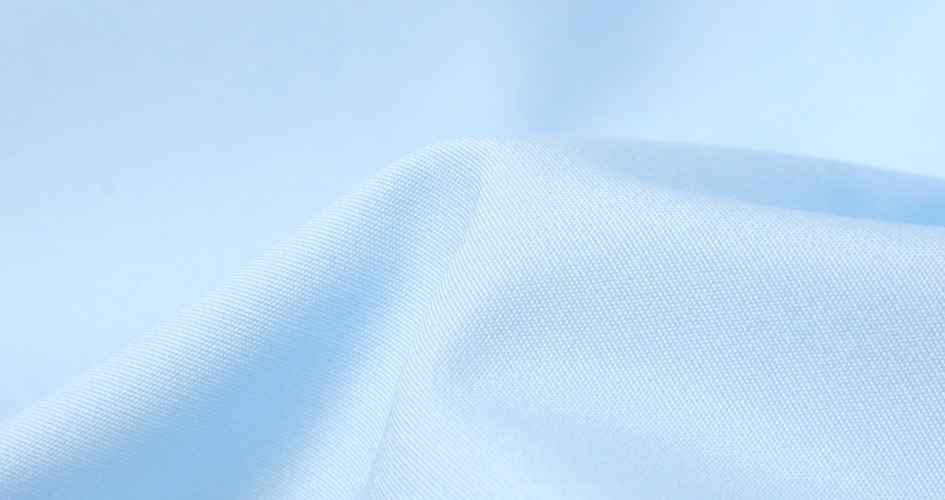
Broadcloth—often referred to as poplin—is a tightly woven fabric with a very simple over-under weave and very little sheen, which makes it nice and professional. Broadcloths are great for guys looking for as little texture as possible in their fabrics. They are generally a thinner, lighter fabric. White broadcloth fabrics in particular can be slightly transparent. Broadcloths generally wear the smoothest out of all weaves thanks to their lack of texture, but can also be the most prone to wrinkling.
Learn more about broadcloth fabrics here or browse our selection of broadcloth fabrics here.
Broadcloth Dress Shirt Fabric

Broadcloth Dress Shirt Fabric

Twill

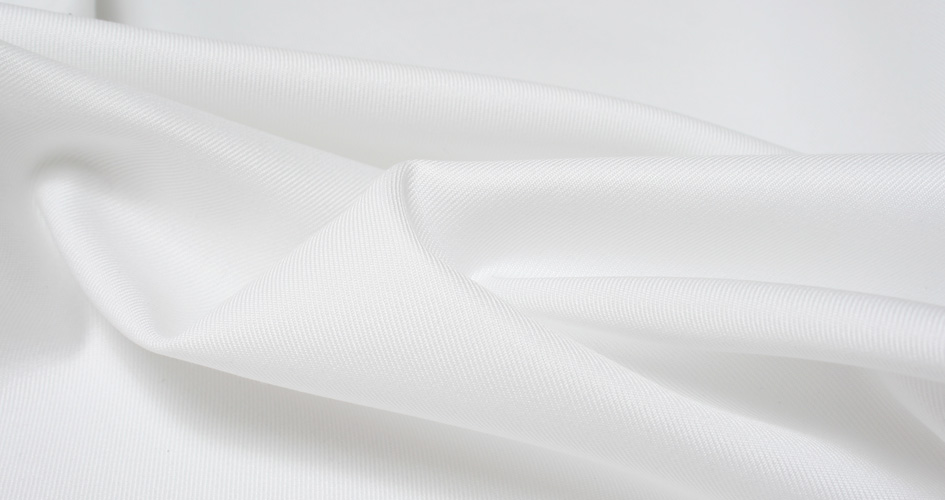
Twill fabrics are easily recognizable because they will show diagonal weave or texture. The diagonal effect can range from very fine, subtle twills to much larger Imperial or Cavalry twills. Twills will almost always have a bit of shine, though the degree can depend on the weave, color, and cotton used. Twill is a tight weave that can come in extremely high thread counts, some of which might be mistaken for silk. Because of the diagonal texture twill is a bit softer than broadcloth and will drape more easily. Twill won’t give you the same “crisp” look that freshly pressed broadcloth can, but it’s relatively easy to iron and more resistant to wrinkles.
Learn more about twill fabrics here or browse our selection of twill fabrics here.
Twill Dress Shirt Fabric

Twill Dress Shirt Fabric

Pinpoint Oxford

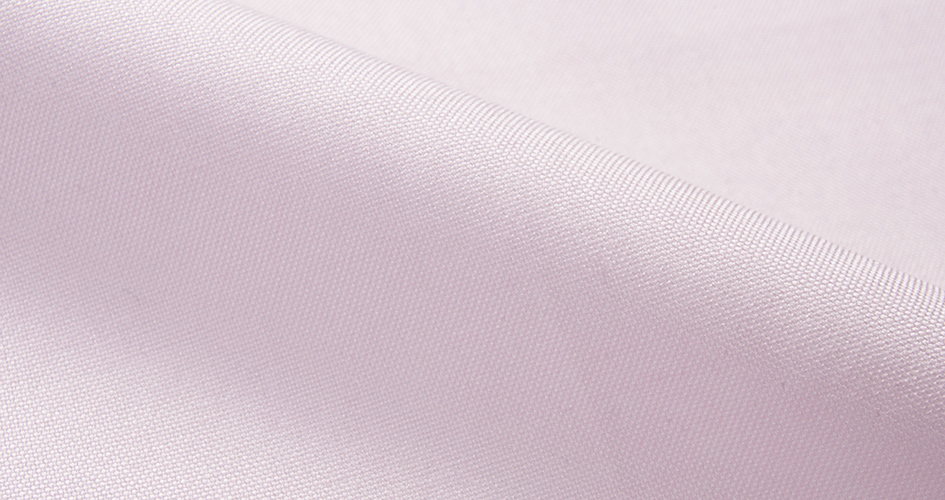
Pinpoint (also referred to as pinpoint oxford) has the same weave as oxford cloth, although it uses a finer yarn and tighter weave. It is more formal than oxford cloth, but less formal than broadcloth or twill. Think of them as great everyday work shirts, but not necessarily the first recommendation for special events. Pinpoint fabrics are generally not transparent and are slightly heavier and thicker than broadcloths. Because of their heavier construction, pinpoints are fairly durable fabrics. Opt for a twill or broadcloth if you’re looking for a formal shirt.
Learn more about pinpoint fabrics here or  browse our selection of pinpoint fabrics here.
Pinpoint Dress Shirt Fabric

Pinpoint Dress Shirt Fabric

Chambray

Chambray is a plain weave fabric.  That means it has a similar construction to broadcloth, though it is generally made with heavier yarns for a more relaxed or workwear appeal. Generally there will be white threads running in the weft/width direction such that the fabric has an inconsistent color to it.  This could be compared to an end-on-end, though chambray is generally much heavier and more appropriate for casual wear than dress.

Browse our selection of chambray fabrics here
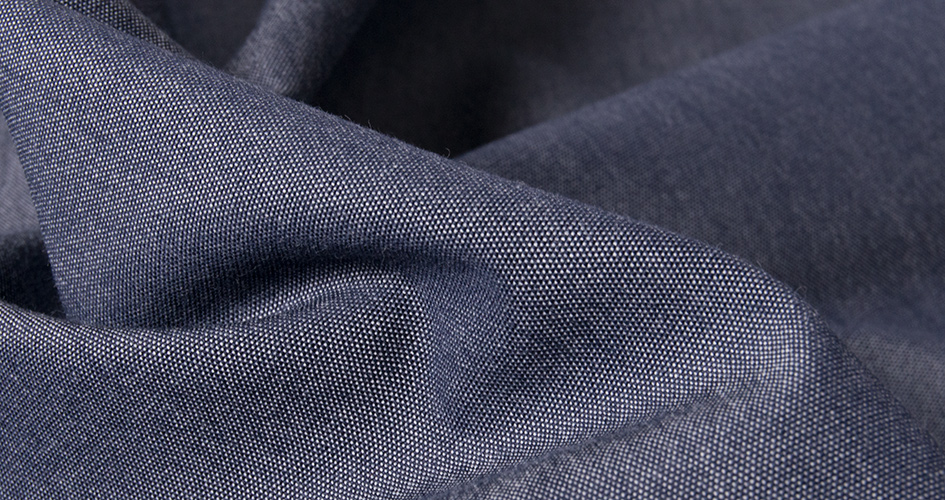
Chambray Fabric

Chambray Fabric

Denim

We all know denim as the fabric of our jeans.  But construction wise, denim is a twill fabric. A sturdy, possibly coarser twill often dyed with indigo.  For the most part though, when it comes to denim shirting, you’re mostly going to find much softer, lighter versions of the fabric than what your jeans are made of.  Denim shirting can come in many forms but generally have a different color on the inside than the outside.

Browse our selection of denim and chambray fabrics here.
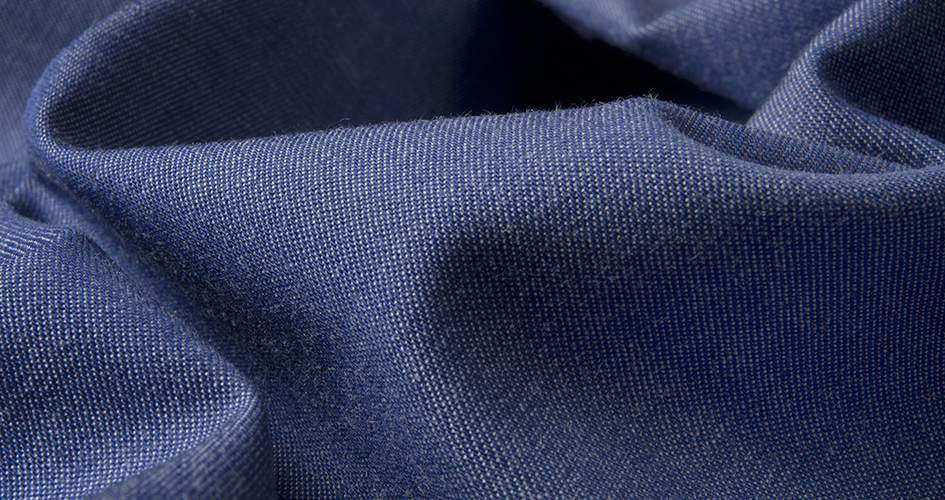
Denim Shirt Fabric

Denim Shirting Fabric

Dobby

Dobby (which is very similar to jacquard, although technically different) can vary widely. Some versions are quite similar to broadcloth in terms of thickness and weight, while others can be thicker or woven to almost look like twill. Many dobby fabrics have stripes woven into them, although some are solid colors. The solid colors tend to have a faint stripe or dotted patterns woven in the same color as the base cloth.

Learn more about dobby fabrics here or browse our dobby fabrics here.
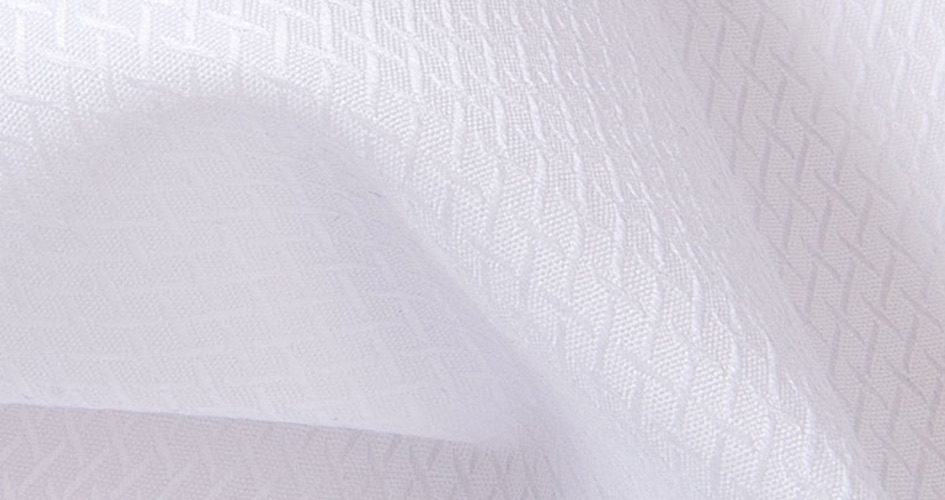
Macro of Dobby Dress Shirt Fabric

Dobby Dress Shirt Fabric

End-on-End

End-on-end broadcloths are a very popular type of dress shirt fabric with a distinct contrast coloring. Woven with colored thread in the warp and white thread in the weft, it looks like a true solid from a distance, but has more visual texture when seen up close. Typically a lighter-weight fabric, it’s a great choice for those living in warmer climates.

Browse our End-on-End fabrics here.
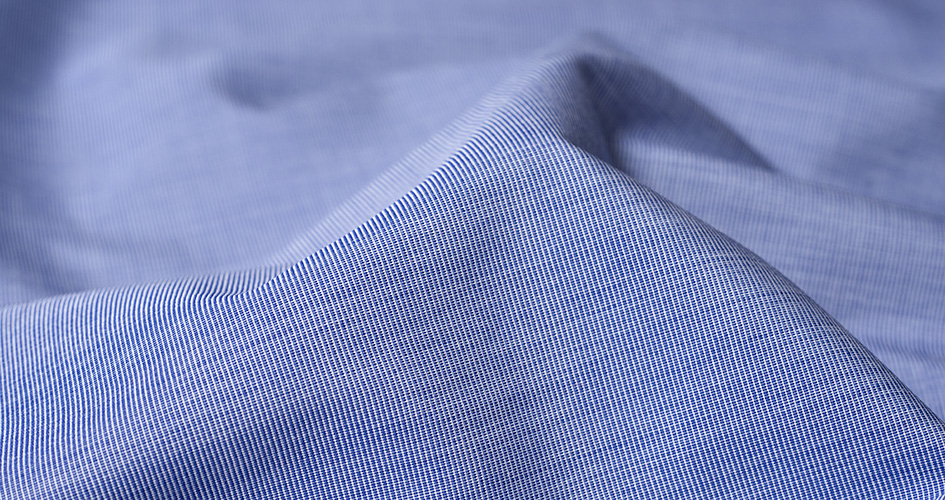
End on End Dress Shirt Fabric

End on End Dress Shirt Fabric

Flannel

A fall/winter favorite. Flannels are warm, fuzzy fabrics that are most often brushed twill or brushed poplin fabrics. While they’re most regularly 100% cotton, they sometimes can come in blends of cotton and wool, and even cotton/cashmere blends for added warmth. Usually made in thicker weaves, these are decidedly casual fabrics that are great for cold weather.

Browse our selection of flannel fabrics here.
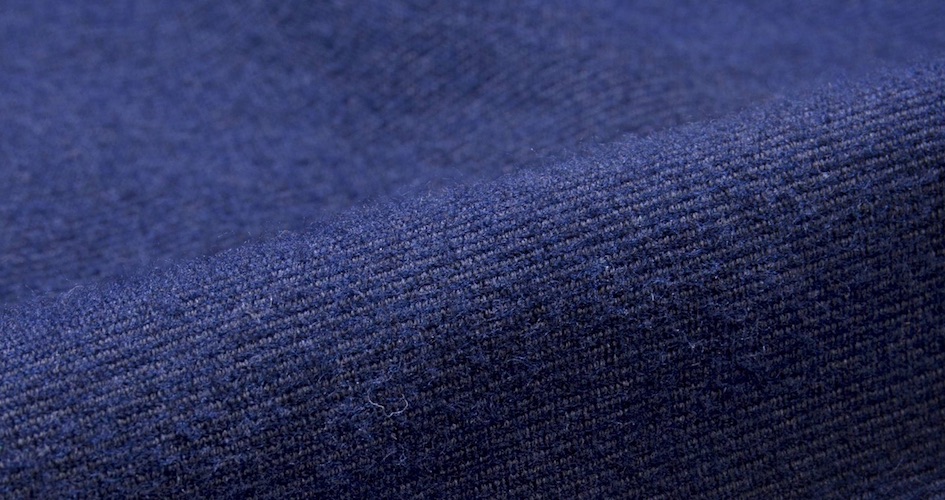
Macro of Flannel Fabric

Flannel Fabric

Melange

Melange fabrics can come in every sort of weave—poplin, twill, royal oxford, etc.—and are woven using multi-colored yarns. Each yarn will be dyed this way, most often with 2-3 subtly different hues.  These unique yarns can help achieve a heathered, intentionally inconsistent, somewhat organic look. Melange fabrics are different from mouline fabrics, as mouline fabrics are made from consistent, one-color yarns that are twisted together to achieve a multi-color look.

Browse our selection of melange fabrics here.
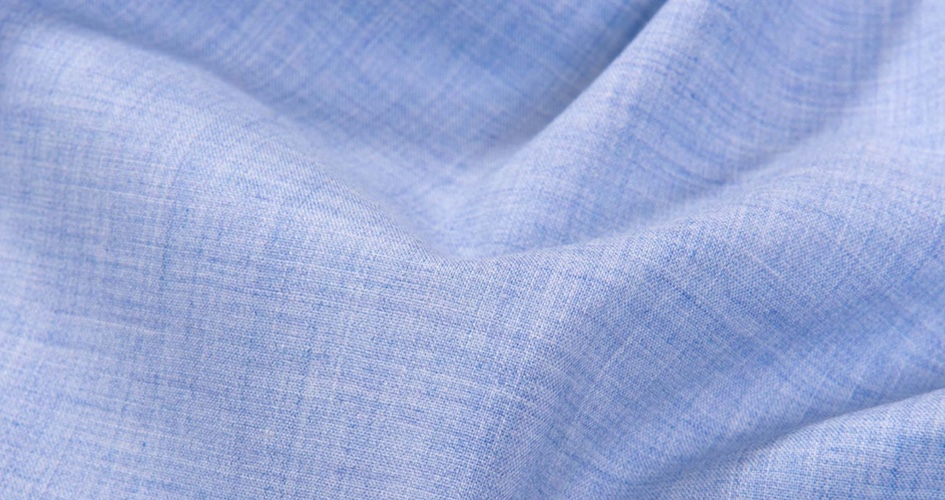
Melange fabric

Melange Dress Shirt Fabric

Oxford Cloth

Oxford cloth is very similar to pinpoint oxford, except it uses a slightly heavier thread and looser weave. It has a slightly rougher texture but is more durable than most fabrics. It’s composed of a symmetrical basketweave where one yarn may cross two yarns. It was originally developed for sportswear, so it’s the least dressy, and (in some circles) not considered appropriate for office or formal wear. Oxford cloth has always been a staple in traditional American button-down polo shirts. It can be worn slightly wrinkled straight from the dryer and still look great.

Learn more about oxford cloth here or browse our selection of oxford cloth here.
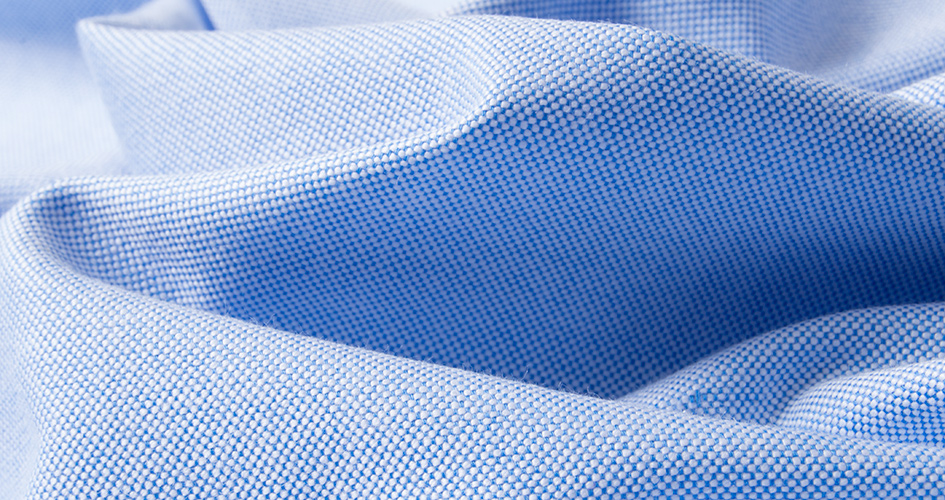
Oxford Cloth Shirt Fabric

Oxford Cloth Shirt Fabric

Poplin

Poplin is so similar to broadcloth that we decided not to distinguish between the two in our fabric descriptions.  For all practical purposes you can equate the two. They are both a plain weave fabric that is going to be quite thin, smooth, and flat. That said, poplin is technically different from broadcloth in that poplin can have different weight yarns in the warp and weft while broadcloths will have a symmetrical construction.  For example, broadcloths could be 100/2×100/2 (meaning 100s two-ply in the warp and weft) while a poplin could be 100/2×60/1 (meaning 100s two-ply in the warp and 60s single-ply in the weft).

Browse our selection of poplin fabrics here.
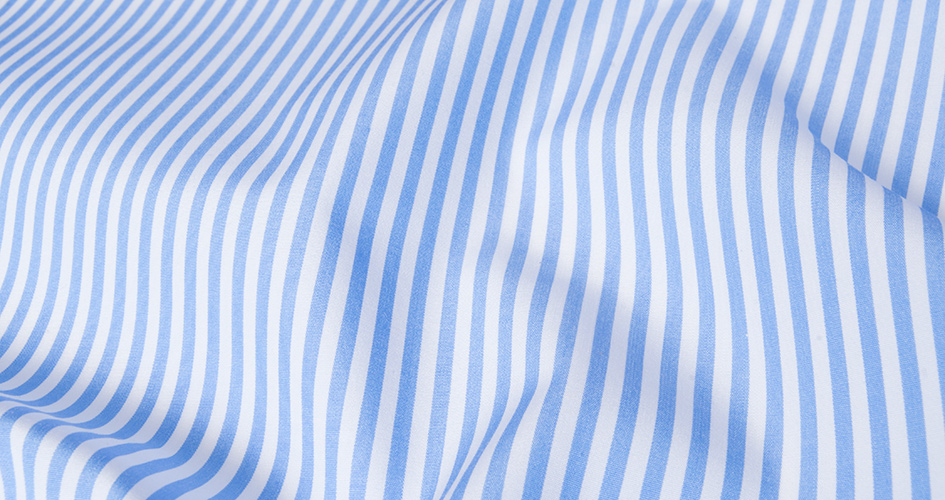
Macro of Striped Poplin Dress Shirt Fabric

Poplin Dress Shirt Fabric

Royal Oxford

Royal oxford is what we call a “pretty fabric.” Although the name is similar, it is not at all similar to pinpoint oxford or oxford cloth. It is a dressy fabric with a distinctive shine and texture. With a more prominent weave than broadcloth or pinpoint, it’s ideal for those interested in a dress or formal shirt with visible texture.
Learn more about royal oxford fabrics here or browse our selection of royal oxford fabrics here.
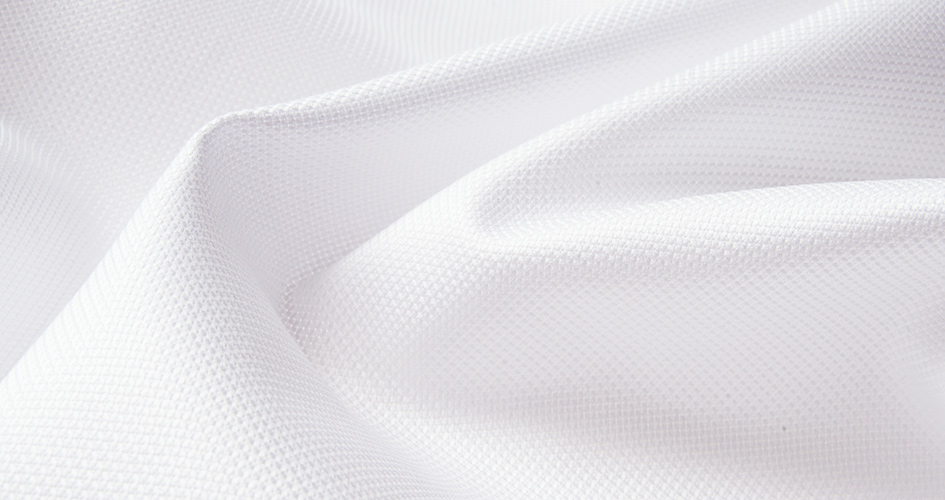
Royal Oxford Dress Shirt Fabric

Royal Oxford Dress Shirt Fabric

Herringbone

Herringbone shirts are popular, more textured shirts for both dress and casual wear. Herringbone is essentially a twill that is mirrored when woven to create the sort of chevron, “V-shaped” look. The fabric’s name comes from its resemblance to the bones of a herring fish.

Browse our selection of herringbone fabrics here.
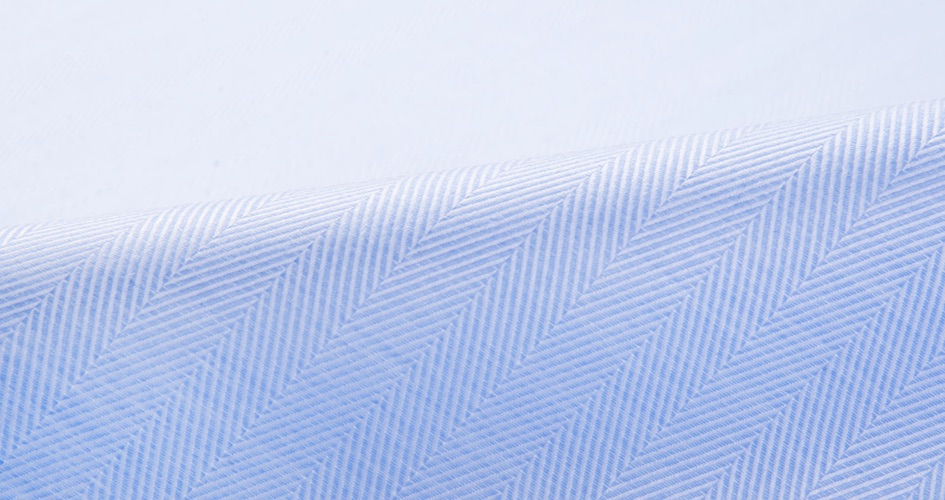
herringbone

Herringbone (Twill) Dress Shirt Fabric

Seersucker

Seersucker is a fabric primarily used to make shirts for warm weather, and is known for its distinctive puckered appearance. This puckered look is created in the finishing of the fabric, after it’s woven, and helps to promote air flow when worn. This helps make seersucker very comfortable in the summer. While seersucker fabrics can come in any color or pattern, blue and white striped seersucker is most popular.

Browse our selection of seersucker fabrics here.
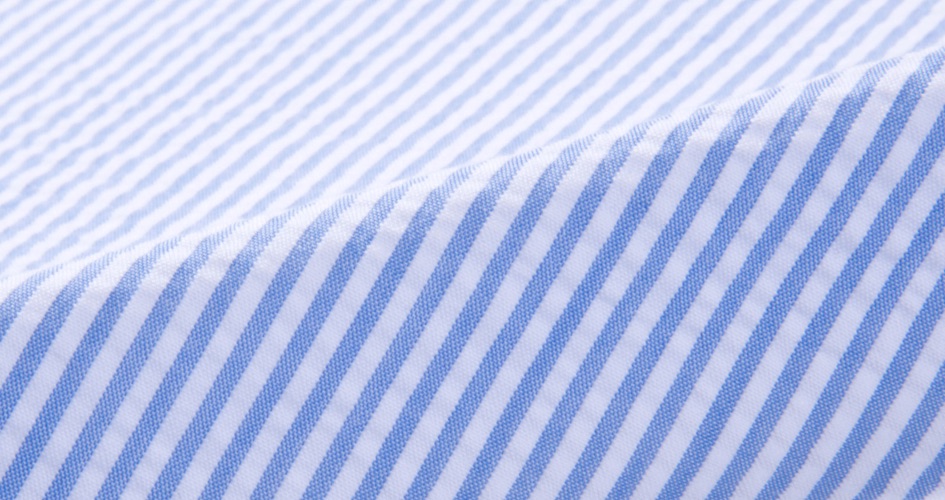
seersucker

Seersucker Shirting Fabric

Linen

Linen fabrics are incredibly breathable and, like seersucker, typically made to be worn in hot climates. Linen is made from the fiber of the flax plant, and can be very labor intensive to produce. Typically linen will be more loosely woven and sheer than most cotton fabrics, and has a very unique, dry hand to it that is unlike cotton. Linen also tends to wrinkle more easily than cotton and generally feels much more relaxed because of this. While we love the look and feel of linen, some people prefer cotton/linen blend shirts as you can achieve much of the coolness of a linen shirt while reducing the wrinkling.

Browse our selection of linen fabrics here.
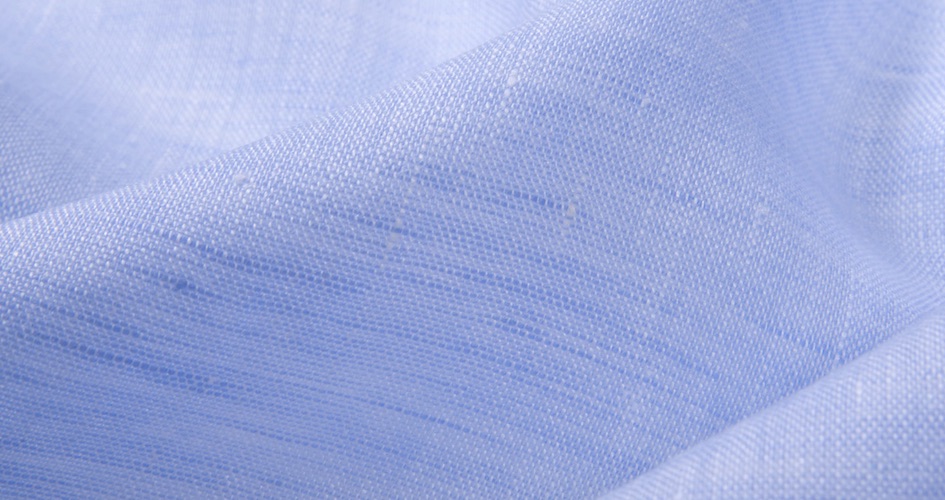
Linen

Linen Dress Shirt Fabric

Egyptian, Sea Island, and American Pima Cotton

When you hear about Egyptian, Sea Island, or American Pima cotton you should know that this is not referring to the type of weave, but to the type of cotton used to make the weave. For practical purposes, Pima cotton, Sea Island, and Egyptian cotton are all cottons derived from originally the same plant: Gossypium Barbadense. These are more desirable cottons because they are typically “extra-long staple length” cottons (length greater than 1 3/8″), which allows them to be spun into finer, stronger yarns.

All three of these cottons are typically regarded as high-end, luxury raw goods. Egyptian and American Pima will be the most readily available, while Sea Island cotton is well-known for being incredibly rare. American Pima will often be woven into fabrics of a slightly lower quality than Egyptian cotton as it is not as clean of a fiber, despite having similar staple lengths.

There is also a famous, rare form of Egyptian cotton called “Giza 45” that is specially used for some of the world’s finest shirting fabrics—notably Thomas Mason Goldline fabrics. This is a highly acclaimed form of cotton found in a particular portion of the Nile Delta that can be woven to produce incredibly fine yet strong yarns. Fabric made from Giza 45 cotton tends not to degrade over time as much as other Egyptian or American Pima cottons.

Accounting for just .0004% of the cotton supply available, Sea Island cotton is the rarest in the world. What makes Sea Island Cotton so desirable is its unique combination of characteristics: extra-long staple length, remarkable fiber strength, incredibly uniform growth, and a significant brightness in color.

While other high-end shirting cottons like Egyptian cotton and American Pima can boast extra-long staple length above 1 3/8″, it’s Sea Island cotton’s durability, consistency, vibrant color, and silky luster that make it different from these. The uniformity, strength, and “hairlessness” of the fiber allows fabric woven from it to last an incredibly long time, and actually become smoother each time it’s laundered.

The best Sea Island Cotton comes from Barbados because the incredibly uniform, humid climate of the island allows for the cotton plants to grow in a consistent way throughout the year. The cotton in Barbados is also picked by hand to ensure the highest quality levels.

Making matters a bit confusing, there are trademarks filed around the names “Sea Island” and “Supima.” Keep an eye out for “Certified Sea Island Cotton” vs. “Sea Island Quality,” as only the former will be authentic and it’s something we often see on the market.

Learn more about Sea Island Cotton dress shirts or browse our selection of Sea Island Cotton fabrics here.
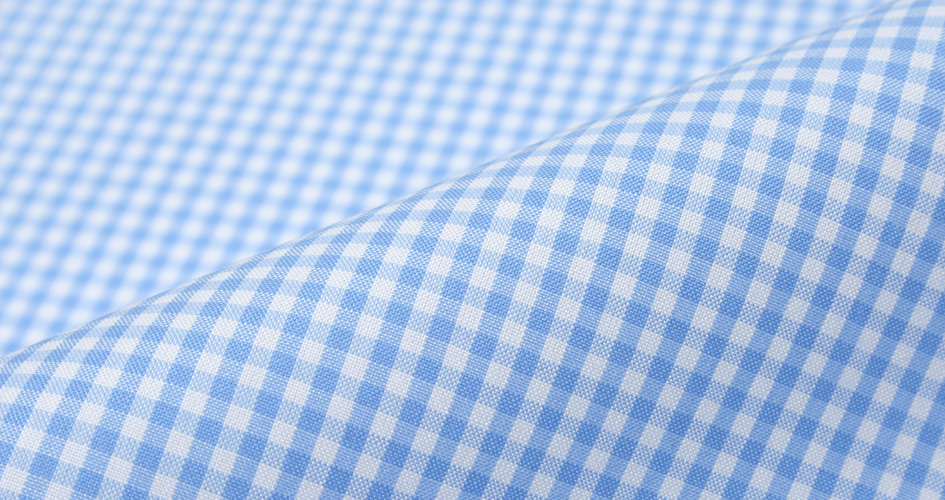
Premium Egyptian Cotton Dress Shirt Fabric

Egyptian Cotton Dress Shirt Fabric

Thread Count

If everything else is the same (weave, ply, mill, and type of cotton), higher thread count means a smoother, silkier, more expensive fabric. Thread count is often referred to with a number like 50s, 80s, 100s, 120s, 140s, 170s, etc., up to 330s.  These numbers refer to the yarn size, but keep in mind that typically a thread count above 100 will imply a two-ply fabric.

Though there are some exceptions when extremely fine single-ply yarns are used, these higher-number thread counts will be two yarns twisted together. For example, 120s thread count means that two 60s yarns are twisted together. Generally this fabric will be more durable than a 60s single-ply, but it won’t necessarily be smoother. 140s thread counts are typically two 70s yarns twisted together. And so on and so forth.

While thread count can be an indicator of quality, remember that ply, mill, and quality of cotton will have just as much to do with how luxurious the fabric is.

Two-Ply vs Single-Ply

Ply is how many yarns are twisted together to make a single thread. Shirting fabrics are most often two-ply or single ply. Two-ply means that two yarns are twisted together to make a single thread that is then woven into the fabric. (Note that this is not at all like two-ply toilet paper!). Two-ply fabrics are generally superior to single-ply fabrics in their durability. Three-ply fabrics are rare, but can be found occasionally.

How to Choose a Collar Style

Featured

With so many collar styles to choose from, choosing the perfect collar style can feel a bit daunting. But it’s really not so bad.  Here are some guidelines we generally stick with to help guys choose the right collar.

President Spread collar is always a safe choice

President Spread collar is always a safe choice

When in doubt choose the President Spread

If you don’t have strong feelings about your collar, and really just want something “normal” or “safe”, the President Spread collar is a great choice.  It’s not a particularly large or small collar and has nice, wearable proportions.  It’s a spread collar, which is (in our opinion) a bit cooler than the point collars, but it’s not an aggressive spread by any means.  The President Spread collar works well with a tie and also generally stands up nicely open collar with a blazer, making it a versatile business collar.  The President Spread is our most popular collar (by far) and you really can’t go wrong with it.

Shorter necks choose collars with standard collar bands

If you know you have a particularly short neck then you will want to stick to the collars that have standard-height collar bands.  The collar band is the part of the collar that goes around your neck, so the height of the collar band determines how high up your neck the collar will stand.  The English Spread, Londoner, Semi Spread and Straight Point are all great choices in this category with a 1″ collar band at the front of the collar.  You may also consider the Franklin Spread and Franklin Semi Spread collars. The Franklin collars also have a 1″ collar band, in addition to shorter collar points that work well proportionally for the vertically challenged.

Longer necks choose collars with longer collar bands

If you’re over 6 feet tall, or just feel that you have a longer neck, you’ll want to consider a collar with a slightly taller collar band, like our “President” collar styles.  The President collar styles are just slightly taller than the collars listed above with a front collar band height of 1 1/4″.  These are still in the range of a very “normal” size collar and you don’t have to worry about them looking strangely massive (no matter how big or small you are).  You can also consider the Roma Spread or Roma Cutaway collars, or even the Milano, but these collars can be a bit too large for those that are shorter than average.

Senior people try bolder cutaways

More senior bosses can try bolder cutaways

Casual environments consider button down collars

If you’re picking out shirts for the weekend or a vacation, consider getting some with a button down collar.  The buttons hold down the collar points for a low maintenance shirt that works well under a blazer or sweater without a tie.  It’s a sportier vibe that looks great on a plaid or gingham shirt.

Junior people in conservative offices play it safe

If you’re a junior hire in a traditional business setting–bank, consultancy, law firm, etc–we generally suggest choosing a more conservative collar.  You want to stand out for the work you do, not the way you dress. In this case, you can’t go wrong with a classic President/English spread or (President) Semi Spread collar. These collars won’t turn any heads (in a good way).

Bosses should have a little fun

Worked your way up the corporate ladder and earned yourself a little flexibility? Feel free to experiment with something a bit more flashy.  If you’re in a particularly conservative office you may still want to steer clear of button-downs, club collars, and our largest collar, the Milano, but you could surely consider the Londoner or Roma Cutaway for a more aggressive, confident look.  If your office is not totally old fashioned you could take it even further with the extreme President Cutaway.

Creatives consider soft unfused collars

Creatives consider soft unfused collars

Creatives consider soft unfused collars

If you work at a startup or media company and you’re going for a more casual cool look, we’d highly encourage you to take a look at our soft unfused collars like the Soft President Spread, Soft Ivy Button Down, Soft English Spread, Colorado Button Down, or the Band Collar. These collars have a casual, relaxed appearance without the stiff, crispness of a fused collar so you’ll avoid looking overly corporate.

Wider faces choose point or semi spread collars

Per the obligatory Alan Flusser adage, if you have a particularly round face, you might want to steer clear of something with an aggressive spread. Choosing a President Semi-Spread, Semi-Spread, or Straight Point Collar can help visually lengthen out your face.

Longer faces choose spread or cutaway collars

If your face is particularly long, then a semi-spread or point collar might not be your best choice. A collar with a little more spread will balance out your natural shape. Consider the President Spread, Londoner, or Roma Cutaway as options that might look best on you.

How to Measure Your Body for Dress Shirts

Featured

If you’re ordering a custom dress shirt, one way to create your custom size is to measure your body. The following explanations and videos will show how to measure for a dress shirt and create your custom size. However, before you get started, these links may be helpful.

  1. Enter your body measurements to generate a custom shirt size.
  2. If you prefer to measure a dress shirt directly, that can also be a great way to create your first custom dress shirt size. How to measure a dress shirt.

Neck Around

Place the measuring tape around the neck at the height where the collar would normally rest. This will be just below your Adam’s apple. Stand relaxed. Do not crane your neck out or squeeze your chin down. The tape should be resting lightly on the skin, not squeezing it. Hold one finger behind the tape measure, against your neck, to ensure some room for comfort. Do not try to account for shrinkage by adding extra room here. We will do that for you. How to measure your neck for custom shirts.

Sleeve Length

Measuring your body in this way will require a partner. If you don’t have a partner, measure a shirt with sleeves that are the right length. Place one end of the measuring tape at the base of the center of the back of the neck. Run the measuring tape over your shoulder, and let it hang down to your hand. Measure to the center of the meaty part of your palm. Do not adjust for shrinkage. We will do that for you. How to measure your sleeve length for custom shirts.

Shoulder Width

This measurement will require a partner. If you don’t have a partner, measure a shirt directly. Either way, it’s helpful to refer to a shirt that fits well in the shoulders. Start the end of the tape measure on the outside edge of the shoulder where you want the yoke of the shirt to start. This is where the horizontal part of the shoulder meets the vertical part of the arm. Measure up over the curve of the shoulders and to the outside edge of the other shoulder. How to measure your shoulders for custom shirts.

Chest Around

Run the measuring tape around the fullest part of your chest, tight up under your armpits and over the shoulder blades. Let your arms hang down in a relaxed, natural pose. Do not puff out your chest or arch your back in any sort of pose that isn’t natural or sustainable. How to measure your chest for custom shirts.

Waist Around

This is slightly different from the waist measurement you use when you buy pants, so don’t assume you know this. It’s important to stand in a relaxed, normal position (unless you’re able to suck in your stomach and hold your breath all day long). Run the tape around the fullest part of the belly. This is usually around the level of the belly button. The measuring tape should be snug on the skin, but not squeezing in. How to measure your waist for custom shirts.

Shirt Length

We need to know how long you want the shirt to be. Put the first end of the measuring tape at the base of the back of your neck and measure down your back to the point where you’d want the shirt to end. This point is usually the bottom of the buttocks, although you may want to go slightly longer if you plan to always tuck the shirt in, or slightly shorter if you plan to wear the shirt untucked. How to measure your body for custom shirt back length.

Bicep Around

With your arm relaxed and hanging at your side, measure around your bicep at its fullest point. This is probably pretty close to your armpit. Make sure the tape measure is not too tight. Round up to the nearest half-inch. Don’t flex. Fine, flex. Done? Ok, now take the measurement. How to measure your bicep for custom shirts.

Wrist Around

Measure around your wrist at the wrist bone. Hold the tape measure tight to your skin, but do not squeeze your wrist. Round up to the nearest quarter inch. We will add 2 inches to this measurement when we calculate your cuff circumference. How to measure your wrist for custom shirts. 

Type of Fit

For most men, we suggest starting with our standard or “office-appropriate” Slim Fit. It will be nicely fitted to you, yet still comfortable and not too tight. However, if you prefer a particularly tight fit, dislike any excess fabric around the chest, waist and arms, and are not bothered by slight tightness or limited range of motion, consider the Super Slim Fit. Conversely, if you appreciate a generous, roomy fit that does not hug your body, then select the Classic Fit. This will be looser around the chest and arms and boxier through the stomach. Tips for choosing the right type of custom shirt fit.

How to Wash a Dress Shirt

Featured

Shirts are made to be worn, not worshiped. This means they get dirty. With proper care, however, a high-quality dress shirt can last for several years and continue to look great. In this post, we’re going to break down three of the most popular washing methods and detail how you can keep your dress shirts looking great for years to come. We’ll also outline how to deal with special emergencies as well as provide some other cleaning tips.

Closeup of clean shirt collar

Method 1: “Wash and press” at the cleaners

Wash and press is the “normal” way to clean dress shirts when you take them to the cleaners, and it’s our first choice. Don’t be too confused by this—even though you take your shirt to the “dry-cleaners,” they are most likely doing wash-and-press unless you are expressly asking them to dry clean.  At just a few bucks per shirt, this cleaning method is relatively affordable, easy, and it keeps the shirts looking great.  Here’s what the process involves at most cleaners:

  1. They wash your shirt in a normal washing machine using water and detergent.
  2. They remove most of the water from the shirt with the spin cycle in the washing machine.
  3. They pull the damp shirt onto an industrial shirt press that closes over the shirt and simultaneously irons the garment while removing all of the moisture.

Pros: Convenient, (relatively) inexpensive.

Cons: Some cleaners will be too hard on the shirts.  The slamming of the press over the front of the shirt can cause  buttons to chip or shatter. If the shirt torso or sleeve is stretched over the press when it is steamed dry it can cause this part of the shirt to become wider in these areas.  Finally, in the process of bringing the shirts from the cleaners to your closet collars will often be smashed in some way, requiring additional ironing for optimal appearance.

Method 2: Wash the shirt yourself at home

If you don’t trust your dry cleaner, or if you’d just like a little more control over how your shirts are washed, you may want to wash your dress shirts at home.  We really like this option, but to do so properly requires a bit of time and care on your part. Follow these steps for optimal results:

  1. Start by preparing the dress shirt. Unbutton all of the buttons, including cuff buttons and any collar buttons.  Remove any collar stays if it has them and put them in a safe place.
  2. Pre-treat any stains by carefully working a little detergent into them, or better yet spot-cleaning them with a stain remover pen.
  3. Set up your washing machine: To minimize wear on a fine or lightweight dress shirt, use the Delicate cycle.  If the shirt is made from a heavier-duty fabric, or is particularly dirty, you may opt for the Normal cycle.  Whites and light colors can use hot water.  Dark-colored shirts that you don’t want to fade should be washed with cold water. Take care not to include other laundry items with bold colors that may bleed into your shirts.
  4. Use a high-quality detergent, that is appropriate to the color of the shirt.  Be sure not to use any detergents or cleaners that are chlorine-based as these will cause discoloration of many shirt fabrics.
  5. Wash the shirts in the washing machine, and then let the spin cycle wring most of the water out of the garment.
  6. The shirts will be tightly crumpled in the washing machine so you’ll want to remove them promptly before these intense wrinkles dry into the shirt. Follow the care instructions on the tag inside your Proper Cloth for the recommended drying method. Note: Be careful about hanging the shirts on a sharp hanger or with tight clothespins as this can distort the fabric or leave a mark on the shirt.
  7. Last, you’ll want to iron the shirts.  You don’t need to wait for the shirts to be completely dry to begin this step, but they should be mostly dry.

Pros: Gives you the most control to treat stains, protect buttons, and iron collars carefully.

Cons: Takes time and attention.

Method 3: “Dry clean” at the cleaners

While we don’t really recommend dry cleaning cotton dress shirts, some folks like to take their shirts to the cleaners and have them dry cleaned. While this cleaning method will certainly not damage the shirt and will minimize shrinkage, it does have some downsides. The first is that it can be expensive—usually over $5/shirt. Another is that water-soluble stains such as perspiration are not removed. Dry cleaning solvents contain very little to no water so perspiration-based dirt can be left untouched.  Washing dress shirts in water is better for removing water-soluble dirt and stains from sweat.  That said, if your dress shirt has an oil-based stain on it you may have better luck getting it cleaned by a dry cleaner than in a washing machine.

Pros: Convenient.  Minimizes wear of the shirts.  Removes oil-based stains.

Cons: Won’t always remove water-soluble dirt or stains. Expensive. Your shirts are at the mercy of a potentially abusive shirt cleaner.

Question: Is it OK to dry shirts in the dryer?

We generally recommend avoiding the dryer and letting the shirt air dry on a hanger, although (depending on your location) this is not always practical.

If you do put the shirt in a dryer, avoid high heat or over-drying the shirt. Use the dryer on a lower setting to get most of the moisture out of the shirt, and then iron the shirt immediately to remove the rest of the moisture and wrinkles at the same time. If you dry your shirts completely in the dryer you’ll find the shirt a bit harder to iron perfectly, and they will likely shrink beyond Proper Cloth’s calculated shrinkage allowances. One notable exception to this rule is non-iron dress shirts which are designed to be dried in the dryer. These should not require ironing if they are promptly removed from the dryer when the cycle is complete and hung up.

Note: Always defer to the care instructions on the tag sewn inside your Proper Cloth shirts.

Question: How to remove a stain from a white shirt?

We all love a great white shirt, but in the unfortunate event that you spill some wine or spaghetti sauce on your shirt, some quick action could minimize any stains that result.

  1. With a brush or comb, carefully swipe or lift away any large pieces such that you don’t smear them worse into the garment. 
  2. Immediately treat the stain with water or stain remover solvent.  The sooner the better.  If you can’t get your hands on a stain remover pen try dishwashing detergent, lemon juice, vinegar, or seltzer water. 
  3. Dab solvents on the stain with a light touch. Pressure can force the stain deeper into the fibers of the garment. 
  4. Rinse and repeat. 

Question: Should I use starch when a shirt is pressed?

While many people do like to have their shirts starched, our suggestion is to avoid starch completely.  While starch can help a broadcloth or oxford shirt appear more crisp, it can also cause shirts to wear out prematurely.  When the starch material gets embedded in the shirt fibers it acts like a million little knives that break down the fibers over time.

Three tips to maximize dress shirt life

  1. Don’t leave dirty shirts in the hamper for too long before washing. This can lead to premature yellowing of the collar band as any sweat and oils will have more time to set into the fabric of the shirt.
  2. Always remove the collar stays from the collar before washing and ironing.  If you don’t they will become warped and cause the dress shirt collar points to curve awkwardly.
  3. Don’t count on your cleaner to find and remove stains. If you know there’s a spot on your placket or sleeve, point it out so that they know to spot clean it.

Men’s Fall Layering Guide: Fabrics & Style Tips for 2025

If you like texture and layering, fall is the season to shine. Cooler weather provides an opportunity to break out some of the best materials in menswear. We’re examining the materials that comprise fall fashion and the process of combining them in a way that’s warm, practical, and stylish. This guide covers the best fabrics for fall and shows you how to layer them with confidence. So, here’s your men’s fall layering guide.

Fall Fabrics for Layering

Flannel

Flannel is a fall fabric that is brushed for softness. Traditionally, it was made of wool, but today you’ll often find it made of cotton. Because it was warm and durable, flannel was popular on the American frontier, giving it the strong, rugged association it has. Plaid flannels are popular top layers for fall, but don’t discount a timeless flannel suit.

Cashmere

If you want incredible softness and elegance, reach for cashmere. Made of the hair of a special breed of goat, cashmere is prized for its incredible hand feel. Cashmere is great for those autumn layers around the house and office, like sweaters, half-zips, and cardigans.

Corduroy

Corduroy is defined by its wales – the distinctive raised lines that appear as though the fabric is made of parallel cords. Corduroy often has a slight sheen and soft texture, appearing similar to velvet or velveteen. The fabric is warm and durable. It has a strong association with the fall, the holidays, and East Coast prep. You can’t go wrong with a pair of corduroy pants, but a corduroy sport coat or full suit is a great fall look.

Tweed

Usually made of wool, tweed is coarse and warm, keeping out the midst and chill of the British Isles. The garments have origins in traditional sporting in the United Kingdom, such as shooting and fishing. You’ll often see it in classic patterns like herringbone, houndstooth, or gun check. Tweed is dynamic, sharing associations with academic, preppy looks, outdoorsiness, and aristocratic style. Because of the warmth, you’ll often see it worn in fall and winter.

Part II: How to Layer for Fall

The Base Layer

Now that you know the fall fabrics, it’s time to talk about how to bring them together. Layering is an art of comfort and style. We recommend starting with a slim base layer in breathable fabric like lightweight cotton, linen, or merino wool that hugs without bulk and absorbs sweat near the skin. You can also think of this in terms of texture: think smooth → textured → rugged as you go outward.

The Mid-Layer

Over that baselayer, explore a mid-layer with texture, such as a flannel shirt, brushed twill overshirt, or a textured knit. These pieces add both warmth and visual depth, making your outfit feel seasonal without looking heavy.

The Hero Piece

This is also where you can incorporate one “hero” piece — a tweed blazer, corduroy overshirt, or patterned knit that anchors the look while letting your simpler layers play a supporting role.

The Gut Check

Make sure each layer stands on its own. If you remove the blazer or overshirt, the sweater and shirt underneath should still look deliberate.

Men’s Fall Layering Guide Shorthand

Like any other season or occasion, this is about personal expression and comfort, so take these fall layering tips as thought starters and not set rules.

  • Consider limiting to about three visible layers so things don’t get bulky or too hot
  • Treat colors and patterns with moderation to start; keep the base simple so the outer layers shine.
  • Explore color tones that match the season

Easy Fall Outfit Guide

  • Business Casual: OCBD + navy merino sweater + flannel trousers + brown tweed blazer
  • Weekend: Brushed cotton flannel shirt + quilted vest + selvage denim + suede boots
  • Evening Out: Black rollneck sweater + cashmere sport coat + wool trousers

For more inspiration, you can get in touch with customer service for some styled advice or consider visiting a showroom if you’re in the New York, Chicago, or Washington, D.C. areas.

Do You Need an Undershirt in Summer? A Men’s Guide to Hot Weather Layers

For some, it’s about comfort; for others, it’s a matter of taste. But the age-old question remains, “Do you need an undershirt in the summer?” While there are a few different factors, you’re mostly choosing between sweat absorption or added heat. In this guide, we’ll break down the case for and against wearing men’s undershirts during the summer months and offer a few alternatives if you choose to do so.

Pros of Wearing an Undershirt in Summer

TL;DR – Your undershirt can…

  • Absorb sweat, conceal sweat marks
  • Keep deodorant off the fabric
  • Prolong the shirts lifespan

Men’s undershirts absorb sweat. This means you run a lower risk of looking sweaty, even if you are feeling sweaty. It prevents unsightly stains that awkwardly pool around your armpits and occasionally under your pecks. Stopping sweat and keeping deodorant off the fabric helps keep the shirt clean. It can also prevent the need for additional washes or dry cleaning, prolonging the shirt’s lifespan. Lastly, if you wear sheer fabrics, an undershirt can add some opacity that prevents the garment from being too see-through.

Reasons to Skip the Undershirt in Summer

TL;DR – Your undershirt can…

  • Trap heat
  • Disrupt your silhouette
  • Peek out depending on the cut your shirt

The most obvious reason here is that you’re adding a layer. This traps heat as well as moisture, especially if you tend to sweat a lot. Some undershirts can add bulk to an outfit, creating a less clean silhouette. Depending on the cut of your undershirt, some of the fabric can be visible if you’re wearing the top button or two undone. Depending on taste, you might not want a visible undershirt. For some strong opinions on that topic, you can read this piece from Put This On.

When You Should Wear an Undershirt

TL;DR – Wear one if…

  • You sweat a lot
  • You wear a very fine or sheer shirt
  • You have a formal meeting or interview, etc.
  • You wear a dress shirt more than once before washing

It’s always a matter of preference, but wearing an undershirt can elevate your overall appearance and keep the dress shirt cleaner. If you’re prone to sweating, have a big meeting, or don’t wash your shirt after every wear, you might want to consider one regardless of the outside temperature.

How to Choose the Right Summer Undershirt

TL;DR – When selecting a summer undershirt, consider

  • Lightweight, moisture-wicking fabrics
  • A close fit to avoid excess bulk
  • A v-neck or scoop neck if you’re skipping a tie; this keeps this

Best Alternatives to Wearing an Undershirt

TL;DR – If you skip an undershirt, you can stay cool by…

  • Selecting breathable fabrics like linen or linen-blends
  • Using sweat pads or wipes
  • Choosing dress shirts with built-in lining or double-weave panels

There’s a long list of things you can do, but if sitting directly next to the AC isn’t an option, you’re best off shopping fabrics developed for and perfected in hot climates. Sweat wipes can offer some temporary relief too.There’s a long list of things you can do, but if sitting directly next to the AC isn’t an option, you’re best off shopping fabrics developed for and perfected in hot climates. Sweat wipes can offer some temporary relief, too.

Do You Need an Undershirt in Summer: Final Verdict

Short answer? No. You don’t need an undershirt in summer. There are plenty of reasons to skip and many ways to keep cool and pressed. That said, there are plenty of good reasons to wear one. And there are some instances where, even if you don’t usually, you might consider breaking your habit.

For more on how to dress during hot months, check out our guide on How to Dress in Hot Weather: A Men’s Summer Style Guide. If you’re looking for men’s undershirts, we offer comfortable V-necks that won’t show under your dress shirt.

How to Dress for the Beach: Options for Every Guy & Every Occasion

The answer to the question, “How to dress for the beach?” doesn’t have to be as simple as board shorts and flip-flops. That’s a great combination, but there’s room to enhance your beach attire, depending on your personal style and the activities and occasions. So, we’ll skip the most obvious and offer a few smart ways to approach men’s beachwear—from low-effort to fully styled—with outfit ideas for different settings and levels of formality to help you figure out what to wear to the beach.

Laid-Back and Easy

For the casual, no-fuss guy, here’s an easy, beach-friendly outfit that feels carefree but not careless:

  • Tailored shorts
  • Breathable short-sleeve button-up
  • Flip-flops or slip-on canvas shoes
  • Lightweight baseball cap
  • Nylon backpack or basic beach tote

Casual but Considered Summer Beach Style

Switching from shorts to pants and layering gives a beach outfit a little more depth and complexity. For something that’s polished but still beach comfortable:

  • Lightweight linen or linen-blend pants
  • Tank top layered with a linen button-down (worn open)
  • Espadrilles, slip-ons, or huarache sandals
  • Sunglasses and a canvas tote

Men’s Beachwear for the Resort

When it comes to beach club outfits for a cabana or upscale resort look, consider exploring matching sets or tucking a polo into elevated trousers.

  • Matching set (short-sleeve shirt and shorts)
  • Knit polo + breathable trousers
  • Minimalist sneakers or leather sandals
  • Understated accessories: a chain, bracelet, watch

The Colder Coastal Beach

Not every beach is warm. For colder climates, consider wearing thicker pants and long sleeves. Bring along a sweater for windy days and an East Coast look.

  • Jeans or medium-weight chinos
  • Linen long-sleeves for the temperate days
  • Twill cotton long-sleeves layered over a t-shirt for a crisp morning walk
  • A sweater for layering
  • Chukkas, boat shoes, or canvas sneakers to tie it together

If you go with a linen shirt, we have some additional advice on what to wear How to Style Men’s Linen Shirts for Summer.

The Upscale Beach Bar

Beach bars range from casual tiki bars to upscale seaside lounges; attire should be appropriate for the setting. If you’re going to something on the casual side, almost everything discussed above will fit in nicely. If you’re going somewhere a little more polished, consider the following:

  • A linen suit or tropical wool suit
  • A Hawaiian shirt or knitted polo
  • Tailored trousers or elevated shorts
  • Loafers for something more formal
  • Sandals, espadrilles, or boat shoes for a more casual look

If you’re headed to a beach wedding, check out our full breakdown of attire in Best Fabrics for Summer Wedding Suits: Stay Cool & Stylish in Hot Weather.

Final Thoughts on How to Dress for the Beach

Beach attire doesn’t have to be limited to shorts. Consider what you plan to do (swimming vs. lounging), the context of the beach (casual public beach vs. beach club), and the occasion. Your take on men’s beachwear doesn’t have to feel like a massive departure from your everyday style by pairing what you own and like in beach-friendly combinations.

Still Need Help with What to Wear to the Beach?

For men, how to dress for the beach can’t always be answered quickly. For some more takes, check out what our friends at Put This On had to say about summer looks, where they discuss how men can dress for the beach. If you’re looking for something more personal, our stylists in customer service can offer recommendations on men’s beach outfits.

Jacket Front Length

How it Works

The Front Length adjustment lets you change the front length of a jacket independently from the back length.

The jacket front length is measured from the high point of the shoulder (where the shoulder meets the lapel) down to the lowest part of the front quarter.

With our Standard setting, the jacket’s front length will be 1.5″ longer than the back length.

Selecting Shorten 1.5″, Shorten 1″, or Shorten 0.5″ will reduce the front length by the specified amount relative to Standard. Selecting Lengthen 0.5″ increases the front length 0.5″ relative to Standard so that it becomes 2″ longer than the back length.

Our Recommendation

For a nice fitting jacket, our goal is typically for the front and back of the jacket to appear evenly aligned with the floor when worn. Achieving this typically requires the front to be slightly longer than the back due to the natural shape of the human body—hence the 1.5″ longer standard.

  • For men who are particularly thin or have a slightly stooped forward posture, using one of the Shorten settings may improve the balance.
  • For men with a prominent chest or midsection, or a very erect posture, lengthening the front further may produce a more balanced appearance.

How to Dress in Hot Weather: A Men’s Summer Style Guide

It’s hot. You’re staring at your closet, trying to decide what will keep you from miserably soaking through a shirt in the heat. It’s tempting to opt for a t-shirt you don’t care about and some shorts. And while a tee and shorts is a solid look, there’s room to dress sharply even when it’s hot. We’re here to break down men’s summer outfits and discuss how to dress in hot weather, offering real-world tips for building a stylish, breathable, and versatile summer wardrobe.

Beat the Heat with Smarter Style Choices

Between work and social functions, sometimes there’s no getting out of dressing up. Even without an occasion, looking sharp for your satisfaction is a worthy pursuit. Luckily, dressing for hot weather isn’t about abandoning style—it’s about being strategic. The right choices in fabric and fit can help you maintain polish while avoiding the swampy discomfort of sweat-soaked outfits.

Best Fabrics for Dressing Well in Summer

No shocker here, but the cornerstone of dressing well in summer is choosing breathable, lightweight fabrics that release heat and wick moisture. You want to invest in materials that work with your body, not against it.

Linen

When it comes to men’s summer outfits, nothing beats linen. Made from flax, it’s incredibly breathable and has a casual elegance that suits both day and night occasions. For a more polished option, consider a linen-cotton blend, which reduces wrinkling while still allowing for airflow. For more on styling linen, check out our blog How to Style Men’s Linen Shirts for Summer.

Cotton (Lightweight or Open-Weave)

Warm-weather classics like poplin, seersucker, and open-weave twills can provide shape without the weight. Look for unstructured cotton jackets and breezy cotton shirts.

Wool & Wool-Blends

There’s a misconception that wool is scratchy and warm like a blanket at your grandmother’s house. Even heavy wool is breathable, but this dynamic fabric comes in a range of weights. Tropical wool, as the name implies, is crafted for warmer climates. A tropical wool suit allows for airflow while wicking away moisture. Additionally, wool is a great fabric to blend. Wool-linen blends are popular for summer suits and sport coats. You can even find wool and silk as a glossy but cool option. If you’re considering wool suits for a summer wedding, consider giving Best Fabrics for Summer Wedding Suits a read.

The Importance of Fit for Hot Weather Style

Fit matters too. Tight clothing traps heat and restricts airflow, making you sweat more and feel uncomfortable. Instead, opt for garments with a bit of drape—shirts that skim the torso without clinging, trousers with room to breathe, and jackets with unstructured silhouettes. A slightly looser fit enhances comfort, looks relaxed, and helps you hit the notes of Summer 2025 Fashion.

Parting Thoughts on How to Dress in Hot Weather

If you want to go casual, go casual. But don’t let the temperature be the reason you skip dressing up. Summer style is about intention—choosing the right fabrics, the right fit, and the right construction. Linen, cotton, and lightweight wool keep things breathable. A looser silhouette with proper drape ensures you stay cool and look sharp. And thoughtful construction adds shape without trapping heat. If you’re unsure where to start, Proper Cloth’s virtual stylists can provide recommendations on everything from sizing to season and style for the perfect summer wardrobe.

Looking for more? Check out some additional hot-weather dressing tips from our friends at Put This On.

How to Evaluate Your Shirt Size

Try It On (with other key pieces)

It sounds like common sense, but be sure to try on the shirt at home in a way that closely represents how you plan to wear the shirt outside.

Dress Shirts

  • Try buttoning it all the way up and wearing it with a tie if it’s a dress shirt 
  • If this is a shirt for work, tucking it into dress pants will be more illustrative of the final look than tucking it into sweatpants
  • If you’ll be wearing the shirt under a suit/jacket, be sure to try it on with and without a jacket

Casual Shirts

  • Wear it untucked and with the top button (or two) unbuttoned 
  • Try it on over your favorite jeans or loose casual pants if that’s your vibe
  • With or without an undershirt—whichever is your norm

Launder the shirt to account for change

Keep in mind that the fit of the shirt will change slightly when it’s washed, becoming larger in some dimensions and smaller in others. We generally suggest washing the shirt once according to the care instructions on the tag before evaluating the fit (especially if you’re going for a slim fit). Don’t worry, we proactively adjust shirt sizes to account for typical changes—shrinkage or stretch—that occur when following the care instructions.

Take it for a test drive

It’s OK if you want to wear the shirt for a day to see how it works in the real world. This will give you more time to evaluate the fit, consider all the different aspects of the size, and see how it performs throughout a typical day. 

Note: You are still eligible for a remake or return after wearing and washing the shirt once or twice.

Dress Shirts Tips

Collar 

  • It’s important to button the collar and check that it fits well. Wearing a shirt buttoned up all day can be uncomfortable if the collar’s a little on the snug side. You’ll want to be able to fit a few fingers in there easily while it’s buttoned. Even if you’re never planning to wear a tie, it’s a good idea to get this right in the off chance you do have to put one on some day.

Sleeve Length

  • With your arms hanging relaxed at your sides and the cuffs of the shirt unbuttoned, the sleeves should come down to the center of the back of your hand (or the first knuckle of your thumb). This will allow for ample range of motion in the sleeves when your arms are extended, without excessive sleeve length bunching up above the cuff when your arms are at rest.
  • A sleeve length that’s on the longer side is ideal for range of motion. You can fully extend your arms and your cuffs will stay down near the wrists. Your sleeves will look a little baggier, folding excess sleeve length behind the cuff when your arms are at rest.
  • Going a little shorter on sleeve length may look more streamlined when your arms are at rest—eliminating much of the extra gathering of sleeve length at the cuff. However, without the added slack in the sleeve length, you’ll experience more restricted range of motion when bending or extending your arms.

Chest Width

  • The Chest Width should fit close enough to the body without the front buttons showing signs of pulling and without tension at the underarm. With tailored shirts, it’s important to have some excess fabric in the upper chest, particularly on the back side of the shirt, behind the arms. Without any extra fabric in the back of the chest, the sleeves cannot move comfortably. Too much room though, can create excess folding near the shoulder and front of the armhole of the shirt.

Midsection Width

  • When evaluating the fit of the Midsection Width, we recommend trying on the shirt while sitting and standing. The shirt should have enough room to do both comfortably, but the amount of room is a matter of your personal preference. Keep in mind that an overly tight midsection can cause the fabric to hug the body, folding and creasing rather than draping freely which can detract from a slim appearance. 

Back Length

  • Generally, the longer the shirt’s Back Length, the more secure you’re able to tuck the shirt in. On a tucked-in shirt, the hem should be long enough to cover your seat in order to keep the shirt from coming untucked when raising your arms. This will also ensure the midsection point of the shirt is aligned with your natural waist, which is key for achieving a slimmer fit.

Cuff Around & Watch Allowance

  • The Cuff Around should fit comfortably around the wrist when buttoned and keep the sleeve from sliding over the hand. It should not be skin tight and ideally should not be loose enough to pass your hand through without unbuttoning it. If you wear a watch or other accessory on the wrist, consider adding a watch allowance to help the cuff pass over your watch more easily. The amount of watch allowance will depend on the size of your watch. Read more about selecting a watch allowance here.

Casual Shirt Tips

Chest Width

  • For a more comfortable fit and improved range of motion, it never hurts to have a little extra room in the chest on a casual shirt. As with all things ‘fit’, personal preference plays a role, but we find it can be nice to have a little more breathing room in a casual untucked shirt.

Midsection Width

  • Compared to a slim, tucked-in dress shirt, you’ll want the Midsection Width of a casual untucked shirt to be at least 0.5” bigger. Your shirt will have a straighter, more classic fit through the body the closer the Midsection Width measurement is to the Chest Width measurement. No matter where you fall on the classic/slim fit spectrum, a little more room in the midsection is key to preventing the shirt from bunching up at the waistline and not falling comfortably over the top of your pants.

Back Length

  • For untucked shirts, we recommend the shirt hem come down to about the middle of the seat. Another good rule of thumb is that the front shirt tail should end midway down the fly of your pants. Generally speaking, untucked shirts are 1.5-2.5” shorter in the Back Length than tucked-in dress shirts.

Top Button Placement

  • The ideal Top Button Placement will depend on how much chest you’re comfortable showing and how open you’d like the collar to be when worn unbuttoned. For a casual shirt, lowering the Top Button Placement allows for a more relaxed, laid-back appearance. Click here to read more about perfecting the unbuttoned look.

Get Help – Submit a Fit Advice Request

For a second opinion, don’t hesitate to submit a Fit Advice Request through your Proper Cloth account. Our Fit Specialists are very experienced at helping clients perfect their fit and we are more than happy to assist. 

Linen Suits: The Complete Guide to Summer’s Smartest Menswear

Whether you like looking sharp in the summer or have dressy events like weddings, linen can be your best friend. Classic fresco wool suits can be too warm, as can synthetic blends? You might as well be wearing a neoprene sweatsuit. Linen suits represent the gold standard for keeping you cool, while the wrinkles convey the laid-back feeling of summer. Breathable, lightweight, and effortlessly elegant, they offer the perfect balance of polish and ease. Let’s talk about how to wear a linen suit.

In this guide, we’ll break down everything you need to know about linen suits—from fabric types to styling tips and where and when to wear them. Whether you’re headed to a wedding, a client lunch, or a warm-weather vacation, the right linen suit can do more than just keep you comfortable—it can elevate your entire look.

What Is Linen Made From?

Linen is a natural textile derived from the fibers of the flax plant. These fibers are extracted from the plant’s stalks and undergo a meticulous process — we’ll spare you the details — to become the breathable, durable fabric known for its comfort in warm weather. Linen’s unique properties, such as its moisture-wicking ability and natural luster, make it a preferred choice for summer garments, including suits.

Why Linen Suits Belong in Your Summer Wardrobe

Linen’s unique properties, such as its moisture-wicking ability and natural luster, make it a preferred choice for summer garments, including suits. But breathability isn’t the only benefit. Linen suits bring texture, charm, and a relaxed sophistication that other fabrics can’t replicate. Add in the ability to transition between casual and formal, and it’s no surprise that linen suits have been a summer essential for centuries.

How to Wear a Linen Suit: Style Tips for Every Occasion

Linen Suits for Weddings and Formal Events

Wearing a linen suit to a wedding? You’re in luck—few outfits balance relaxed and refined better than this. Stick to neutral or soft tones (think natural, beige, sage, or light blue). Pair with a crisp white shirt, a subtle pocket square, and loafers or leather lace-ups. Linen suits for weddings are ideal for beach ceremonies or garden receptions. For even more event-specific ideas, see our complete summer wedding style guide.

Linen Suits for Business Casual

Opt for a darker tone like navy or olive for a more professional setting. Layer with a lightweight dress shirt or polo. You can skip the tie but opt for loafers for a more buttoned-up look.

Casual Looks with Linen Suits

If you’re dressing it down, explore separating the pants and jacket. Throw the jacket over a tee or knit polo. Pair the pants with a breezy camp collar shirt. The casual category is where linen suit outfit ideas really open up. A nice linen blazer can work with drawstring trousers and even jeans.

Linen, Linen Blends, and What They Really Mean

If you’re a scotch or wine snob, the word “blend” might have a negative connotation. When it comes to fabrics, there’s no need to shy away. Blending can bring the best attributes of each fabric to a garment.

100% Irish Linen

We take a lot of pride in our full linen suits. We source from the legendary Baird McNutt mill, which has been producing incredible linen since 1798. If you want a 100% linen suit, the Bedford is the route to go. These suits have a substantial feel while remaining incredibly breathable and offering wrinkled charm. We offer a variety of colors and patterns. Learn more about the best fabrics for summer wedding suits.

Stretch Wool & Linen

This suit combines wool and linen with a small amount of stretch-fit material for extra comfort. Wool, which is still very breathable, brings some wrinkle resistance to the table, while the linen contributes to its breathability and texture. The result is a suit that holds its shape nicely with a slightly different texture than pure linen or pure wool.

Wool, Silk, and Linen from Loro Piana Fabric

For something incredibly luxurious, the Mercer suit blends wool, linen, and silk from the legendary Loro Piana mill in Italy. Again, the wool provides structure to complement the breathability of the linen, but here, the silk offers an incredible feel.

Other Linen Options

Final Styling Tips for Linen Suits

  • Embrace the wrinkles: Linen creases—don’t fight it. It’s part of the look.
  • Fit matters: Tailoring is essential. Go custom if you can (hint: Proper Cloth makes that easy).
  • Stick to seasonal shades: Natural, beige, light blue, olive, and sage all play well in the heat.
  • Don’t fear blends: Mixing brings out the best characteristics of each fabric.
  • Mind your footwear: Loafers, derbies, or even smart sneakers. Just avoid anything too chunky.

Related Reading

For even more summer style guidance, check out these articles from the Proper Cloth reference library:

How to Style Men’s Linen Shirts for Summer

It’s easy to trade in style for comfort when it gets hot. But if you’re a gentleman who appreciates looking and feeling cool, there’s no better summer staple than the men’s linen shirt. Breathable, lightweight, and effortlessly elegant, it’s a sophisticated staple in laid-back and semi-formal settings. Knowing how to style men’s linen shirts for summer gives you more reason to reach for this amazing fabric. So, as lovers of linen, we’re here to break down what makes this fabric special and how to style it.

Why Men’s Linen Shirts Are Perfect for Summer

Let’s start with the basics. Men’s linen shirts are made from flax fibers, which naturally wick moisture and allow airflow. That means you stay cooler, drier, and more comfortable when it’s humid. The fabric’s subtle texture and casual drape give it an easygoing elegance that cotton and synthetics rarely match. Linen is also versatile. While most people associate linen with more of a casual look, done right, it can be styled up, especially dressier linen shirts.

How to Style Men’s Linen Shirts for Summer

With Tailored Shorts

For some very easy men’s linen shirt outfit ideas, explore pairing a linen shirt with tailored shorts to strike the perfect smart-casual balance. For something even more relaxed, an untucked linen short-sleeved shirt with drawstring shorts. A long-sleeve shirt ups the look (tucking optional) for something slightly more polished. Add a pair of espadrilles and you’re ready for a seaside stroll or mid-morning brunch.

As a Beach Cover or Layering Piece

Leave your linen shirt open over a tee or tank, and wear it with swim trunks or relaxed shorts. Go for lighter colors or a slightly sheer linen shirt for hot weather. A washed linen, with its broken-in feel, is perfect for this look.

Pair It Chinos or Lightweight Trousers

Pair your linen shirt with chinos or breezy drawstring trousers to step the look up a little while keeping relatively casual. Add minimal white sneakers or loafers, and you have an elevated, everyday summer look. For something even more polished, tuck your linen shirt in with a pair of wide-leg high-rise trousers.

Explore Unique Linen Shirts

A lot of linen shirts come in standard designs – your basic long-sleeve casual shirt or camp collars. However, this fabric can be applied to styles beyond warm-weather staples. An unexpected design allows you to push the linen look beyond some of the more common associations. The safari linen shirt (on the right) offers an almost historic look, while the western linen shirt (on the left) lends a rugged look. Reaching for unique linen designs allows you to stand out and find more occasions to wear this dynamic fabric.

Expand Past Solids & Stripes

A lot of linen shirts come in similar colors (white, light blue, pastels) or patterns – namely stripes. These are classics and will always look great. However, linen can carry more complicated patterns nicely. You can expand your repertoire by incorporating plaids to give your linen attire more range. This year, Proper Cloth explored a few linen plaids and even linen plaid blends for guys looking for something different.

Dressed Up with a Blazer or Unstructured Jacket

Linen will always feel more casual than other fabrics, but that doesn’t mean it can’t be dressed up within its own category. Add a linen dress shirt under a suit (maybe even a linen suit). For fewer wrinkles and more structure, explore a cotton-linen blend. Since linen lends itself to informality, you can always skip a tie. That said, the contrast of a causal shirt with a tie sometimes offers some visual intrigue. Full a breakdown of linen tailoring, check out our full guide to linen suits for summer.

Experiment with Different Types of Linen

Linen comes in many weights, treatments, and blends. The possibilities are too long to list, but here are a few Proper Cloth uses.

  • Washed Linen – pre-washed fabric has a broken-in softness and a lived-in look that’s ideal for casual fits.
  • Irish Linen by Baird McNutt – Woven in Northern Ireland by the legendary Baird McNutt mill, this linen is crisp and textured.
  • Portuguese Linen – This balanced and versatile fabric offers structure, especially when blended with cotton.

Parting Thoughts

Linen has a strong association as the fabric you throw on for your vacation or a garden party. While it rightly deserves that reputation, the fabric can be more dynamic. It can act as something incredibly functional, like a cover-up. It can also be dressed up to feel sophisticated and suave. Styled right, linen runs the gamut from laidback to luxurious. It doesn’t have to be restricted to the basic coastal looks and colors. Treated as the complex fabric it is, linen deserves some extra space in your closet.

How to Style Men’s Shorts: A Modern Guide for Summer

Shorts can be divisive. Some men live in them despite freezing temperatures. Others, like famed menswear designer Nicolas Gabard, refuse to wear them. In fact, there’s an entire subculture of men who won’t wear shorts at all. For some, it’s a fear they will look too casual, too juvenile, or simply not stylish enough. But shorts can be a part of ​men’s summer fashion​. When worn well, shorts can look as polished and intentional as pants. In this guide on how to style men’s shorts​, we’ll walk through fit, fabric, and styling tips to help you confidently wear them.

Fit Comes First: Avoid Sloppy Silhouettes

You’ve probably seen photos of Adam Sandler on the red carpet, rocking massive gym shorts that make him look like he’s in the NBA in the mid-2000s. This look works for Adam Sandler because he’s in the midst of a two-decades-long campaign to craft an I-don’t-care-about-conventional-style aura. If you’re not Adam Sandler, we recommend a different approach to shorts.

The measurements are important. If the inseam is too long, the proportions get clunky. If it’s too short and the leg is wide, it can feel awkward. Aim for a tailored shape that sits cleanly at the waist. Common inseam lengths range from 5″-9″ above the knee—long enough to feel grown-up, short enough to avoid bulk. If you have wider legs, you can get away with a wider leg opening; if you have skinnier legs, you might want something more tapered. It’s also good to give thought to the entire silhouette of an outfit. Short shorts are enjoying a renaissance, and we like a nice 5″ or 6″ inseam. While there’s no rule, if you go for something shorter, it’s worth considering the length of the shirt. Something that’s extra long and covers up a lot of the shorts can look awkward.

Context Matters: From Beach to Dinner Table

If you’re confident and have a good eye for styling, you can make any short work in any setting. But not everyone knows how to make swim trunks work away from the pool. A safer strategy: invest in elevated shorts that work in the most relaxed settings (poolside) to more polished settings (brunch at a beach club). Chino-styled shorts in classic colors (navy, beige, grey, sand, etc.) are always a safe bet. They are easy to pair with tees, long-sleeve button-ups, Hawaiian shirts, sweaters, and tanks, conveying a polished and thoughtful feel. Drawstrings are considered more casual. In a laid-back setting, they’re great. But even the right drawstring shorts can look elevated. A t-shirt tucked in creates a clean break. A tasteful untucked button-up shirt covers the drawstring, making them feel less casual.

Fabric Makes the Difference: Choosing the Right Materials for Summer Shorts 

Breathable fabrics are a hallmark of modern men’s summer fashion, and shorts are no exception. Natural fibers like linen and cotton are go-to choices for their breathability and lightweight feel, especially in humid climates. Linen offers a laid-back, airy drape that pairs well with tailored tops, while cotton twill has more structure and polish, making it ideal for occasions where you want a more crisp look.

Texture, pattern, and comfort-enhancing flexibility give shorts another dimension beyond the material. Seersucker offers a puckered texture that’s both breathable and visually intriguing; jacquard’s unique weave creates beautifully complex patterns; stretch-blends provide comfort for more active days. Use these materials to add dimension to your look without sacrificing comfort or function. If you’re unsure where to begin, explore some of our thoughts on fabric and fit in our Summer 2025 Menswear Trends post.

Men’s Shorts Outfit Ideas: From Dressier Moments to Casual Days

  1. Relaxed but Polished – Pair cotton twill shorts with an untucked Oxford shirt and loafers. Add a lightweight jacket if the weather calls for it. Since pants and short-sleeve shirts are a more popular pairing, the reverse (shorts with a long-sleeve) creates a less-common-yet-balanced look.
  2. Textured & Patterned – Try a jacquard or patterned short with a solid linen shirt and leather sandals. This is a great way to create dimension without going overboard. Textured fabrics create visual intrigue, offering an easy way to give an outfit depth.
  3. Smart Casual – Combine shorts with a knit polo and suede loafers for a look that could handle a dinner reservation.
  4. Dress It Down – Swap out the polo or dress shirt for a Hawaiian pattern camp collar shirt. Give it more depth by layering it over a knit tank.

How to Style Men’s Shorts Like You Style Trousers

One approach to styling men’s shorts is to treat them like a core piece of your outfit, not an afterthought. While not universal, there are plenty of looks where you can treat your shorts like pants. When it comes to ​men’s summer fashion​, bring the same mindset you would to the formality of an outfit with pants. In other words, if you want a more relaxed look, skip tucking in your pants. But don’t be afraid to tuck your shirt in with shorts. Doing so creates a nice break in the overall look. A belt can help emphasize that break, but a belt-less look can also add a sense of intentionality to the final outfit.

Final Thoughts on Men’s Summer Shorts Style

Men’s summer fashion​​ doesn’t have to feel restrictive. And shorts shouldn’t be limited to a functional garment that lets the bottom halves of your legs breathe. Styled well, you can create an elegant silhouette and explore the idea of balance. Well-constructed, well-fitted shorts—paired with the right shirts and accessories—can result in some of the most stylish outfits you’ll wear all summer. ​

Looking for more style advice for the summer? We break down similar warm-weather outfit strategies in What to Pack for Europe in Summer and Warm-Weather Vacation Outfits.

Summer 2025 Menswear Trends: The Key Looks to Know

Summer 2025 is shaping up to be an exciting season in men’s fashion, balancing comfort, elegance, and playful experimentation. Whether you’re hunting inspiration to refresh your wardrobe or staying informed, we’re here to illuminate the top summer 2025 menswear trends. From fabric choices to color palettes and silhouettes, we’re here to discuss what’s influencing men’s summer fashion trends this year and help you dress with confidence and modern style.

Tailored Linen: A Staple of Summer 2025 Men’s Fashion

For men’s fashion summer 2025, expect to see linen in everything from softly structured blazers to full suits. Linen is incredibly breathable, which makes it functional for warm weather. But the fabric also wrinkles in an elegant way, which gives off a nonchalance that suggests you’re feeling carefree and relaxed. It’s also a fabric that plays well with others, so if you like a less-wrinkled look, there are plenty of linen blends. Wool, which also breathes well, gives a linen blend some extra structure, while cotton can provide durability. Linen has always been a summer favorite, so what makes it a men’s summer fashion trend in 2025? It’s the way it’s cut for suits. This year’s linen (or linen-blend) suits are designed to have a relaxed look. That doesn’t have to mean baggy. Instead, the tailoring can still be impeccable, flattering the body in all the right places but with a fuller silhouette.

Matching Sets: Coordinated Style for Summer 2025

One of the standout summer 2025 menswear trends is the popularity of matching sets—coordinated shirts and short combos that feel equal parts stylish and effortless. While not new, the coordinated outfit trend offers an intentional look and grab-and-go convenience. Elevating this trend from just repeating simple prints is the emphasis on texture and woven fabrics. Proper Cloth’s Tile Jacquard set brings an extra layer of detail and visual intrigue with a woven Portuguese fabric that’s as fun to touch as it is to look at. An outfit like this can be super recognizable, so you might hesitate to wear it too often. But broken up, it actually offers a lot of versatility and opportunities to push yourself to style it differently. For Check out a deep dive on how to style men’s shorts.

Plaid Patterns: A Bold Summer Statement

Historically, plaid is almost always equated with fall. But in the past few years, playful fashion designers have found ways to bring the pattern to lighter fabrics and incorporate the look into warmer months. An unexpected development in men’s summer clothing trends: plaid has started appearing in sun-washed color palettes and lightweight fabrics like seersucker, poplin, and linen. Plaid shirts, pleated shorts, and even casual suiting pieces in soft-check patterns add visual interest without the weight.

Pastels are a dominant trend in men’s summer style this year, from dusty lavender to soft mint, peach, and gentle blues. These tones work exceptionally well on lightweight shirting, polos, and unstructured tailoring. The key is subtlety—pair pastels with neutral trousers or dark sandals to keep the look sophisticated, not saccharine.

Sporty Aesthetics: Athletic Wear as Everyday Wear

So far, our focus might feel more sartorial. But there’s room for comfort and more relaxed looks. Zip-ups, athletic polos, and athletic pants are still in—especially those that can transition easily from the golf course to the clubhouse or from a casual office to impromptu post-work drinks. This hybrid approach to men’s summer fashion trends makes it easier than ever to balance comfort and polish.

Wide-Leg Trousers: Embracing Relaxed Silhouettes

We discussed this in great depth in our piece on The Return of Wide-Leg Trousers, but here in summer 2025, this menswear trend remains strong. This style offers a comfortable yet sophisticated alternative to slimmer cuts. Wide cuts and higher rises provide a throwback to pant styling from the 1940s through the 1960s. Proper Cloth offers a huge range of wide-leg trousers, including many linen options for the warmer months.

Summer Wedding Tailoring: Relaxed but Refined

One emerging theme within summer 2025 menswear trends: the evolution of the styles you see at weddings. The era of ultra-skinny suits is over—grooms and guests alike are opting for relaxed tailoring that offers both elegance and comfort. Think softly structured jackets, pleated trousers, and lightweight fabrics that breathe easily while still looking polished. Whether the dress code is formal or garden-party casual, this shift allows for a refined silhouette without the stiffness. If you want a deeper dive into wedding fabrics, check out Best Fabrics for Summer Wedding Suits or our Summer Wedding Dress Codes recommendations.

If you’re looking for more on what’s happening in style, check out our 2025 Menswear Trends. Our friends over at GQ also did a write-up on a similar topic.

Transitional Dressing: A Guide of What to Wear When the Weather Won’t Decide

Those few weeks between winter and spring can be a maddening period to dress. The temperatures swing wildly from day to day and often throughout a single day day. When you taste a warm day in early March, it’s tempting to grab spring and summer clothes from storage only to be punished with a 30-degree day or a soaked pair of linen pants. Dressing for a crisp morning that turns into a warm afternoon (only to cool off again by evening) requires strategy. That’s where transitional dressing comes in. By focusing on layering for transitional weather, you can adapt with style, stay comfortable, and get more mileage out of every piece in your closet.

Layering for Transitional Weather: The Foundation of Smart Dressing

Over a lifetime, it’s easy to acquire a collection of spring jackets that feel like there’s one for every temperature between 38 and 59 degrees. However, the key to transitional dressing isn’t about finding the exact right weight for a garment but layering. It’s not just about adding more clothing—it’s about using thoughtful combinations of versatile garments that can adjust throughout the day. A henley under a lightweight overshirt or a cotton crewneck layered over a button-down provides the flexibility to adapt as temperatures fluctuate. This is the core of a thoughtful men’s transitional wardrobe: items that work together, come off easily, and layer back on when needed.

Outerwear That Works Overtime

A transitional jacket goes a long way in maintaining sanity as you try to outmaneuver the weather. You want something heavy enough to keep you warm but light enough to layer. There’s a balance to it. We recommend items like chore coats, shirt jackets, and bombers. They’re perfect for transitional outfits for men who need to move between casual lunches, outdoor commutes, and evening drinks.

Pants: Comfortable, Versatile, and Weather-Ready

When it comes to bottoms, aim for trousers that deliver polish and comfort across shifting temperatures. Fabric blends are a great option here. A cotton-linen dress pant gives the breathability of linen with a bit more warmth. Wool trousers offer a refined silhouette and work for chillier evenings without needing thermal layers. For more casual days, 5-pocket pants in brushed cotton or stretch will provide structure and flexibility, perfect for transitional outfits for pants that can dressed up or down.

Shirts & Sweaters: Your Core Transitional Layers

Breathability is important to layering. A classic Oxford shirt worn under a knit is always reliable. Lightweight crewneck sweaters in cotton or merino wool give just the right amount of warmth while still layering under jackets. Heck, even a t-shirt under certain button-ups can look nice while providing functionality. These approaches are great for layering for transitional weather, and help form the backbone of a functional men’s transitional wardrobe.

Fabrics That Adapt With the Weather

Transitional seasons have unpredictable temperature swings, so the materials you choose matter. Cotton twill, brushed flannel, merino wool, and lightweight denim are ideal for dressing for in-between seasons. These fabrics offer breathability, flexibility, and enough insulation to handle chilly mornings and warm afternoons—making them critical in any seasonal wardrobe transition.

Transitional Accessories for Men: Balancing Style and Function

Accessories don’t have to be afterthoughts—they can also be a part of a layering strategy for unpredictable weather. A lightweight scarf or a knit cap can tie a look together while ensuring you’re ready for 60 degrees or 30.

Final Thoughts on Dressing Between the Seasons

Successful transitional dressing requires anticipating the unexpected and choosing pieces that offer flexibility without sacrificing style. It’s also a chance to reimagine your wardrobe as we move from one season to another. By incorporating layering strategies, adaptable outerwear, and functional accessories, your transitional wardrobe becomes a seamless extension of your style.

The best place to look for transitional clothes is our “trend for” category, depending on the time of year. You can also check out the Features pages, which showcase lookbooks and capsules that are often perfect for that seasonal wardrobe transition.

For further advice, check out this post from our friends at the Gentleman’s Gazette on the same topic.

Shirt Collar Constructions

In addition to the numerous collar styles we offer, we have three different collar constructions that provide an extra layer of variety and versatility for your shirt designs. These different constructions are generally suited to different uses and styles and will change the final look or expression of the collar and shirt. Our offering is curated for the most tasteful and useful combinations, so not all collar styles are available in all constructions. 

One of the main components of collar construction is interlining, which is a general term for a material that is inserted between the outer fabric layers of a collar to provide support and structure to the collar from the inside. Interlinings can be attached to the collar in different ways. If the interlining is heat bonded to the collar fabric, it is referred to as “fused” or “fusible,” whereas if the interlining is sewn to the collar, it is referred to as “unfused” or “non-fused.” We use a variety of premium interlinings in our collars, including both fused and unfused, which are optimized for each construction. 

Construction 1: Dress Collars – “Stiff Fused”

Our most professional and formal collars feature a “stiff fused” construction. The interlinings are fused to the collar fabric, which gives a smooth, even finish to the collars. The interlinings in these collars are stiff, providing the greatest amount of structure and support. Together, these properties keep the collar looking smooth and pucker-free over time after wearing and laundering. The stiffness, and consequent formality, of these collars is less ideal for casual fabrics and shirts like linen and flannel and is best suited for classic business and formal staples like pinpoint, twill, and broadcloth. 

Construction 2: Casual Collars – “Soft Non-Fused” 

Our most casual collars feature a “soft non-fused” construction, noted by the “Soft” prefix in the collar name (e.g. Soft Franklin Spread). The interlinings are sewn to the collar fabric, which adds light support to the collar while maintaining the flexibility and character of the fabric. This keeps the collar soft, though it means the collar will develop some puckering around the edges over time after wearing and laundering. Collars with a soft non-fused construction have a casual look and are not ideal for business or formal fabrics and dress shirts; they work best for casual fabrics like textured linens, corduroys, and ivy-inspired oxfords. 

Construction 3: Hybrid Collars – “Soft Fused”

Our third collar construction is a hybrid of our other two constructions, and they are noted by the “Soft Fused” prefix in the collar name (e.g. Soft Fused Franklin Spread). In soft fused collars, the interlinings are fused to the collar fabric, which provides a smooth, even finish to the collars, however these interlinings are lighter, softer, and more pliable than the interlinings in our stiff fused collars. This allows a soft fused collar to look smoother than a soft non-fused collar, but also be more flexible than a stiff fused collar. Soft fused collars will have some puckering around the edges over time after wearing and laundering, but these effects will be more subtle and look cleaner than the results you’ll see on soft non-fused collars. Soft fused collars are ideal for adding a bit of polish to casual fabrics and shirts without looking overly formal or dressy. They are a great way to level up a brushed flannel or linen blend that can pair with casual tailoring or elevated essentials. 

What to Pack for Europe in Summer: Menswear Essentials for Style & Comfort

Comfort, practicality, style, looking the part: it’s a lot to pack into a suitcase. You want to ensure you have options for long days of walking, looking elegant at nice dinners, and leisurely afternoons by the pool. This guide breaks down what to pack for Europe in summer so you’re prepared with elevated, versatile, and climate-appropriate pieces. Let’s take a look at some men’s summer vacation outfits.

Lightweight Shirts for Hot Days & Dressy Evenings

Europe can be hot in the summer—especially popular destinations in the south like Italy, Spain, and Greece—so breathable fabrics are key. Linen and lightweight cotton shirts are perfect for keeping cool while still looking refined. Short-sleeve button-ups or polos work well for daytime exploring, while long-sleeve options elevate your look for dinners or museums with dress codes. Linen shirts are an essential part of the men’s summer travel wardrobe. Long-sleeve Linen, poplin, and lightweight polo shirts make for smart, stylish travel clothes for men.

Packing list for Europe: 2-3 linen or poplin long-sleeve shirts, 2 short-sleeve button-ups or polos

Trousers & Shorts That Work from Day to Night

Avoid overpacking by choosing versatile bottoms that work across different settings. Chino trousers in lightweight cotton or stretch twill offer style and structure for dressier outings. If you have room, an elegant pair of trousers you can dress down during the day and up at night is a great addition. For more casual destinations or coastal towns, pack one pair of shorts or casual drawstring pants that are great for the beach or long walks. The key to a sharp yet comfortable men’s summer vacation outfit is flexibility—and your packing list for Europe should reflect that.

Packing list for Europe: 1 pair of chinos or dressier linen trousers, 1 casual lightweight pant, and 1 pair of tailored shorts

One Versatile Jacket to Handle Breezy European Evenings

Even in the summer, evenings in Northern Europe (or anywhere coastal) can be breezy. A lightweight, unstructured blazer or a chore coat is a great go-to. Choose something that doesn’t wrinkle easily (or looks good with wrinkles) and pairs well with trousers and jeans. One way to elevate this move is to pack a full linen or cotton suit where the pants and jacket look good separately. Opting for lightweight, stylish menswear that travels well ensures you’re prepared without compromising style.

Packing List for Europe: Pack: 1 unstructured blazer or chore coat

Travel-Friendly Footwear That Balances Comfort and Style

When traveling in Europe, you’ll walk a lot—so your shoes need to be up for it. Leave the athletic trainers at home unless you’re exercising, and opt for loafers or clean leather sneakers that look sharp but feel comfortable. Striking the right balance between style and function is central to mastering what to wear on a European vacation.

Packing List for Europe: 1 pair of leather loafers or driving shoes, 1 pair low-profile sneakers

Tying your Warm-Weather Travel Outfits Together with Accessories

For the sake of suitcase space, we’ve preached functionality and versatility. When it comes to accessories to complement men’s European vacation outfits, we’re departing from that advice. Since most accessories are small, have some fun with them. They don’t need to be functional or work with every outfit. Grab a few items that add flair and draw the eye to parts of the outfit you want to accentuate. If you want to go more practical, things like umbrellas, crossbody bags, belts, sunglasses, and scarves are all good options. These small additions enhance a thoughtful men’s summer travel wardrobe.

Packing Tips for Stylish European Vacations

Think of these less as rules and more as shorthand if you’re in a bind for space and style advice.

  • Neutral Color Palette: Makes it easy to mix and match outfits
  • Layering Is Key: Europe’s weather can shift between cities
  • Quality Over Quantity: Invest in pieces that are versatile and well-made

Final Thoughts: Mastering the Men’s Summer Travel Wardrobe

Unlike your closet, space in your suitcase is a lot more limited. So, we preach versatility when deciding what to pack for Europe in summer. You want summer clothing that works as hard as your itinerary.

Beyond finding pieces that can be worn more than once, we also emphasize breathability and polish. Summer is hot; Elements of European society are more formal than other parts of the world. So, finding clothes that leave you cool while looking elegant is key to fitting in and feeling good. Your European vacation outfits should consist of lightweight stables and elevated essentials. If you don’t have anything that fits that description, explore Proper Cloth’s seasonal trending category, which offers lightweight shirts, unstructured jackets, and travel-ready trousers.

Men’s Packing List for European Summer Trip

  • 2-3 linen or poplin long-sleeve shirts, 2 short-sleeve button-ups or polos.
  • 1 unstructured blazer or chore coat
  • 1 pair of chinos or dressier linen trousers, 1 casual lightweight pant, and 1 pair of tailored shorts
  • 1 pair of leather loafers or driving shoes, 1 pair low-profile sneakers
  • A few accessories that you’ll enjoy layering into outfits

If you’re looking for some additional advice on how to save space for some folks who transversed the globe, National Geographic has a great write-up on how to maximize your suitcase. Wondering what to buy for your men’s summer vacation outfits? Check out these great pieces from our recent Lisbon Lookbook for summer 2025.

The Return of Wide-Leg Trousers: Why Relaxed Tailoring Is Back in Menswear

For over a decade, slim-fit and skinny pants dominated menswear. Even after the ultra-skinny jeans fad tapered off a little in the early 2010s, almost every major clothing brand was selling pants in variations of slim and skinny, with pants starting thin and getting thinner as they tapered toward the bottom. In 2025, it’s safe to say that wide-leg trousers aren’t “making” a comeback; they’re back. You’ll find wider cuts everywhere, from high-fashion runways to the wardrobes of style-conscious men embracing a more comfortable, sophisticated silhouette. This shift aligns with the broader movement toward relaxed tailoring, which prioritizes ease of movement, soft draping, and timeless elegance.

Let’s break down a history of wide-leg trousers, why they’re back now, and how to incorporate a fuller cut of pants into your wardrobe without looking dated or overly trend-hungry.

A Brief History of Wide-Leg Trousers

1920s–1950s: The Golden Age of Full-Cut Trousers

In the early-to-mid 20th century, full-cut trousers were standard in menswear. Hollywood icons like Cary Grant and Fred Astaire epitomized effortless elegance in pleated trousers that draped beautifully with movement. These high-waisted, wide-leg pants offered both sophistication and comfort.

1970s: The Flare and Oversized Revolution

By the 1970s, wide-leg pants took on a bolder edge, with flared and exaggerated silhouettes becoming mainstream. From rockstars to disco kings, looser fits became synonymous with rebellion and individuality.

1990s–2000s: The Streetwear Influence

Fast forward to the late 90s and early 2000s, and oversized trousers made a comeback in skateboarding, hip-hop, and avant-garde fashion. While some styles bordered on baggy and extreme, they still influenced today’s more refined take on relaxed tailoring.

Why Wide-Leg Trousers Are Back in Style

  • A Rebellion Against Skinny Fits: So often, new fashion trends are a reaction to the current standards. So unsurprisingly, after 15 years of slim and skinny fit, a wider style of pant was almost inevitable.
  • Comfort-Driven Menswear: The pandemic introduced the idea that work and comfort could exist in the same place. With a return to office, wide-leg trousers provide breathability and freedom while maintaining a polished, tailored appearance.
  • Influence from Luxury Brands & Designers: Brands like Brunello Cucinelli, The Row, Lemaire, and Bottega Veneta have championed relaxed tailoring, proving that loose-fit dress pants look incredibly elegant when styled correctly.
  • A Shift Toward Classic Menswear Aesthetics: In the last few years, terms like quiet luxury and old-money dressing have become popular, reviving interest in classic menswear, which shares a lot of overlap with those aesthetics. Full-cut trousers naturally align with this refined, understated style.
  • The Celebrity & Street Style Influence: Actors like Timothée Chalamet, Jeremy Allen White, and Brad Pitt have embraced high-rise trousers and relaxed fits, inspiring modern menswear enthusiasts to do the same and fashion brands to chase that interest.

Wide-Leg vs. Baggy: What’s the Difference?

There’s a difference between wide-leg trousers and baggy pants. While both are popular right now, the distinction is important.

  • Wide-Leg Trousers: Tailored, structured, and designed to drape elegantly—they create intentional volume without excess fabric bunching.
  • Baggy Pants: Intentional use of excessive fabric compared to the length of the leg, creating pooling at the ankles and an unstructured fit.

How to Wear Wide-Leg Trousers in 2025

The key to wearing wide-leg trousers successfully is to focus on proportion and balance—pair them with fitted shirts, structured jackets, or cropped outerwear to maintain a clean, intentional silhouette.

Casual Looks: Elevated Everyday Dressing

  • Pair wide-leg pants with a polo shirt or knitwear for a sophisticated casual look.
  • Loafers, minimalist sneakers, or Chelsea boots keep the outfit refined.

Smart Casual: The New Business Casual

  • Tuck in a dress shirt or pair high-rise trousers with a lightweight blazer.
  • Stick to neutral tones (beige, navy, charcoal) for a polished aesthetic.

Tailored/Formal: The Modern Suiting Approach

  • Opt for pleated trousers in lightweight wool or linen blends.
  • A double-breasted blazer beautifully complements the volume of relaxed trousers.
  • Finish with oxfords, derbys, monk strap shoes, or loafers for a timeless effect.

Should You Try Wide-Leg Trousers?

We say yes. Granted, we’re biased because we like the look. But, the return of wide-leg trousers isn’t a short-lived trend—it’s part of the larger shift toward relaxed tailoring and timeless menswear. Whether you’re drawn to the comfort of more room in the leg, the elegance, or the rich history of full-cut trousers, there’s no shortage of reasons to give wed-leg pants a go.

If you’re ready to incorporate relaxed tailoring into your wardrobe, explore Proper Cloth’s selection, ranging from wool to linen. If you’re intrigued but not sure where to start, get in touch with a stylist who can help you find the perfect size. For some reading on wide-leg trousers, check out Esquire’s write-up on the topic.

What to Wear to a Summer Wedding in 2025: Men’s Style Guide

Dressing for a summer wedding can be a challenge. It’s a juggling act; balancing style, comfort, and the right level of formality in the heat requires thoughtful outfit choices. In 2025, men’s warm-weather wedding style offers more options than ever for staying sharp and cool. If you’re attending a formal ballroom reception, a breezy beach ceremony, or a rustic garden wedding, we’ll walk you through exactly what to wear to a 2025 summer wedding, ensuring you’re dressed within the summer wedding dress code.

A quick note: If you’re considering wearing a white jacket or white pants, it’s worth asking the bride and groom if it’s okay. For more general rules, check out our guide on how to wear white pants.

Understanding the Men’s Summer Wedding Dress Code

Before choosing an outfit, it’s important to know the men’s summer wedding dress code for the event. The formality level will dictate your clothing choices, fabric selections, and color palette. Most of the time, the attire recommendations or requirements are in the invite. If you don’t see it or you’re not sure, check the website or reach out to someone in the wedding party who will know.

  • Black Tie: Black tie means you should be wearing a tuxedo with all the elements that tie a tuxedo together. For a guide on black tie and tuxedos, check out The Ultimate Tuxedo Guide. For summer black tie, tropical wool, linen, or even merino wool are breathable options.
  • Formal (Black Tie Optional): Formal leaves the door open for black tie, but dark suits, crisp dress shirts, and silk ties are all appropriate.
  • Semi-Formal: This is one of the more common dress codes you’ll encounter. Light-colored suits in linen, cotton, or wool-blend fabrics are all on the table.
  • Beach Wedding: An even more relaxed vibe, you can wear linen suits and other breathable fabrics along with light colors for a relaxed yet polished look.
  • Casual Wedding: This is the most relaxed summer wedding fashion for men. Wear well-tailored chinos with a lightweight blazer for a smart casual look.

Understanding the summer wedding dress codes for men ensures you’re stylishly dressed while respecting the event’s formality. If you want more information on textiles, check out our guide to the Best Fabrics for Summer Wedding Suits.

Best Men’s Summer Wedding Outfits: A 2025 Style Guide

Black Tie – For ultra-formal summer weddings, black tie requires a polished, classic look that adheres to tradition while considering warm weather.

  • Traditional black tuxedo or midnight blue tuxedo in lightweight wool or tropical wool; if you opt for linen, go for a blend to keep some of the structure of the garment so you look polished
  • Crisp white tuxedo shirt with a bow tie
  • Black patent leather dress shoes or formal loafers
  • Minimize accessories—cufflinks, a silk pocket square, and a well-fitted tux are plenty
  • Avoid heavy fabrics like velvet or thick wool

Formal Weddings – Formal weddings allow some flexibility; the best approach is a dark, lightweight suit.

  • Dark navy, charcoal, or deep gray suits in breathable wool or linen blends
  • Crisp white or light-colored dress shirt
  • Silk tie for a more traditional look, a knit tie for something more relaxed
  • Oxford dress shoes or sleek loafers for a refined look
  • A pocket square and well-tailored fit enhance sophistication

Semi-Formal & Cocktail Attire – For most summer weddings, a lightweight suit in neutral tones is a great move, but soft pastel colors are also appropriate. Stick to breathable fabrics to beat the heat.

  • Light gray, beige, or soft blue suits in linen or lightweight wool (learn more about how to wear a linen suit)
  • Crisp white or pastel dress shirts
  • A silk or knit tie looks relaxed and sophisticated, but no tie is also great
  • Loafers or leather dress shoes for a refined finish

Beach & Destination Weddings – Beach wedding attire for men calls for relaxed elegance. The key is staying cool while maintaining a polished appearance.

  • Unlined linen or cotton suits in shades like tan, light blue, or soft gray
  • Breathable dress shirts or a well-tailored linen shirt
  • Loafers or stylish espadrilles—no socks required
  • Ditch the tie for a more laid-back, breezy look

Garden & Outdoor Weddings – Garden wedding outfits for men should reflect the romantic, natural setting. Earthy tones and soft textures are a safe approach.

  • Soft pastel or light brown suits in linen or cotton-blend fabrics
  • Patterned or textured dress shirts for added visual interest
  • Suede loafers or elegant derby shoes
  • Pocket squares and subtle accessories to elevate the look

How to Dress for a Summer Wedding: Warm-Weather Wedding Style Tips

  • Opt for Breathable Fabrics: Stick to linen, cotton, and lightweight wool to prevent overheating
  • Choose Light Colors: Light gray, beige, and pastels absorb less heat than dark tones
  • Tailoring Matters: Even in a casual setting, a well-fitted suit or blazer elevates your look
  • Minimal Layers: Keep it light with an unstructured blazer or single-breasted jacket
  • Shoes Matter: The best men’s summer wedding outfits are incomplete without the right footwear—think loafers, oxfords, stylish espadrilles, or slippers

Final Thoughts: What to Wear to a Summer Wedding in 2025 & The Best Men’s Outfits

Dressing well for a warm-weather wedding doesn’t mean sacrificing comfort. Whether you’re opting for a formal suit, a relaxed linen ensemble, or a classic beach wedding look, knowing how to dress for a warm-weather wedding ensures you’ll be stylish and seasonally appropriate.

Proper Cloth offers a curated collection of lightweight suits, breathable dress shirts, and tailored menswear designed to help you master modern wedding guest style for men.

For more on summer wedding attire, take a peek at our best fabrics for summer wedding suits. For a broader look at fashion, check out our 2025 Menswear Trends.

Still wondering what to wear to a summer wedding in 2025? Get in touch with our style advisors, who will make specific recommendations based on your individual needs.

For a full breakdown of wedding guest attire for both men and women, take a look at Brides writeup on the subject.

How to Wear White Pants for Men

Done right, they look amazing; done wrong, you stick out like a sore thumb. Pulling off white pants can feel intimidating. With some background knowledge and styling tips, it is possible to answer the age-old (and seasonal) question: “How to wear white pants for men?” We’re here to help you choose the right fabric, pick the best fit, or style white pants for different occasions. We’ll take you through everything you need about how to wear them, including materials, pant styles, outfit suggestions, and the best shoes for white pants.

A quick note: If you’re headed to a wedding, it’s always worth checking with the bride and groom before wearing white. For more, check out our full guide on what to wear to a summer wedding in 2025.

Choosing the Right Fabric for White Pants

  • Linen: The most breathable and relaxed option, perfect for summer or resort wear. It is ideal for a casual yet refined aesthetic.
  • Cotton: A versatile, structured fabric that works well for white chinos or tailored trousers.
  • Denim: How to style white jeans for men starts with confidence—these offer a bold, stylish alternative for casual dressing.
  • Lightweight Wool: More polished, this option is one of the best ways to wear white trousers in formal evening outfits and summer weddings.

Understanding the Different Types of White Pants

White pants tend to get lumped together. Maybe that’s because you see them more seasonally, so they’re thought of as warm-weather pants. But there are a lot of styles of white pants, and depending on the occasion or setting, you might want to consider which white pants you wear.

  • White Chinos – Chinos are made from “chino” cloth, usually smooth cotton. They’re not dress pants but offer a smart-casual look, making them versatile. Wear them with loafers and a button-down or even a dress shirt and a blazer.
  • White Five-Pocket Pants – As the name suggests, these have one more pocket than a chino, sharing the design with jeans, making them a hybrid between the two. They can be worn similarly to chinos for a relaxed yet polished outfit.
  • White Jeans – Made from denim, white jeans can be a bold statement piece that looks best when paired with neutral tones and minimalist styling.
  • White Trousers – These represent the dress pant category. While traditionally used for formal and semi-formal occasions, you can wear these for a more relaxed look. A t-shirt and white linen pants is a great look. Of course, you can dress them up with a tailored blazer and dress shoes.

How to Wear White Pants for Different Occasions

  • Casual Looks: Explore white chinos with a striped T-shirt or polo for a timeless nautical outfit. For footwear, you can go for something casual like sneakers or a sock-less loafer look. White five-pockets can look nice with an untucked linen shirt in a solid and contrasting color. For shoes, try lightweight sneakers or espadrilles for a laid-back weekend look.
  • Smart Casual Outfits: Style white chinos with a linen button-down shirt and loafers for a refined yet relaxed aesthetic. Layer with an unstructured blazer for an elevated modern preppy fashion vibe.
  • Evening & Formal Looks: – For a classic coastal look, pair white trousers with a navy blazer and interesting loafers (suede, tassels, bit-loafer) for a sophisticated event-ready outfit. White pants look great with sport coats of all colors, ranging from muted blues and greens to black if you know how to pull it off. A full white linen or tropical wool suit can be a strong look if you’re getting married. If someone else is getting married, it’s best to ask the bride and groom before showing up in too much white.

Best Shoes for White Pants

Choosing the best shoes for white pants sets the tone of the look. With confidence and styling, any shoe and any pant can work together, but here are some general guidelines if you want to play it a little more cautiously.

  • White Chinos: Summer loafers and a white pair of trousers pair effortlessly. A suede loafer is an especially elegant choice for summer when you wear white pants. That said, minimalist sneakers are a great option too. For something even more summery and relaxed, white pants go well with espadrilles and other slipper-type shoes.
  • White Five-Pocket Pants: The best footwear for white five-pockets and jeans is similar to white chinos. Sneakers are even easier to pull off with jeans, but you can always up the look with leather shoes or even desert boots. White jeans and white minimalist sneakers create a great monochromatic look.
  • White Trousers: Classic dress shoes for white pants are generally the move. You can pair them with a classic Oxford or derby shoe—especially in suede. For something less formal, you can always go for loafers and other slip-on shoes like espadrilles and slipper-like shoes.

Final Thoughts: Mastering Men’s White Pants Style

Any piece of clothing that is eye-catching and stands out can feel intimidating. Ultimately, you can wear white pants however you want, especially if you wear them confidently and enthusiastically. That said, if you prefer to play it conservatively with very noticeable white pants, you can reference these as a loose rule of thumb and starting point. Whether you prefer white chinos for a versatile look, five-pocket pants for modern appeal, or tailored white trousers for formal occasions, knowing when to wear them, how to pair them, and what shoes to wear with white pants ensures you always look sharp.

For additional advice on wearing white pants, check out our friends over at Real Men Real Style and their blog on the topic. Still wondering how to wear white pants for men? As always, if you want some direct style advice, you can contact our style advisors via chat or phone or visit one of our showrooms.

Ready to upgrade your style? Shop Proper Cloth’s tailored white chinos, linen pants, and dress shirts to find the perfect fit.

Best Fabrics for Summer Wedding Suits: Stay Cool & Stylish in Hot Weather

Most people love a wedding, but the thought of sitting through a long outdoor ceremony in the humidity is enough to make you sweat just reading the invite. Choosing the best fabrics for men’s summer wedding suits ensures you look the part without fainting into the row in front of you. Selecting lightweight suit fabrics is essential for hot-weather formalwear, whether you’re the groom, groomsman, or guest. This guide will break down the most breathable suit materials and highlight the best dress shirt fabrics for summer weddings to complete your look. If you know your wedding is black tie and you need a refresher on tuxedo styles, you can read our full guide.

Why Fabric Choice Matters for Summer Weddings

TL;DR – Your summing wedding suit needs to breathe. Not all fabrics are the same.

Summer weddings mean high temperatures, outdoor venues, and increased humidity. That giant fan will mess your hair up long before it provides any relief, so the right suit choice is essential. Opting for breathable suit fabrics for summer weddings ensures your attire is stylish and practical. The right material can prevent overheating, wick away moisture, and drape elegantly.

When considering how to choose a summer wedding suit, fabric is just as important as fit and color. A lightweight, breathable suit can make all the difference at beach weddings, garden ceremonies, or destination nuptials. For a full write-up on what to wear to summer weddings this year, check out our full guide.

The Best Fabrics for Men’s Summer Wedding Suits

Linen – The Ultimate Hot-Weather Suit Fabric

If feeling cool is more important than looking pressed, linen is best for a beach wedding or an outdoor summer ceremony. It is exceptionally breathable and lightweight. The wrinkles give it a relaxed and effortless look. To match the season, lighter tones like beige, tan, or light blue are perfect, but tobacco makes for a memorable, bold look. Proper Cloth’s Irish Linen Bedford Suit is made from pure Irish linen from the iconic Baird McNutt mill. Learn how to style linen suits for weddings, work, or weekend travel in our full guide.

Cotton – A Versatile, Lightweight Option

While not as breathable as linen, cotton suits balance a lightweight feel with structure, reducing the amount of wrinkles from humidity. As the name implies, the High Twist Cotton Sullivan Suit is made from a tightly twist material that enhances breathability and durability.

Seersucker – Classic & Textured for a Southern Touch

A go-to fabric for hot climates, seersucker is known for its signature puckered texture, which allows airflow. This fabric is naturally wrinkle-resistant and moisture-wicking, making it the perfect wedding attire for a tropical or southern destination. The Seersucker Stretch Waverly Suit comes in a classic blue and white stripe, as well as chocolate and fatigue green for a relaxed yet polished summer look.

Lightweight Wool – A Surprising Year-Round Option

We suggested warm-weather wool in our vacation wardrobe blog post, and we will here, too. Wool, especially tropical wool, is an excellent summer wedding fabric. When it comes to the temperature, It is known for its breathability. But wool also holds its shape and resists wrinkles if you’re going for that crip, summer wedding suit look. The Drago S130s Tropical Wool Allen Suit is made of 100% merino wool and has a range of eye-catching and wedding-friendly colors.

Best Dress Shirt Fabrics for Summer Weddings

You can beat the heat with a carefully chosen summer suit fabric, but if you throw on a polyester shirt, you’ve won the battle and lost the war.

Linen

We covered how breathable linen is. Double down by pairing a linen shirt with a linen suit, or create visual intrigue by mixing textures with a cotton suit.

Cotton-Linen Blend

A cotton-linen blend will have more structure to it. Because it will look crisper, it’s a good shirt to pair with a tropical wool suit, but it works with seersucker, linen, and cotton.

Cotton Broadcloth

Broadcloth can be woven to be very lightweight. It will be more transparent than other fabrics but gives a luxurious and relaxed feel, making it another good option for a tropical wool suit.

Nailing the right suit and shirt will provide relief, and make sure you look the part for the setting. If you have more questions on general wedding attire etiquette, we recommend checking out a full write-up from Emily Post. For additional heatproof dressing tips, check out our friends’ write-up at Real Men Real Style.

Proper Cloth offers a lot of customization, so you can select patterns and fabrics and tailor them to your needs, tastes, and circumstances. If you’re unsure where to get started, you can always contact customer service, which allows you to chat about style and measurements over the phone, email, or via chat.

What to Pack for a Warm-Weather Vacation: Stylish Men’s Resort & Travel Outfits

At this stage of winter, the charm of snow has melted, and you may be starting to eye that pamphlet for a tropical resort, cruise, or beachside hotel. If you want your wardrobe to match the setting, we have the spring vacation outfit inspo for you. Today, we’re talking about the right clothes to bring to nail your tropical vacation look, travel-friendly fabrics, and how to mix and match to maximize suitcase space. So, let’s talk men’s vacation outfit ideas.

1. Lightweight Shirts: The Foundation of Your Vacation Wardrobe

Men’s vacation outfits should start with versatile, lightweight shirts that keep you cool and communicate a relaxed yet sophisticated vibe.

  • Linen Shirts – The ultimate warm-weather staple, linen is breathable, moisture-wicking, and effortlessly stylish. The great thing about linen is that it’s okay to wrinkle. And there will definitely be wrinkles between humidity and movement. But these imperfections give off a carefree attitude. To maximize space, we recommend a versatile color like white. Learn more about white shirts and their versatility with this guide to white shirts.
  • Cotton-Linen Blends – Cotton-linen blends are a great option if you prefer a little more shape. It combines the breathability of linen with the structure of cotton.
  • Short-Sleeve Camp Collar Shirts – This is a style of shirt with a relaxed, flat-lying collar, typically featuring a notch where it meets the shirt, making it one of the best casual vacation looks for men. These give off the feeling of being on vacation in Hawaii circa 1955. Because of their warm-weather association, these are usually made in lighter, more breathable fabrics. Get the full scoop on the camp collar and its history.
  • Wrinkle-Resistant Dress Shirts – You might want something more polished if you have a dressier event or dinner at an upscale restaurant. Wrinkle-resistant shirts are easy to throw in the suitcase without worrying about wrinkles.

2. Lightweight Pants & Shorts: Breathability Meets Style

Vacation pants shouldn’t be an afterthought. Yes, people look at your shirt first, but like an infamous rug once did for a certain Mr. Lebowski’s room, pants tie the outfit together.

  • Linen Pants – Linen chinos are incredibly dynamic because they can look casual with an untucked shirt or polished when styled with a jacket or dressier shirt. Some come with stretch-fit material that gives a little bend, adding to the comfort.
  • Tropical Wool Trousers – Wool is often met with skepticism outside of winter settings, but the material is incredibly breathable. Tropical wool, if the name hasn’t given it away already, is a lighter version often woven in an open or plain weave, adding to the breathability. It resists wrinkles more than linen, so it’s great to pack if you like a more pressed look.
  • Drawstring Trousers – A relaxed, modern take on vacation wear, drawstring pants are great for throwing over shorts or bathing suits and even more active pursuits like a tropical hike or beachside stroll.

3. Outerwear: Lightweight Layers for Breezy Evenings

If you skip the outer layer, you may spend most of a boat day tucked below deck and out of the wind. If that doesn’t convince you, your outer layer is also the best way to dress up a vacation outfit.

  • Unlined Sport Coat – A breathable linen or cotton jacket is excellent for an evening out. An unlined jacket keeps you looking polished without overheating.
  • Luxury Vest – Core warmth in a smart casual look — what’s not to love? The vest is key to men’s vacation outfits because it provides warmth and an elevated look without committing to a light jacket. It’s more laidback than a sport coat or jacket if you want to keep it casual. We recommend avoiding puffy options to save space in the suitcase.

4. Travel-Friendly Clothing: Wrinkle-Resistant & Easy to Pack

Packing efficiently is as important as choosing the right outfits. Look for wrinkle-free travel fabrics and maximize versatility.

How to Pack Light: Mix-and-Match Vacation Outfits for Maximum Versatility

Consider neutral colors and pieces; you can style them differently when mixing and matching. Give thought to the colors you plan on packing and how they might go together. If you’re feeling ambitious, you can grab everything you’re considering and lay it out, matching tops and bottoms to see how they go together. If you’re short on room but also worried about wearing the same thing a few times, avoid packing too many loud or recognizable patterns. Our Resort Capsule took nine pieces to make 24 outfit combinations. That’s likely more than you’ll pack, but it represents just how much mileage you can get out of your wardrobe when you combine thoughtfulness and versatility. For the best packable vacation clothes, avoid bulky items. Thinner fabrics are a win because they fit the warm-weather setting and take up less space. That said, they wrinkle the easiest, so if your priority is looking crisp, you should consider stretch materials, wrinkle-resistant clothes, and non-iron fabrics.

Additional Men’s Vacation Outfit Ideas

If you’re searching for additional men’s vacation outfit ideas, we encourage you to check out the previously mentioned Resort Capsule or our trending for spring category. For video, Proper Cloth shot a video in Tulum a few years back. While many of those pieces are no longer in stock, the footage serves as great inspiration for warm-weather vacation outfit ideas. Sometimes, it helps to bounce ideas off a real person. If you want to talk to someone about fit, sizing, or spring vacation recommendations, contact customer service for advice.

Confused by any terminology? Brush up on your menswear vernacular through our glossary.

The Ultimate Tuxedo Guide: Types, Styling Tips, and Black Tie Rules

A tuxedo is the most formal garment most guys own. When styled right, the tux suggests elegance and timeless style. Nailing it isn’t hard, but attention to detail is essential. If you’re wondering how to wear a tuxedo for a wedding, gala, fundraiser, or other black tie event, we’re here to help you choose and style your tux. This tuxedo guide will explore different types of tuxedos, how to style them properly, and the key elements of black tie attire. If you are headed to a summer wedding that isn’t black tie, you can pause here and check out our guide to summer weddings.

Quick Refresher – What is Black Tie?

There are plenty of articles covering this topic in great depth. If you’re reading this tuxedo guide, you may already know what a black tie is. But just to be safe, here’s a quick refresher:
The standard black tie ensemble consists of a black tuxedo, a white tuxedo shirt, a black bow tie, and polished dress shoes.

What is a Tuxedo?

This might feel basic, but a lot of guys will wear a black suit to a black-tie event, and while that’s closer than a teal suit, it’s not quite a black tie. The defining characteristics of a tuxedo are:

  • Satin Lapels – A signature feature of the tuxedo, typically found in peak, shawl, or notch lapel styles.
  • Satin Stripes on Trousers – Running down the side of the leg for added formality.
  • Bow Tie & Formal Shirt Requirement – Worn with a tuxedo shirt instead of a standard dress shirt.
  • Formal Accessories – Cummerbunds, waistcoats, and tuxedo studs complete the look but are not a requirement.

The Different Types of Tuxedos & How to Choose the Right One

There is a surprising amount of variety in tuxedos, offering an opportunity for self-expression. Understanding the differences can help you decide whether you prefer a classic tuxedo style or something less common. Let’s start with the jacket construction.

Single-Breasted vs. Double-Breasted Tuxedos

  • Single-Breasted Tuxedo – The most common and versatile option, the single-breasted tuxedo features one row of buttons.
  • Double-Breasted Tuxedo – A double-breasted tuxedo jacket features two parallel columns of buttons on the front, with a wide, overlapping closure that fastens on one side, creating a structured and formal silhouette.

Single-breasted tuxedos have always been more common. The double-breasted tuxedo, the descendant of naval jackets, can have a more formal or bolder feel. If you’re interested in learning more about the history of the double-breasted suit, check out our full write-up.

Tuxedo Lapel Styles

  • Peak Lapel – A peak lapel sticks out past the rest of the collar, like a mountain peak. In regular suiting, this is more common on double-breasted jackets. When it comes to tuxedos, it’s common to see it on single-breasted jackets as well.
  • Notch Lapel – A less formal and less common lapel style where the top of the lapel and the bottom of the collar meet at an angled cut-out or “notch,” creating a small, triangular gap.
  • Shawl Lapel – Sleek and rounded, offering a vintage-inspired, softer aesthetic.

Tuxedo Colors & Fabrics

  • Classic Black Tuxedo – The gold standard for black tie events, you can’t go wrong by going classic.
  • Midnight Blue Tuxedo – A subtle alternative to black, midnight blue often looks richer under evening lighting.
  • White or Ivory Tuxedo – Typically worn for warm-weather or destination events, white or ivory offers a great alternative. If you’re a guest at a wedding, it’s worth checking with the bride and groom if your white tux is appropriate.
  • Velvet or Textured Tuxedos – Great for statement-making formalwear, velvet, and textured tuxedos are strong options for seasonal events or New Year’s Eve.

Tuxedo vs. Dinner Jacket

  • Tuxedo – A tuxedo is always worn with matching trousers, traditionally in black or midnight blue.
  • Dinner Jacket – A patterned or colored jacket, often paired with black tuxedo trousers for an alternative take on black tie. Historically, this was something people changed into for supper.
  • Smoking Jacket – People often mix up smoking jackets and dinner jackets. A smoking jacket is closer to a robe. It’s usually made of velvet and is worn around the house.

How to Style a Tuxedo: The Key to Nailing Black Tie

Once you’ve chosen your tuxedo construction, collar style, and color, it’s time to style it. Knowing how to style a tuxedo correctly ensures a polished and sophisticated appearance.

Choosing a Tuxedo Shirts

  • Pleated Front – A classic option with vertical pleats, perfect for traditional black tie looks.
  • Piqué Bib Front – Features a textured bib panel for a more formal touch.
  • Plain Front – A minimalist, modern take, typically worn with tuxedo studs.

It’s important to wear a true tuxedo shirt, but which style you choose is personal. We recommend avoiding having too much going on. For example, if you wear something double-breasted, skip busier tuxedo shirt styles like pleated or bib fronts to avoid a busy look. Read our guide, Proper Cloth Tuxedo Shirt Styles, for a deeper dive into tuxedo shirt options.

Essential Tuxedo Accessories

  • Bow Tie – A bow tie, usually silk, is considered part of the tuxedo. You haven’t completed the look unless you have a bow tie. Some have strong opinions on pre-tied vs. traditional bow tie, which is tied yourself. If you want to go very traditional, go for the self-tied option; if you’re new to bow ties, go for the pre-tie.
  • Waistcoat – Like the vest that makes a two-piece suit a three-piece suit, the waistcoat goes under your jacket. These look great with single-breasted jackets but are not recommended with double-breasted.
  • Cummerbund – A cummerbund is a wide piece of silk that goes around the waist in place of a waistcoat.
  • Cufflinks – If you buy a traditional tuxedo shirt, you’ll have French cuffs, which means there won’t be buttons. Fasten the cuffs with The cuff is fastened with cuff links.
  • Studs – As with cuffs, traditional tuxedo shirts won’t have buttons. Studs fasten the shirt. Ideally, your studs and cufflinks match.
  • Formal Shoes – Traditionally, you wear a tuxedo with patent leather Oxfords. Patent leather is the black, gleaming material worn with tuxedos and military uniforms. Oxfords (vs. derbys) have a closed lacing system (where the eyelet tabs are stitched and should touch when closed. The shoe brand Cobbler Union has a complete write-up on the difference between these two shoes. You can also wear velvet slippers depending on the level of formality. If you want to go super traditional, there’s also a shoe called an “opera pump” worn for events in the 17th and 18th centuries.

Common Tuxedo Mistakes to Avoid

Many people won’t notice small mistakes. But you didn’t come to a tuxedo guide to get it almost right. Here are some common mistakes to avoid:

  • Wearing a Necktie Instead of a Bow Tie – A dead giveaway that the dress code has been misinterpreted. You’re not really in black tie or wearing a full tux with a necktie.
  • Pairing a Tuxedo with a Standard Dress Shirt – A tuxedo shirt has a distinct look, especially with studs, so avoid using your everyday white dress shirt.
  • Not Wearing Proper Footwear – Black shoes that lack the shine of patent leather will stand out, which is okay if you’ve chosen something else appropriate, like velvet slippers or pumps.

Final Thoughts: Finding the Perfect Tuxedo

Black tie has a lot of rules. It can, therefore, feel constricting. But there’s a lot of room for variety and self-expression between the jacket’s construction, lapels, colors, material, footwear, and accessories.

Beyond our tuxedo guide, Proper Cloth offers a range of options with classic colors like midnight blue and black. Occasionally, we also carry ivory or seasonal colors. You can select from peak, notch, shawl lapels, and all the classic accessories. Best of all, we offer a tremendous amount of customization options. This means you can take an existing model and put your spin on it. Additional customizations, like jacket vents, pocket styles, and monograms, allow you to personalize and style the jacket to your tastes. If you’ve read the tuxedo guide and are not sure where to start, we offer free styling advice so you can learn about fit, style, and accent details from an expert.

Want to read more? Take a peek at our guide to summer wedding fabrics.

Spring 2025 Menswear Trends: The Ultimate Style Guide for Modern Men

The bleak grey of late winter has us dreaming of warmer weather and what we might wear. So, for a little escapism, let’s dive into spring 2025 menswear trends. Here are seven shifts we’re seeing and seven tips to keep it current throughout the warmer months. If you haven’t already, check out our 2025 Menswear Trends for full-year predictions.

1. Light, Relaxed Tailoring: Effortless Sophistication

TL;DR – The heavily structured suits and separates of the past are making way for relaxed tailoring. Soft, unstructured blazers, wide-leg trousers, and airy fabrics represent the latest spring menswear styles.

  • Linen & Cotton Blazers: Lighter, softer jackets are key this spring. Look for unlined, unstructured blazers in breezy fabrics for a refined-yet-relaxed fit. The word “blend” sometimes has a negative connotation, but blending two premium fabrics, like a linen-silk combination, is a great way to showcase complex textures in one elegant garment.
  • Wide-Leg Trousers: This trend made our year-long list, so while this isn’t new, it’s here to stay for this spring. Wide-leg doesn’t have to mean baggy or ill-fitted. Properly fit, a wide-leg trouser provides flow, drape, and movement in a pair of slacks.

Style Tip: A versatile color of wide-leg trousers, like navy or beige, gives a spring wardrobe incredible range, pairing with tees, linen button-ups, and sport coats.

2. 70s-Inspired Details: Subtle Nostalgia

TL;DR – The 70s influence remains strong, but in a softer and more wearable iteration.

  • Camp-Collar Shirts: Originally popular in the 1940s & 50s, this bigger collar was in again in the 70s. Now, these relaxed, short-sleeve shirts are back and work perfectly for spring’s rising temperatures. Keep an eye out for collars to get longer, flirting with that 1970s leisure suit vibe.
  • Retro Patterns: We aren’t quite back to groovy paisley, but louder patterns have a place in spring fashion: Think geometric prints, warm-toned stripes, and subtle floral motifs.

Style Tip: Start small —  with one 70s-influenced piece — to start. Once you’ve mastered adding in flair, go for more.

3. Textured Fabrics: Bringing Depth to Spring Outfits

TL;DR – Sheer, textured, and airy fabrics carry new spring looks for men, adding interest without heavy layering.

  • Seersucker Proliferation: Texture is getting more attention. The seersucker, long popular in The South, is a great way to accentuate texture. This lightweight, puckered fabric looks great as a shirt, but you can go big with a full seersucker suit if you’re looking to emulate Derby or traditional southern fashion.
  • Open-Weave Knits: Woven polos are enjoying popularity. The open-weave fabric allows for breathability while adding subtle texture. Skip an undershirt for the pool, or try a layer under for a seaside dinner.

Style Tip: Mix textured fabrics with smoother ones to create depth and visual intrigue.

4. 90s Minimalism Meets Workwear

TL;DR – The boxy side of the 90s is back — think clean, oversized silhouettes with sharp, tailored elements.

  • Boxy Overshirts: We’re seeing roomier garments in lots of sub-genres of fashion. But renewed interest in 90s style means a return to boxier, spacious outer layers like chore coats and flannels. Even in warmer weather, the baggy top layer has a place. It’s a look on its own but functional for spring and summer campfires.
  • Relaxed Suiting: We mentioned relaxed tailoring in our first trend. Taken to an extreme, this relaxed tailoring starts to feel like a 90s Armani vibe with enough drape to house a family.

Style Tip: A roomy overshirt adds a structured but relaxed feel to your outfit.

5. Monochrome & Tonal Dressing: Elevated Simplicity

  • Key Colors: Shades of beige, light browns, off-whites, and soft blues lead the way, especially in the quiet luxury realms.
  • Seasonal Layers: Lightweight wool and linen blends keep monochrome outfits seasonally appropriate. These types of layers allow for those transition days between late winter and early spring.

Style Tip: For next level photos, consider monochromatic outfits that either complement or sharply contrast the setting.

TL;DR – Sneakers won’t disappear, but loafers and sleek leather sandals are gaining momentum.

  • Leather Penny Loafers: These shoes have been famous for decades, but you’ll see them on the feet of a much wider audience. No longer relegated to a preppy look, penny loafers are proving to be versatile and dynamic.
  • Strapped Minimalist Sandals: A sophisticated warm-weather alternative to chunky slides, minimalist sandals convey a nonchalance that still feel put together.

Style Tip: Loafers aren’t just for the office. The range of clothes you can wear with loafers now is huge, so get experimental.

7. Spring Accessories: The Small Details That Matter

  • Rings, Watches, Bracelets: The “wedding ring only” era is gone. Guys are experimenting with jewelry not only as a form of self-expression but also as a point of accentuation, where accessories draw the eye to a focal point.
  • Slim & Rectangular Framed Sunglasses: While oversized and bold frames are popular, so is the inverse. Often seen in high fashion and streetwear, these frames feel sleek and minimalist, occasionally with narrow lenses and sharp, angular edges.

Style Tip: Accessories should feel like an extension of your outfit—limit to a few pieces that complement the outfit rather than layering too many.

Go Big in Spring 2025 with Custom-Fit Menswear

Spring 2025 menswear trends will come and go. Clothes measured to flatter will always look better, even as style changes. If you want to elevate your spring wardrobe and give it a more timeless feel, it’s worth considering made-to-measure. We cut and sew your shirts, pants, and suits to your custom size and style preferences. This process ensures your clothes always look good on you and reflect your taste, even if fashion shifts. If you’re curious, you can create your own size. Alternatively, you can measure or mail a shirt or visit a showroom for an in-person fitting. We look forward to helping you nail your look this spring and beyond.