At Proper Cloth, we offer a wide range of shirt styles, and depending on the type of fabric used for the shirt, the care instructions will be different. Washing your shirt according to the suggested care instructions will help ensure that the shirt lasts a long time and will look its best.
Furthermore, we adjust each shirt for shrinkage differently, with the goal of the shirt matching your ordered dimensions plus standard allowances after 1-2 washes. Washing your shirt according to the suggested care instructions helps ensure that it will fit you consistently with your other shirts (and the way you want).
Overall we have nine different sets of care instructions for each of these types of shirts: Dress Shirts, Casual Shirts, Casual Washed Shirts, Denim Shirts, Knit Shirts, Non-Iron Shirts, Performance Shirts, Merino Shirts, and Dry Clean Shirts.
Care at a Glance
| Shirt Type | Your shirt tag will say |
|---|---|
| Dress Shirts | Machine Wash Cold, Non-Chlorine Bleach, Hang Dry, Iron Low Heat |
| Casual Shirts | Machine Wash Cold, Non-Chlorine Bleach, Hang Dry |
| Casual Washed Shirts | Machine Wash Cold, Non-Chlorine Bleach, Machine Dry Low Heat |
| Denim Shirts | Machine Wash Cold with Like Colors Only, Machine Dry Low, Low Iron |
| Knit Shirts | Machine Wash Cold, Non-Chlorine Bleach, Machine Dry Low, Do Not Iron |
| Non-Iron Shirts | Machine Wash Cold, Non-Chlorine Bleach, Machine Dry Low Heat, Low Iron |
| Performance Shirts | Machine Wash Cold, Non-Chlorine Bleach, Machine Dry Low Heat, No Iron |
| Merino Shirts | Machine Wash Cold, Non-Chlorine Bleach, Hang Dry, Low Iron |
| Dry Clean Shirts | Professionally Dry-Clean |
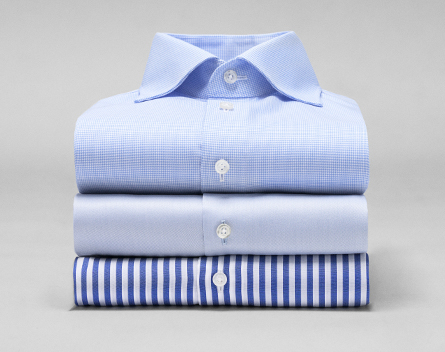
Dress Shirt Care Instructions
Your shirt tag will say “Machine Wash Cold, Non-Chlorine Bleach, Hang Dry, Iron Low Heat”
- Prepare the dress shirt by unbuttoning all of the buttons, including cuff and collar buttons. Remove any collar stays and put them in a safe place.
- Pre-treat any stains by carefully working a little detergent into them or spot-cleaning with a stain remover pen.
- Set up your washing machine: To minimize wear on a fine or lightweight dress shirt, use the Delicate cycle. If the shirt is made from a heavier fabric, or is particularly dirty, you may opt for the Normal cycle. Whites can use warm or hot water. Colored shirts should use cold water to reduce fading. Take care not to include other laundry items with bold colors that could bleed onto your shirts.
- Use a high-quality detergent, that is appropriate for the color of the shirt. Do not use chlorine-based detergents or bleaches as these can discolor your shirts.
- Wash the shirts in the washing machine and let the spin cycle wring most of the water out of them.
- The shirts will be tightly crumpled in the washing machine so remove them promptly before wrinkles dry into the shirt.
- Lightly shake the shirts to remove wrinkles and hang the shirts on a hanger so they can air dry. Button the top-button only on the shirt as it hangs. Standard wire hangers are fine, but avoid using tight clothespins as these can distort the shirt fabric or leave a mark on the shirt.
- Next you’ll want to iron the shirts. You don’t need to wait for the shirts to be completely dry to begin this step, but they should be mostly dry.
- Put each dress shirt on a hanger, reinsert collar stays if you choose to use them and button the top button of each shirt. Ensure the collar is in a good position, and the collar points are not rolling under the collar.
- Store dress shirts hanging on shirt hangers with the top button buttoned.
Casual Shirt Care Instructions
Your shirt tag will say “Machine Wash Cold, Non-Chlorine Bleach, Hang Dry”
- Prepare the casual shirt by unbuttoning all of the buttons, including cuff and collar buttons. Remove any collar stays and put them in a safe place.
- Pre-treat any stains by carefully working a little detergent into them or spot-cleaning with a stain remover pen.
- Set up your washing machine: To minimize wear on a fine or lightweight dress shirt, use the Delicate cycle. If the shirt is made from a heavier fabric or is particularly dirty, you may opt for the Normal cycle. Whites can use warm or hot water. Colored shirts should use cold water to reduce fading. Take care not to include other laundry items with bold colors that could bleed onto your shirts. Similarly, some casual shirts use natural dyes that can bleed onto your other items, so be sure to only wash casual shirts with like colors.
- Use a high-quality detergent, that is appropriate for the color of the shirt. Do not use chlorine-based detergents or bleaches as these can discolor your shirts.
- Wash the shirts in the washing machine, and let the spin cycle wring most of the water out of them. The shirts will be tightly crumpled in the washing machine so remove them promptly before wrinkles dry into the shirt.
- Lightly shake them out to remove wrinkles and hang the shirts on a hanger so they can air dry. Standard wire hangers are fine, but avoid using tight clothespins as these can distort the shirt fabric or leave a mark on the shirt. Button the top button of the shirt as it hangs and fluff or bat the shirt to remove as many wrinkles or folds as possible.
- Shape the damp collar into a nice shape, ensuring the collar points are not rolling under. Make sure the shirt tails are not rolling up. Make sure the inside of a French front is not twisted or folded back on the inside of the shirt. For a Camp collar, only button the third button down (or whichever button you will button when you wear the shirt), and fold the collar back smoothly.
- After the shirt is dry it is ready to wear. You can touch-up iron or steam it if you want, but most small wrinkles will work themselves out after you put the shirt on.
- Store casual shirts hanging on shirt hangers with the top button buttoned or lightly folded and stacked.
Casual Washed Shirt Care Instructions
Your shirt tag will say “Machine Wash Cold, Non-Chlorine Bleach, Machine Dry Low Heat”
- Prepare the shirt by unbuttoning all of the buttons, including cuff and collar buttons. Remove any collar stays and put them in a safe place.
- Pre-treat any stains by carefully working a little detergent into them or spot-cleaning with a stain remover pen.
- Set up your washing machine: To minimize wear, use the Delicate cycle. If the shirt is made from a heavier fabric or is particularly dirty, you may opt for the Normal cycle. Whites can use warm or hot water. Colored shirts should use cold water to reduce fading. Take care not to include other laundry items with bold colors that could bleed onto your shirts, and only wash with like colors if the fabric uses natural or garment dyes.
- Use a high-quality detergent, that is appropriate for the color of the shirt. Do not use chlorine-based detergents or bleaches as these can discolor your shirts.
- Wash the shirts in the washing machine, and let the spin cycle wring most of the water out of them.
- Dry the shirts in a machine dryer on a Low Heat setting.
- Promptly remove the shirts from the dryer. Fluff and bat them to remove major wrinkles. Put the collar in a nice position and fold the shirts carefully.
- Store casual washed shirts hanging on shirt hangers with the top button buttoned or lightly folded and stacked.
Denim Shirt Care Instructions
Your shirt tag will say “Machine Wash Cold with Like Colors Only, Machine Dry Low, Low Iron”
- Prepare the denim shirt by unbuttoning all of the buttons, including cuff and collar buttons. Remove any collar stays and put them in a safe place.
- Pre-treat any stains by carefully working a little detergent into them or spot-cleaning with a stain remover pen.
- Set up your washing machine: Use the Delicate or Normal cycle and cold water. Denim fabric is dyed with indigo or other dyes that can bleed, so only wash denim shirts with like colors, and never with whites or light-colored garments.
- Use a high-quality detergent, that is appropriate for the color of the shirt. Do not use chlorine-based detergents or bleaches as these can discolor your shirts.
- Before washing, turn the shirts inside out to help reduce fading and protect the surface of the fabric.
- Wash the shirts in the washing machine, and let the spin cycle wring most of the water out of them.
- Dry the shirts in a machine dryer on a Low setting. Remove promptly to minimize wrinkling.
- If necessary, touch up with a low-heat iron to smooth out wrinkles on the body or sharpen the collar.
- Store denim shirts hanging on shirt hangers with the top button buttoned or lightly folded and stacked.
Knit Shirt Care Instructions
Your shirt tag will say “Machine Wash Cold, Non-Chlorine Bleach, Machine Dry Low, Do Not Iron”
- Prepare the knit shirt by unbuttoning all of the buttons, including cuff and collar buttons. Remove any collar stays and put them in a safe place.
- Pre-treat any stains by carefully working a little detergent into them or spot-cleaning with a stain remover pen.
- Set up your washing machine: To minimize wear, use the delicate cycle. Whites and very light colors can use warm water. Darker-colored knit shirts that you don’t want to fade should use cold water. Take care not to include other laundry items with bold colors that could bleed onto your shirts.
- Use a high-quality detergent, that is appropriate for the color of the shirt. Do not use chlorine-based detergents or bleaches as these can discolor some shirt fabrics.
- Wash the knit shirts in the washing machine, and then let the spin cycle wring most of the water out of them.
- Dry the knit shirts in a machine dryer on a Low setting.
- Promptly remove the shirts from the dryer. Fluff and bat them to remove major wrinkles. Put the collar in a nice position and fold the shirts carefully.
- Do not iron the knit shirt. Knit fabrics can be permanently distorted or develop a shine when subjected to heat from an iron.
- Button the top button and leave the collar sticking up straight, or in a position where it can lay flat naturally.
- Store knit shirts lightly folded and stacked. Avoid storing knit shirts on hangers as this will cause the sleeves and body of the shirts to elongate over time.
Non-Iron Shirt Care Instructions
Your shirt tag will say “Machine Wash Cold, Non-Chlorine Bleach, Machine Dry Low Heat, Low Iron”
- Prepare the non-iron shirt by unbuttoning all of the buttons, including cuff and collar buttons. Remove any collar stays and put them in a safe place.
- Pre-treat any stains by carefully working a little detergent into them or spot-cleaning with a stain remover pen.
- Set up your washing machine: To minimize wear on a lightweight non-iron shirt, use the Delicate cycle. If the shirt is made from a heavier fabric, or is particularly dirty, you may opt for the Normal cycle. Whites can use warm or hot water. Colored shirts should use cold water to reduce fading. Take care not to include other laundry items with bold colors that could bleed onto your shirts.
- Use a high-quality detergent, that is appropriate for the color of the shirt. Do not use chlorine-based detergents or bleaches as these can discolor your shirts.
- Wash the non-iron shirts in the washing machine and let the spin cycle wring most of the water out of them. Remove promptly.
- Dry the non-iron shirts in a machine dryer on the Low setting. *Note: Non-Iron shirts are designed to be dried in a machine dryer, and it is this process that helps remove the wrinkles from the shirt.
- Promptly remove the shirts from the dryer. Shake the shirts a bit to help the fabrics return to their natural smooth shape and hang on hangers.
- Reinsert collar stays if you choose to use them and button the top button of each shirt. Ensure the collar is in a good position, and the collar points are not rolling under the collar. If necessary, touch up with a low-heat iron to sharpen the edges of the front or collar.
- Store non-iron shirts hanging on shirt hangers.
Performance Shirt Care Instructions
Your shirt tag will say “Machine Wash Cold, Non-Chlorine Bleach, Machine Dry Low Heat, No Iron”
- Prepare the performance shirt by unbuttoning all of the buttons, including cuff and collar buttons. Remove any collar stays and put them in a safe place.
- Pre-treat any stains by carefully working a little detergent into them or spot-cleaning with a stain remover pen.
- Set up your washing machine: To minimize wear use the Delicate cycle. If the shirt is made from a heavier fabric, or is particularly dirty, you may opt for the Normal cycle. White performance shirts should use warm water. Colored performance shirts should use cold water. Take care not to include other laundry items with bold colors that could bleed onto your shirts.
- Use a high-quality detergent, that is appropriate for the color and material of the shirt. Do not use chlorine-based detergents or bleaches as these can discolor your shirts.
- Wash the shirts in the washing machine, and let the spin cycle wring most of the water out of them.
- Dry the shirts in a machine dryer on a Low setting.
- Promptly remove the shirts from the dryer. Fluff and bat them to remove major wrinkles. Put the collar in a nice position and fold the shirts carefully.
- Do not iron or steam! Performance shirts use materials that can melt or become permanently distorted when subject to high heat.
- Woven performance shirts should be stored differently than knit performance shirts. Woven performance shirts should be stored hanging on hangers. Knit performance shirts should be lightly folded and stacked. Hanging knit shirts on hangers may cause the sleeves and body of the shirts to elongate over time.
Merino Shirt Care Instructions
Your shirt tag will say “Machine Wash Cold, Non-Chlorine Bleach, Hang Dry, Low Iron”
- Prepare the merino shirt by unbuttoning all of the buttons, including cuff and collar buttons. Remove any collar stays and put them in a safe place.
- Pre-treat any stains by carefully working a little detergent into them or spot-cleaning with a stain remover pen.
- Set up your washing machine: To minimize wear use the Delicate cycle. All merino shirt should use cold water. Note, washing in hot water (repeatedly) may cause damage to the shirt. Take care not to include other laundry items with bold colors that could bleed onto your shirts.
- Use a high-quality detergent, like Woolite Complete, which is appropriate for the material of the shirt. Do not use chlorine-based detergents or bleaches as these can discolor your shirts.
- Wash the shirts in the washing machine, and let the spin cycle wring most of the water out of them.
- Lightly shake the shirts to remove wrinkles and hang them on a hanger so they can air dry. Note, drying merino shirts at high heat (repeatedly) may cause damage to the shirt.
- Once dry, fluff and bat the shirts to remove major wrinkles. Put the collar in a nice position and fold the shirts carefully.
- Merino wool fibers can change when subjected to high heat, so only iron on a low heat setting if necessary. Ironing at high heat may cause a shininess to appear on the fabric or seams to come unraveled. If necessary use light steam sparingly to reduce wrinkles.
- Woven merino shirts should be stored differently than knit merino shirts. Woven merino shirts should be stored hanging on hangers. Knit merino shirts should be lightly folded and stacked. Hanging knit shirts on hangers may cause the sleeves and body of the shirts to elongate over time.
Professional Dry Clean Care Instructions
Your shirt tag will say “Professionally Dry-Clean”
We rarely suggest a shirt be dry cleaned, but occasionally it’s necessary. Typically this care method is reserved for shirts made from a particularly fine or rare material that is sensitive to intense heat or that should not be wet.
In some cases, we will recommend this care method for knit shirts that are known to have particularly high shrinkage if they are washed with water.